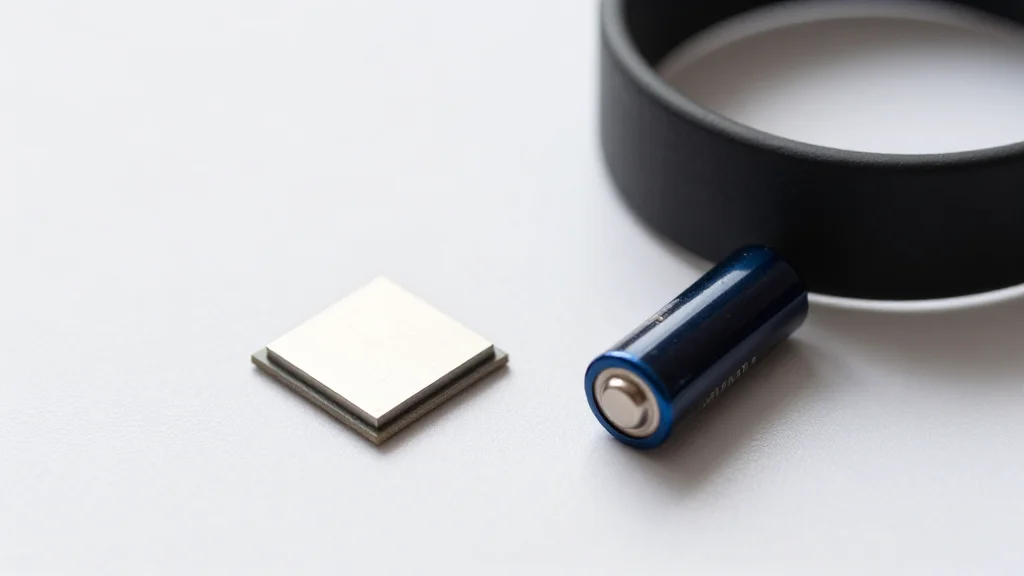
Murata Launches Ultra-Low Power AMR Sensors to Boost Battery Life in Healthcare and Wearables Devices
Companies Mentioned
Why It Matters
The sensors dramatically reduce standby power, enabling longer battery life for compact medical and wearable devices and strengthening Murata’s position in the fast‑growing low‑power IoT market.
Key Takeaways
- •MRMS166R consumes only 20 nA at 1.2 V.
- •Sensors support operation down to 1.2 V from coin cells.
- •Compact 1 × 1 × 0.4 mm package fits space‑constrained devices.
- •Enables two‑year standby life in typical medical wearables.
- •MRMS168R offers 12 mA drive for higher‑load applications.
Pulse Analysis
Murata’s launch of the MRMS166R and MRMS168R AMR sensors marks a notable advance in ultra‑low‑power magnetic switching technology. By redesigning the internal circuitry, Murata reduced average current consumption to a mere 20 nA for the MRMS166R while maintaining reliable operation at a 1.2 V supply voltage. This breakthrough addresses a long‑standing bottleneck for coin‑cell‑powered devices, where voltage headroom and capacity are limited. The sensors’ tiny 1 × 1 × 0.4 mm footprint also aligns with the miniaturization trends driving modern wearables and implantable medical electronics.
In healthcare and consumer wearables, power efficiency directly translates to longer device lifespans and reduced maintenance. Capsule endoscopes, skin‑adhesive patches, AR glasses, and wireless earbuds all rely on periodic active‑sleep cycling to conserve energy. The MRMS166R’s sub‑20 nA standby draw can push standby intervals beyond two years, eliminating frequent battery replacements and improving patient compliance. Meanwhile, the MRMS168R’s higher drive capability (up to 12 mA) supports more demanding loads such as haptic actuators or small motors, expanding its applicability to smart locks and IoT security sensors that must react quickly while staying power‑frugal.
Strategically, Murata’s new sensors reinforce its leadership in the passive component market and position the company to capture a larger share of the low‑power IoT segment, which analysts forecast to grow at double‑digit rates through 2030. Competitors will need to match or exceed the 20 nA benchmark to stay relevant, potentially spurring a wave of innovation in magnetic sensor design. As device manufacturers prioritize longer battery life and tighter form factors, Murata’s AMR lineup is likely to become a standard building block in next‑generation medical, wearable, and smart‑home products.
Murata Launches Ultra-Low Power AMR Sensors to Boost Battery Life in Healthcare and Wearables Devices
Comments
Want to join the conversation?
Loading comments...