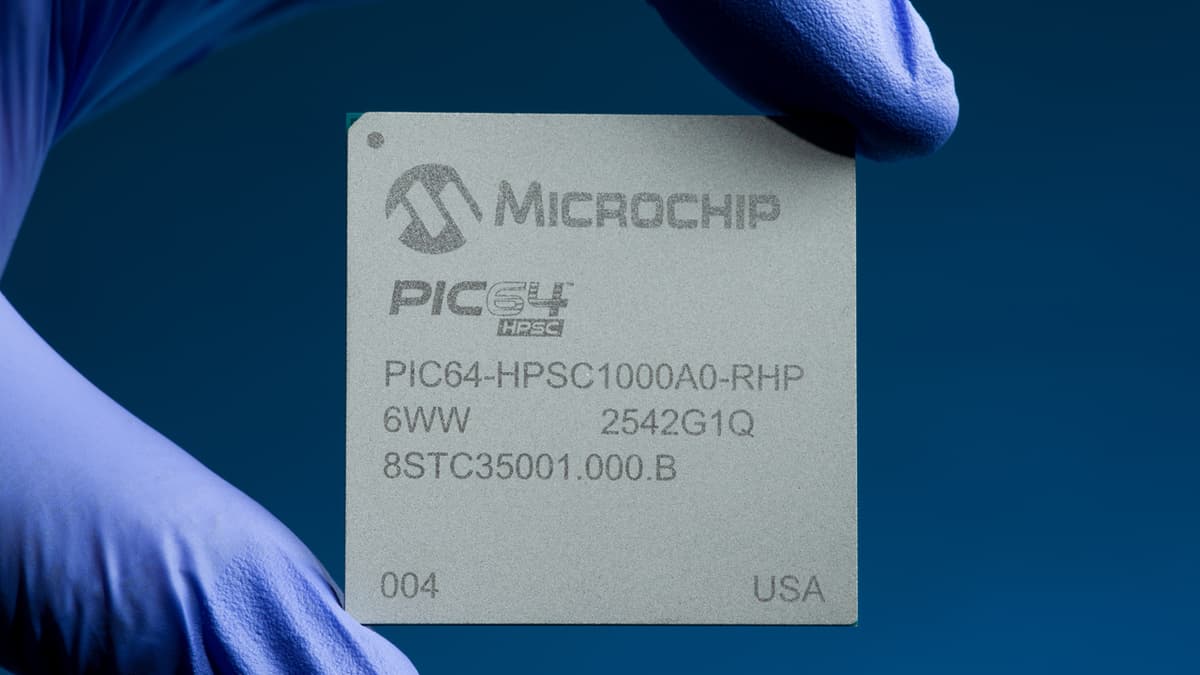
NASA Partners with Microchip to Build Next-Generation Spaceflight Chips with 100x the Power of Current Offerings — Chip Designed to Withstand Radiation for Extended Missions on the Moon and Mars
Why It Matters
The breakthrough could dramatically boost mission autonomy and data processing for NASA’s Artemis and future Mars endeavors, while opening a new revenue stream for Microchip in the growing space‑tech sector.
Key Takeaways
- •Microchip to deliver SoC 100× current spaceflight computing power
- •Radiation‑hardened and radiation‑tolerant versions target deep‑space and LEO missions
- •Integrated compute‑network chip reduces spacecraft weight, cost, and power use
- •Technology could spin off to drones, AI, medical and energy‑grid applications
Pulse Analysis
NASA’s collaboration with Microchip marks a pivotal shift in space‑grade computing, moving beyond incremental upgrades to a transformative 100‑fold increase in processing power. Traditional space processors are limited by radiation‑hardening constraints and legacy architectures, forcing missions to rely on multiple discrete units for compute, storage and communications. By consolidating these functions into a single, radiation‑qualified system‑on‑a‑chip, the new design promises not only raw speed but also a leaner, more power‑efficient payload—critical for long‑duration lunar and Martian expeditions where every watt counts.
The High‑Performance Spaceflight Computing (HPSC) platform leverages a scalable architecture that can deactivate non‑essential modules to conserve energy, and links multiple chips via advanced Ethernet for parallel processing. This modularity enables onboard autonomy, such as real‑time terrain analysis for rovers or adaptive data compression for deep‑space probes, reducing reliance on Earth‑based command loops. Moreover, the dual‑track approach—radiation‑hardened for harsh deep‑space environments and radiation‑tolerant for commercial LEO satellites—positions the solution to serve both government and private sector customers, accelerating the commercial satellite market’s shift toward higher‑performance payloads.
Beyond the immediate aerospace benefits, the partnership underscores a broader trend of space‑derived technologies migrating to Earth applications. The same radiation‑hardening techniques, low‑power design, and secure networking could enhance critical infrastructure, from resilient energy‑grid controllers to AI‑enabled medical devices. As the U.S. seeks to maintain leadership in semiconductor innovation, this joint effort not only bolsters NASA’s Artemis and future Mars missions but also creates a pipeline of advanced chips that could reshape multiple industries.
NASA partners with Microchip to build next-generation spaceflight chips with 100x the power of current offerings — chip designed to withstand radiation for extended missions on the Moon and Mars
Comments
Want to join the conversation?
Loading comments...