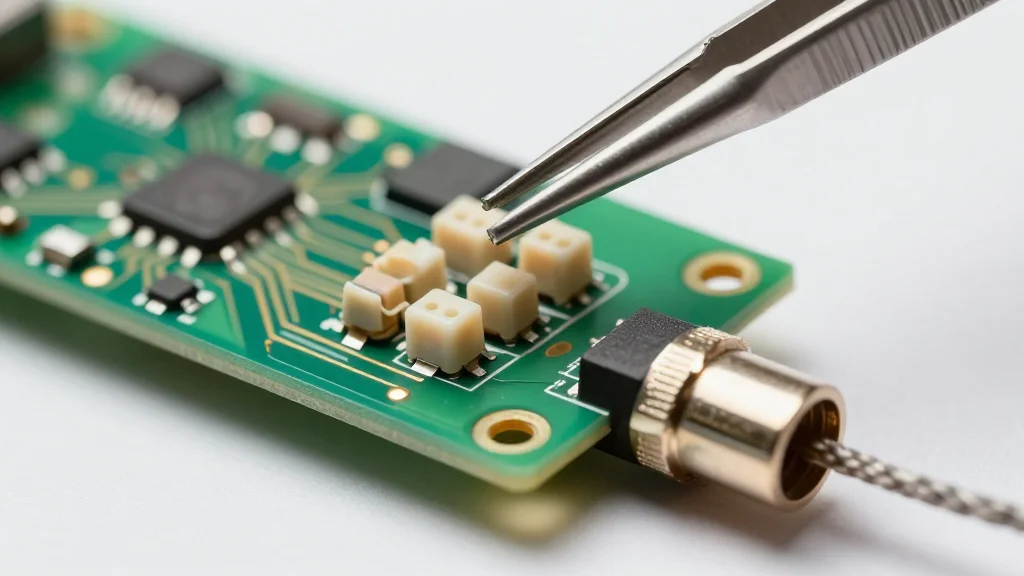
New Murata SMD Library for Microwave Office Support

Companies Mentioned
Why It Matters
Accurate parasitic modeling reduces RF design errors, shortens development cycles, and improves product reliability in high‑frequency applications.
Key Takeaways
- •New Murata library adds parameterized capacitor and inductor models for Microwave Office
- •Models include parasitic ESL, ESR, and frequency‑dependent behavior
- •2D/3D component data enable seamless layout integration
- •Accurate simulations cut redesign time and improve RF performance
Pulse Analysis
High‑frequency circuit design has long been hampered by the hidden parasitic elements inherent in surface‑mount components. Lead inductance, equivalent series resistance, and stray capacitance become dominant above a few gigahertz, causing signal distortion, crosstalk, and instability in amplifiers. Traditional idealized models overlook these effects, leading to costly redesigns once a prototype is fabricated. As wireless standards push toward wider bandwidths and higher carrier frequencies, designers demand simulation tools that reflect the true electrical behavior of each part.
Murata’s newly released library for Cadence Microwave Office directly addresses this gap. It supplies parameterized models for the latest SMD capacitors and inductors, each calibrated with measured ESL, ESR, and frequency‑dependent loss curves. In addition to SPICE‑compatible netlists, the package includes detailed 2D and 3D package outlines, allowing seamless import into PCB layout editors. Designers can now adjust component values on‑the‑fly, run Monte‑Carlo sweeps, and verify that a filter or matching network meets spec before hardware is built. Early benchmark simulations show that Murata’s models predict up to 15 % higher insertion loss and shifted resonant peaks compared with ideal parts, highlighting the practical impact of accurate parasitic representation.
The broader industry impact is significant. By integrating realistic component libraries into a leading RF design suite, semiconductor and OEM teams can accelerate time‑to‑market, reduce prototype iterations, and improve overall product yield. As 5G, automotive radar, and IoT devices continue to demand tighter performance margins, the adoption of such high‑fidelity libraries is likely to become a standard practice. Murata’s move also signals a shift toward collaborative ecosystem tools, where component manufacturers supply simulation‑ready data that dovetails with EDA platforms, fostering a more efficient design workflow across the RF community.
New Murata SMD Library for Microwave Office Support
Comments
Want to join the conversation?
Loading comments...