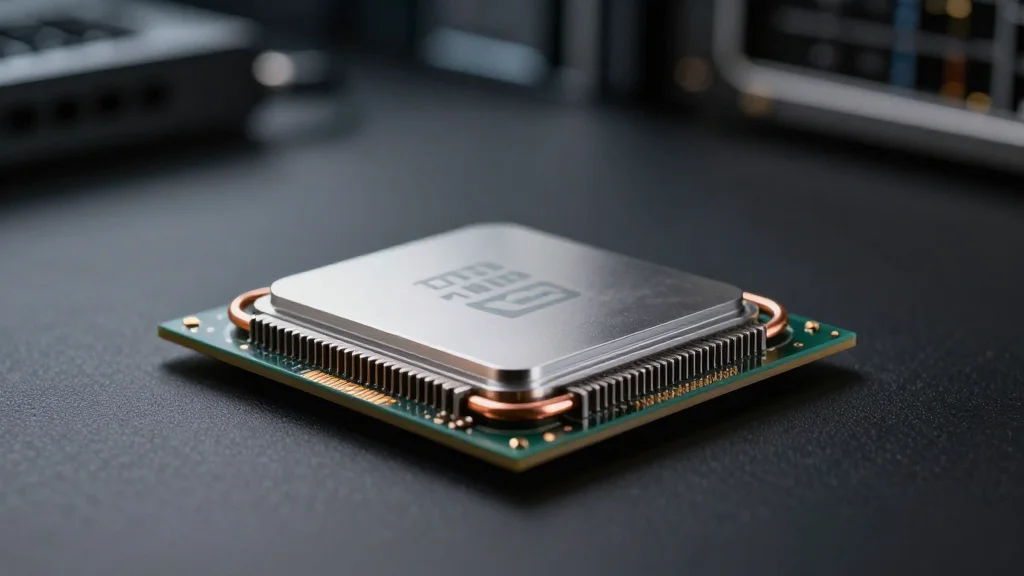
Nvidia Says Vera Rubin Design Hurdles Cleared, Targets Q3 2026 Production Ramp

Why It Matters
The clearance of Vera Rubin’s design issues removes a supply‑chain bottleneck that threatened to slow the deployment of next‑generation AI workloads. Hyperscale cloud providers and enterprise AI teams have been waiting for hardware that can sustain trillion‑parameter models with low latency; Vera Rubin’s promised efficiency gains could lower operating costs and accelerate the rollout of advanced services such as autonomous agents and real‑time language assistants. Beyond immediate performance benefits, the Q3 2026 production ramp signals that Nvidia’s ecosystem—spanning TSMC’s advanced node, Micron’s HBM4, and ODM partners—is capable of delivering complex, high‑density AI systems at scale. This reinforces Nvidia’s dominance in the data‑center segment and sets a benchmark for competitors who must now match both the compute density and the power‑efficiency metrics that Vera Rubin claims to achieve.
Key Takeaways
- •Nvidia confirms cooling‑architecture design issues on Vera Rubin are largely resolved.
- •Mass‑production schedule with ODMs targets a supply ramp in Q3 2026.
- •Vera Rubin NVL72 delivers up to 3,600 petaflops per rack and 20.7 TB HBM4 memory.
- •Groq 3 LPX accelerator provides 2.5 TB/s per unit, scaling to 640 TB/s per rack.
- •Nvidia claims up to 35× efficiency per megawatt and a 10× revenue opportunity for agentic AI workloads.
Pulse Analysis
Nvidia’s announcement comes at a pivotal moment for the AI hardware market, which has been grappling with a supply crunch that pushed up prices for GPUs and custom accelerators alike. By resolving the Vera Rubin cooling challenge, Nvidia not only restores confidence in its own roadmap but also eases pressure on the broader ecosystem that depends on a steady flow of high‑performance chips. The timing aligns with a surge in demand for trillion‑parameter models, a class of AI that promises breakthroughs in natural language understanding and autonomous decision‑making but has been hamstrung by bandwidth and latency constraints.
From a competitive standpoint, the Vera Rubin platform raises the bar for rivals such as AMD and Intel, which are also racing to deliver next‑gen AI accelerators. Nvidia’s claim of 35× efficiency per megawatt could translate into lower total‑cost‑of‑ownership for cloud operators, a decisive factor when evaluating large‑scale deployments. Moreover, the integration with Groq’s LPX accelerator showcases a co‑design approach that blurs the line between compute and interconnect, a strategy that may become the new norm for AI infrastructure.
Looking ahead, the real test will be how quickly hyperscale customers can integrate Vera Rubin into existing data‑center fabrics and whether the promised performance gains materialize at scale. If Nvidia can deliver on its Q3 2026 ramp, it will likely secure a dominant position in the emerging agentic AI market, driving further investment in HBM4 memory and advanced packaging technologies. Conversely, any delay or shortfall could open a window for competitors to capture market share, especially as AI workloads diversify beyond pure inference into more interactive, multi‑modal applications.
Nvidia Says Vera Rubin Design Hurdles Cleared, Targets Q3 2026 Production Ramp
Comments
Want to join the conversation?
Loading comments...