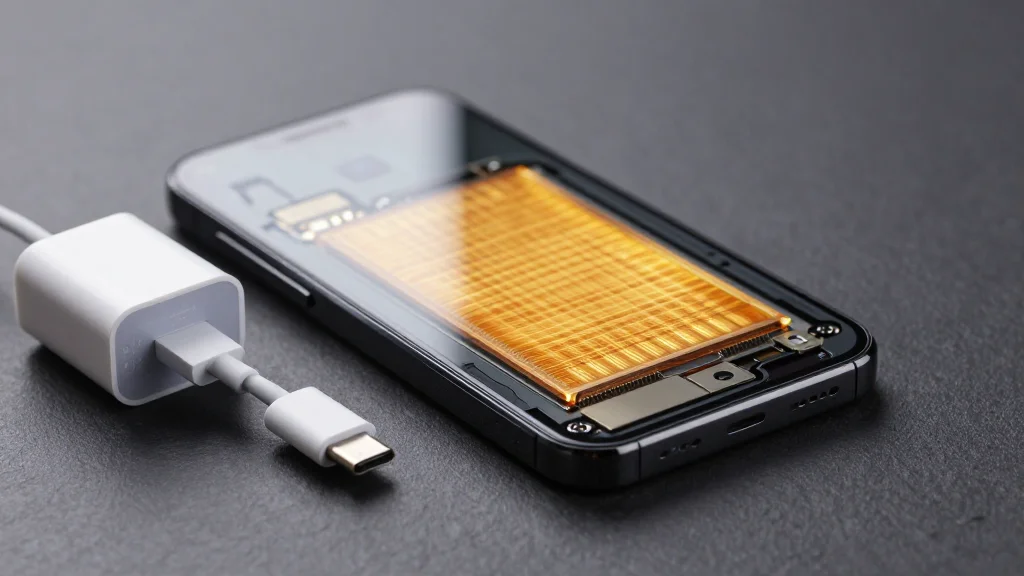
Oppo's Find X9 Ultra Debuts 7,050 mAh Silicon‑Carbon Battery, Threatening Lithium‑Ion Dominance

Companies Mentioned
Why It Matters
The introduction of a silicon‑carbon battery at flagship scale challenges the long‑standing dominance of lithium‑ion chemistry in smartphones. By delivering a 7,050 mAh pack that retains more charge during intensive use and charges at 100 W, Oppo forces rivals to rethink the trade‑off between battery size, device thickness, and charging speed. If the technology proves reliable, it could accelerate the industry’s shift toward higher‑energy‑density cells, reducing the need for oversized batteries and potentially extending device lifespans. Beyond consumer experience, the move has supply‑chain implications. Silicon‑carbon anodes require different raw materials and manufacturing processes, prompting battery makers to diversify their production lines. Early adoption by a major OEM like Oppo may spur investment in new fabs, influencing pricing and availability of advanced cells for other sectors such as electric vehicles and IoT devices.
Key Takeaways
- •Oppo Find X9 Ultra ships with a 7,050 mAh silicon‑carbon battery—25‑35% larger than typical lithium‑ion cells.
- •Independent testing shows the Find X9 Ultra retains 94% charge after three hours of 1080p video playback, versus 90% for iPhone 17 Pro Max.
- •The device supports 100 W wired fast charging, roughly double Apple’s 40 W peak rate.
- •Competing May 2026 launches (Vivo X300 Ultra, OnePlus Nord CE 6) use larger lithium‑ion packs but lack silicon‑carbon chemistry.
- •Silicon‑carbon adoption could reshape battery‑material supply chains and accelerate R&D in hybrid anode technologies.
Pulse Analysis
Oppo’s decision to mainstream silicon‑carbon batteries is a calculated risk that pays off by differentiating its ultra‑premium lineup in a market saturated with incremental upgrades. Historically, battery innovation has lagged behind display and camera breakthroughs because of the high cost and safety concerns of new chemistries. By committing to a 7,050 mAh pack, Oppo signals confidence in the maturity of silicon‑carbon production, likely backed by strategic partnerships with Chinese cell manufacturers that have been quietly scaling the technology.
From a competitive standpoint, the move forces Apple and Samsung into a defensive posture. Apple’s incremental battery growth—capped at roughly 5,000 mAh for the iPhone 17 Pro Max—relies on software optimizations and faster charging to claim “all‑day” endurance. Samsung, meanwhile, continues to iterate on lithium‑ion capacity without a clear roadmap for silicon‑carbon. If consumers begin to prioritize raw battery life over other specs, Oppo could capture a niche of power‑hungry users, especially in emerging markets where charging infrastructure is uneven.
Looking forward, the real test will be durability. Silicon‑carbon cells historically suffer from faster degradation due to silicon’s expansion during charge cycles. Oppo’s 3D Cryo‑velocity cooling system may mitigate thermal stress, but long‑term reliability data is still pending. Should the technology hold up, we may see a cascade effect: OEMs adopt hybrid anodes, battery suppliers retool factories, and the industry’s energy‑density ceiling rises, potentially reshaping design philosophies for the next generation of smartphones, wearables, and even electric vehicles.
Oppo's Find X9 Ultra Debuts 7,050 mAh Silicon‑Carbon Battery, Threatening Lithium‑Ion Dominance
Comments
Want to join the conversation?
Loading comments...