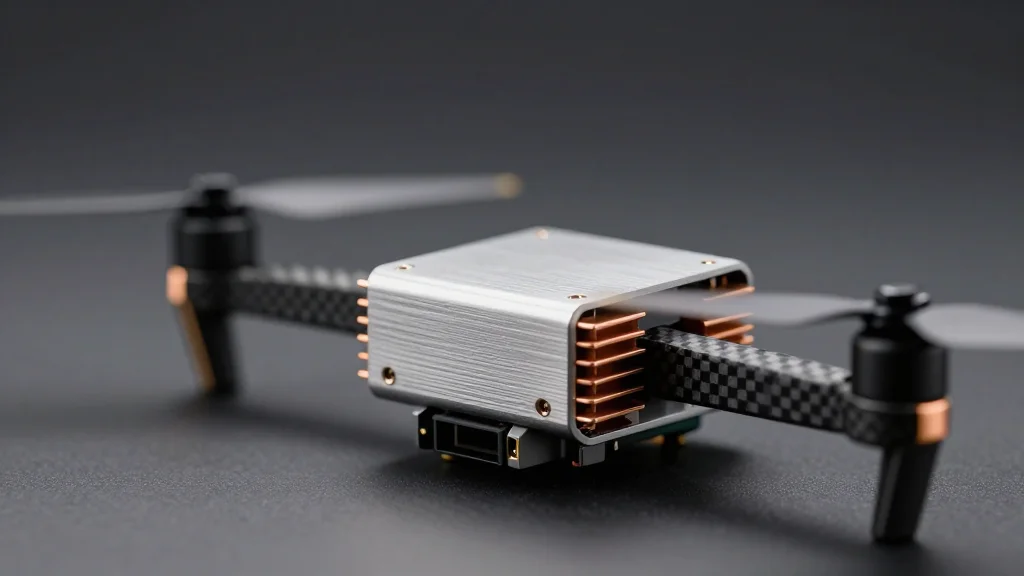
Power Modules for Drone Applications
Why It Matters
Reduced size, weight, and design complexity accelerate drone innovation, giving manufacturers a competitive edge in a rapidly expanding UAV market.
Key Takeaways
- •MPS modules reduce drone power board size by up to 30%
- •Integrated thermal management cuts cooling system weight
- •Support for high‑performance FPGAs enables advanced AI processing
- •Modular design accelerates time‑to‑market for new drone models
Pulse Analysis
The commercial drone sector is projected to exceed $30 billion in U.S. sales by 2028, driven by logistics, inspection, and AI‑enabled services. Yet, power delivery remains a bottleneck; designers must balance limited airframe volume with the heat generated by high‑performance processors such as FPGAs. Traditional power architectures rely on discrete converters and bulky heat sinks, inflating weight and complicating certification. MPS’s new power modules address these pain points by integrating high‑efficiency DC‑DC conversion, synchronous rectification, and built‑in thermal spreaders, delivering up to 95% efficiency in a footprint comparable to a standard chip carrier.
Beyond hardware consolidation, the modules incorporate intelligent control loops that dynamically adjust voltage rails to match real‑time processor demand, reducing idle power draw and extending flight endurance. This capability is especially valuable for AI‑driven drones that toggle between intensive compute bursts and low‑power standby modes. By offloading power‑management tasks to the module, system engineers can focus on payload integration and software development, shortening the prototype cycle from months to weeks. The result is a faster path from concept to certification, a critical advantage in markets where regulatory approvals can delay product launches.
Looking ahead, the modular approach paves the way for scalable drone families, where a single power platform can be reused across multiple airframe sizes and mission profiles. As battery energy density improves, the ability to efficiently harness that energy becomes a differentiator. MPS’s solution not only meets today’s thermal and space constraints but also future‑proofs designs against emerging high‑throughput processing demands, positioning manufacturers to capture a larger share of the burgeoning UAV ecosystem.
Power Modules for Drone Applications
Comments
Want to join the conversation?
Loading comments...