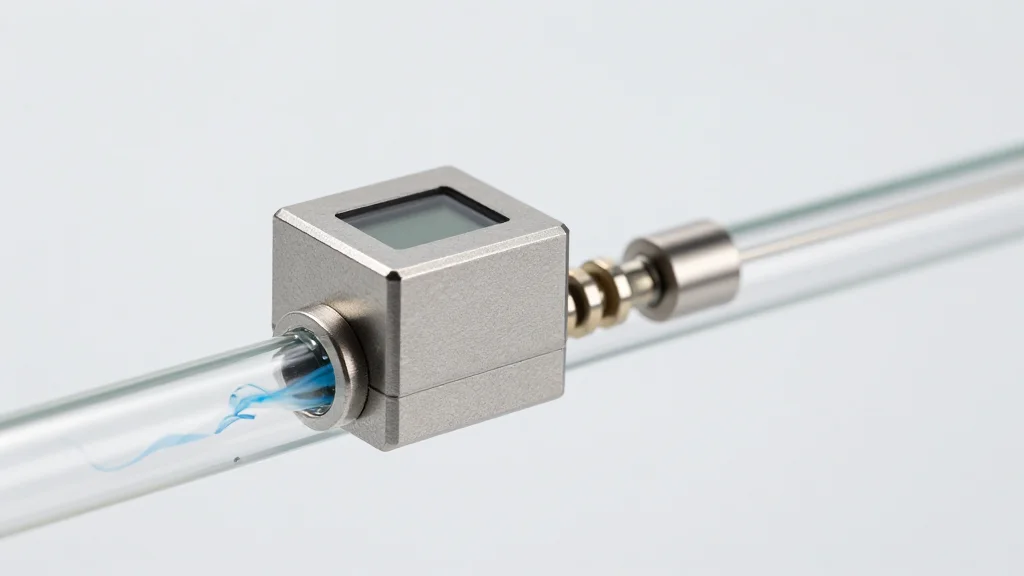
Pressure and Ultrasonic Flow Sensing for Smarter Fluid Systems
Companies Mentioned
Why It Matters
Integrated pressure and ultrasonic flow solutions reduce system complexity while delivering higher accuracy, accelerating adoption of IoT‑enabled fluid management across industrial, HVAC, and water‑treatment markets.
Key Takeaways
- •MAX40109 integrates calibration, trimming, and conditioning in one chip
- •Reduces component count and simplifies pressure‑sensor board design
- •MAX35103 provides high‑accuracy ultrasonic flow with sub‑1 % error
- •Operates on milliwatt power, ideal for battery‑powered devices
- •Enables non‑invasive flow measurement across pipes without cutting
Pulse Analysis
The push toward smarter fluid infrastructure is reshaping HVAC, water treatment, and process‑industry sectors. Operators now demand real‑time pressure and flow data to optimize energy use, meet tighter emissions standards, and enable predictive maintenance. Embedded sensors that combine accuracy with low power consumption are essential for scaling Internet‑of‑Things deployments, where each additional component adds cost, space, and reliability risk.
Analog Devices’ MAX40109 addresses these pressures—literally—by folding calibration, trimming, and signal‑conditioning onto a single die. This integration slashes bill‑of‑materials, reduces board layout complexity, and minimizes drift over temperature extremes. Engineers can therefore design compact, rugged pressure‑monitoring modules that fit into constrained enclosures while maintaining the precision required for closed‑loop control in pumps and compressors. The device’s low‑current operation also aligns with battery‑or‑energy‑harvesting designs, extending service life without sacrificing performance.
On the flow side, the MAX35103 family brings high‑resolution ultrasonic metering to applications that previously relied on invasive clamps or bulky turbine meters. By measuring the time‑of‑flight of acoustic pulses, the chip delivers sub‑1 % accuracy with milliwatt‑level power draw, making it ideal for remote or portable installations. Its flexible topology support lets OEMs choose between transit‑time, Doppler, or hybrid modes, tailoring solutions to liquids of varying conductivity and particle content. As non‑invasive monitoring gains regulatory favor for sanitary and safety reasons, the MAX35103 positions manufacturers to meet future compliance while cutting installation time and maintenance costs.
Pressure and Ultrasonic Flow Sensing for Smarter Fluid Systems
Comments
Want to join the conversation?
Loading comments...