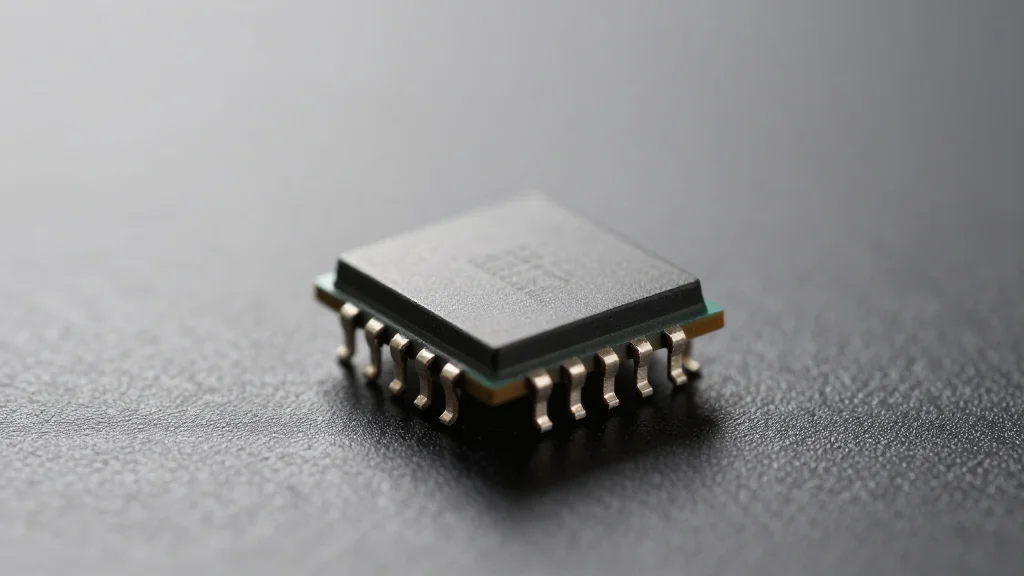
Pressure Sensors: Turning Environmental Signals Into Smart Actions
Why It Matters
Accurate, low‑power pressure data lets consumer devices react to subtle environmental changes, improving reliability and user experience. The sensor’s robustness reduces design risk and accelerates time‑to‑market for rugged IoT products.
Key Takeaways
- •XENSIV DPS368 measures pressure with ±280 Pa accuracy after dust exposure
- •Capacitive design delivers low noise, high repeatability for near‑atmospheric sensing
- •2.0 × 2.5 × 1.1 mm³ package fits space‑constrained wearables and HVAC units
- •Ultra‑low standby current supports long battery life in IoT devices
- •IPx8 and gel‑protected MEMS ensure operation in dusty, wet environments
Pulse Analysis
Pressure sensing has quietly become a backbone of modern consumer electronics, moving from occasional event triggers to a continuous stream of background data. By translating subtle changes in ambient air pressure into digital signals, devices can infer altitude, airflow, or enclosure integrity without adding visible hardware. This invisible context layer fuels sensor‑fusion algorithms that improve user experience in wearables, smart HVAC, robotic vacuums, and other IoT products. As manufacturers push for greater autonomy, the reliability and granularity of barometric data increasingly dictate how effectively a device can adapt to its environment.
Infineon’s XENSIV DPS368 exemplifies the next generation of capacitive barometric sensors tailored for near‑atmospheric operation. Its MEMS‑based capacitive transducer delivers exceptionally low noise and repeatable measurements, allowing software to detect pressure shifts of only a few pascals—far finer than traditional piezoresistive parts. The 2.0 × 2.5 × 1.1 mm³ package integrates easily into space‑constrained wearables and compact appliances, while an ultra‑low standby current (sub‑µA) preserves battery life in always‑on IoT nodes. Combined with linear temperature compensation, the device maintains stable output across the wide thermal swings typical of consumer use.
Beyond electrical performance, the DPS368’s gel‑protected MEMS and IPx8 rating address the harsh realities of real‑world deployment, from kitchen dust to outdoor humidity. Independent Arizona A4 dust tests confirmed that cumulative absolute accuracy stays within ±280 Pa, demonstrating that particulate exposure does not degrade sensor fidelity. This robustness lowers engineering risk for OEMs, enabling faster time‑to‑market for products that must survive rugged conditions. Infineon’s broader BAP portfolio, spanning automotive‑grade to ultra‑low‑power consumer parts, gives designers a scalable path as pressure‑sensing requirements evolve across markets, reinforcing the sensor’s strategic role in the expanding IoT ecosystem.
Pressure Sensors: Turning Environmental Signals into Smart Actions
Comments
Want to join the conversation?
Loading comments...