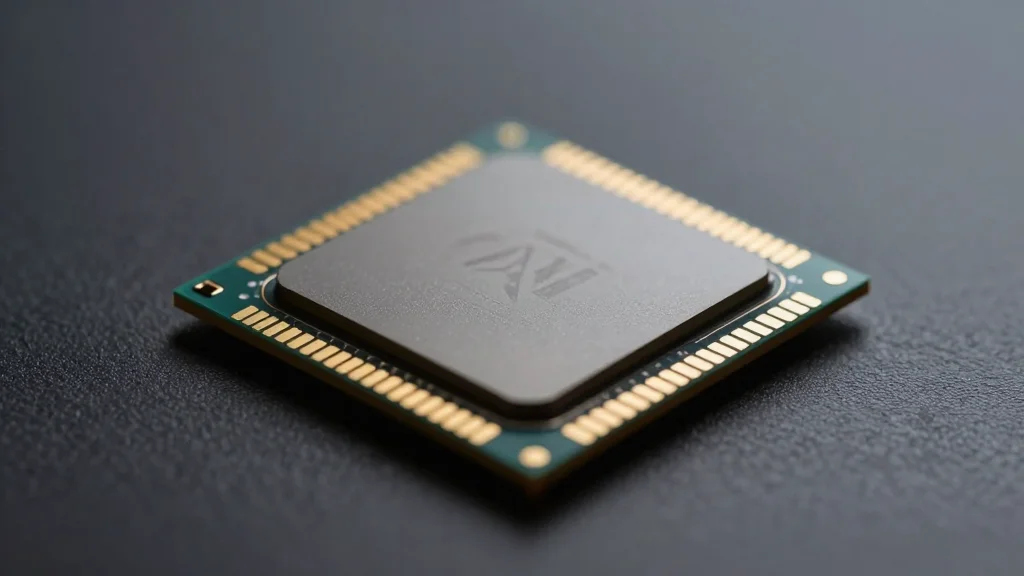
Qualcomm Unveils Agentic CPU and Plans First Data‑Center Chip Shipments by December 2026

Companies Mentioned
Why It Matters
Qualcomm’s entry into custom data‑center silicon marks a strategic diversification away from its traditional reliance on handset chips, opening a high‑margin revenue stream in the fast‑growing AI infrastructure market. By targeting agentic AI workloads, the company aims to capture a niche that blends compute and inference, potentially setting a new standard for AI‑driven services. The announcement also signals intensified competition in the data‑center space, where incumbents are racing to provide specialized processors for generative AI. Qualcomm’s hyperscaler partnership could accelerate adoption of its agentic CPU, forcing rivals to rethink their own roadmaps and possibly reshaping the balance of power among silicon vendors.
Key Takeaways
- •Qualcomm will ship its first custom data‑center ASICs to a major hyperscaler by December 2026.
- •CEO Cristiano Amon announced a dedicated CPU for agentic AI experiences, emphasizing the importance of CPUs for AI agents.
- •Shares surged over 20% in after‑hours trading, reaching about $177, and a $20 billion share buyback was authorized.
- •Qualcomm acquired Alphawave Semi for $2.4 billion, giving it the design capability for custom ASICs.
- •Handset chip revenue fell 13% to $6.024 billion, while automotive chip revenue rose 38% to $1.326 billion.
Pulse Analysis
Qualcomm’s pivot to custom data‑center silicon is a calculated bet on the AI boom that could redefine its growth trajectory. Historically, the firm has leveraged its modem and mobile SoC expertise to dominate the smartphone market, but the slowdown in handset demand and memory shortages have exposed the limits of that model. By leveraging the Alphawave acquisition, Qualcomm now possesses the in‑house ASIC design talent needed to compete in a segment traditionally dominated by Intel, AMD, and Nvidia. The agentic CPU concept, while still nebulous, aligns with the industry’s shift from pure inference accelerators to processors that can handle the full lifecycle of autonomous AI agents, including token generation and decision‑making.
The hyperscaler partnership is crucial. Securing a multi‑generation deal with a leading cloud provider not only guarantees volume but also provides a testing ground for Qualcomm’s architecture against real‑world AI workloads. If the performance‑per‑watt and cost metrics meet expectations, Qualcomm could carve out a niche in edge‑to‑cloud AI deployments, especially in scenarios where power efficiency is paramount. However, the company faces stiff competition from established data‑center players that are rapidly iterating their own AI‑optimized CPUs and GPUs. Qualcomm will need to demonstrate clear differentiation, perhaps through tighter integration with its Snapdragon ecosystem or by offering unique software stacks that simplify agentic AI deployment.
Looking ahead, the June investor day will be a litmus test for market confidence. Detailed roadmaps, pricing strategies, and performance benchmarks will determine whether Qualcomm can translate its hype into sustainable revenue. Success could accelerate the broader industry trend toward heterogeneous compute platforms that blend CPUs, GPUs, and AI accelerators, while failure may relegate Qualcomm’s data‑center ambitions to a footnote in its broader diversification efforts.
Qualcomm Unveils Agentic CPU and Plans First Data‑Center Chip Shipments by December 2026
Comments
Want to join the conversation?
Loading comments...