Razer Blade 18 Launches with 24‑Core Intel CPU and $7,000 Top‑End Model

Companies Mentioned

Why It Matters
The Blade 18 underscores a pivotal moment for the high‑end gaming laptop market, where performance ceilings are being pushed by both CPU and GPU advancements, yet cost barriers are rising sharply. By bundling a 24‑core processor, a top‑tier RTX 5090, and a dual‑mode 18‑inch display, Razer is targeting a segment of gamers and creators who demand desktop‑class power without a tower. However, the $7,000 price point raises questions about market size and the long‑term viability of such premium devices, especially as component shortages keep memory and storage costs high. The laptop also highlights the growing convergence of gaming and AI workloads. Razer’s claim that the Blade 18 outperforms Apple’s M5 Max in AI inference reflects a broader industry shift where GPUs traditionally used for gaming are becoming essential for AI development. This dual‑use case could expand the laptop’s appeal beyond gamers to data scientists and content creators, potentially reshaping purchasing decisions in the high‑performance notebook segment.
Key Takeaways
- •Blade 18 launches with Intel Core Ultra 9 290HX Plus (24 cores, 5.5 GHz boost)
- •Configurable GPU options: RTX 5070 Ti, RTX 5080, RTX 5090
- •Top‑end model with 128 GB RAM and RTX 5090 priced at $7,000
- •Dual‑mode 18‑inch display: 3840 × 2400 @ 240 Hz or 1920 × 1200 @ 440 Hz, 20 % brighter
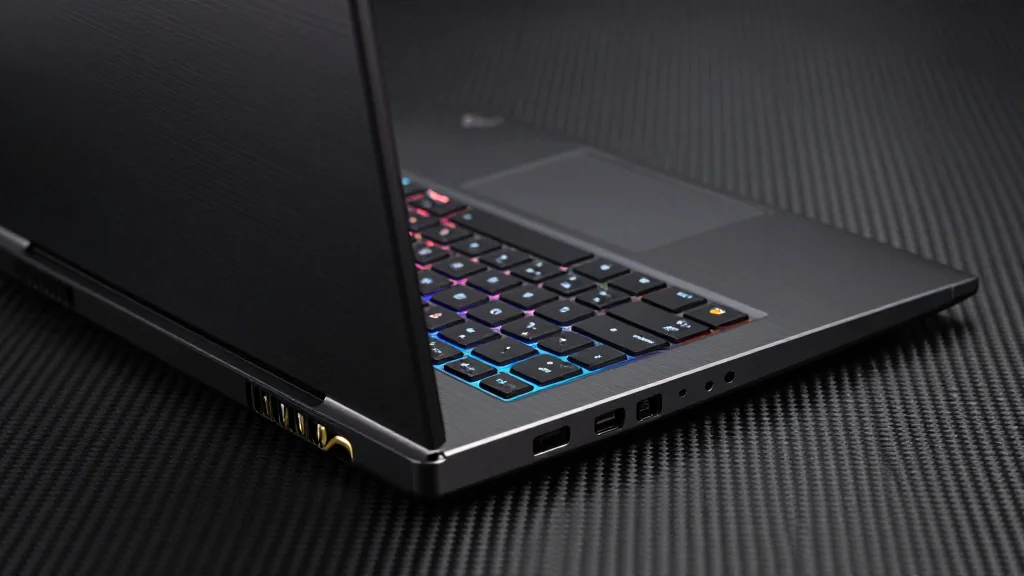
- •Weight just over seven pounds; includes Thunderbolt 5, HDMI 2.1, three USB‑A, SD card slot, Ethernet
Pulse Analysis
Razer’s Blade 18 represents both a technical triumph and a pricing gamble. The integration of a 24‑core Intel CPU and Nvidia’s RTX 5090 places the laptop at the apex of current mobile compute, effectively delivering a desktop‑class experience in a single chassis. This aligns with a niche but growing demand for portable workstations capable of handling high‑resolution gaming, real‑time ray tracing, and AI workloads. Historically, Razer has positioned its Blade series as premium, but the $7,000 ceiling pushes the product into a realm traditionally occupied by boutique manufacturers and custom‑built desktops.
From a market dynamics perspective, the Blade 18’s price hike is symptomatic of broader supply‑chain pressures. The “RAM crisis” cited by Razer has inflated memory costs, and the scarcity of high‑bandwidth components forces manufacturers to pass expenses onto consumers. Competitors like MSI and Asus are also seeing similar pricing trajectories, suggesting an industry‑wide shift rather than an isolated Razer decision. This could lead to a bifurcation where only the most affluent enthusiasts or professional creators invest in such hardware, while the majority gravitate toward more affordable, albeit less powerful, alternatives.
Looking ahead, the Blade 18’s success will hinge on how quickly the performance gap between high‑end laptops and desktop rigs narrows. If future GPU and CPU generations deliver proportionally greater efficiency, the weight and thermal constraints of laptops may become less of a barrier, making devices like the Blade 18 more attractive despite their cost. Conversely, if component shortages persist, we may see a slowdown in premium laptop adoption, prompting manufacturers to explore modular or upgradable designs to extend product lifecycles. Razer’s next move—whether a price correction, a new configuration, or a focus on software‑level performance enhancements—will be a bellwether for the sustainability of ultra‑premium mobile gaming hardware.
Razer Blade 18 Launches with 24‑Core Intel CPU and $7,000 Top‑End Model
Comments
Want to join the conversation?
Loading comments...