Reference Platform Targets Robust 10BASE-T1S Ethernet Design
Why It Matters
Robust magnetics are essential for reliable SPE performance in noisy edge environments, making the reference platform a catalyst for faster migration from legacy fieldbus to Ethernet.
Key Takeaways
- •Integrated transformer improves noise rejection.
- •Bourns magnetics combine transformer and CMC.
- •Platform supports point‑to‑point and multidrop.
- •Enables faster SPE adoption in automation.
- •Reduces design risk and time‑to‑market.
Pulse Analysis
Single‑Pair Ethernet (SPE) is rapidly moving from concept to mainstream in industrial and building‑automation markets, promising Ethernet connectivity for sensors and actuators that traditionally relied on field‑bus protocols such as CAN or RS‑485. The key attraction lies in its ability to deliver deterministic, low‑latency communication over a single twisted pair while keeping cabling costs low. However, the harsh electromagnetic environment of factories and HVAC systems places strict demands on signal integrity and electromagnetic compatibility (EMC). Meeting those requirements calls for careful engineering of the physical layer, especially the magnetics that sit between the PHY and the cable.
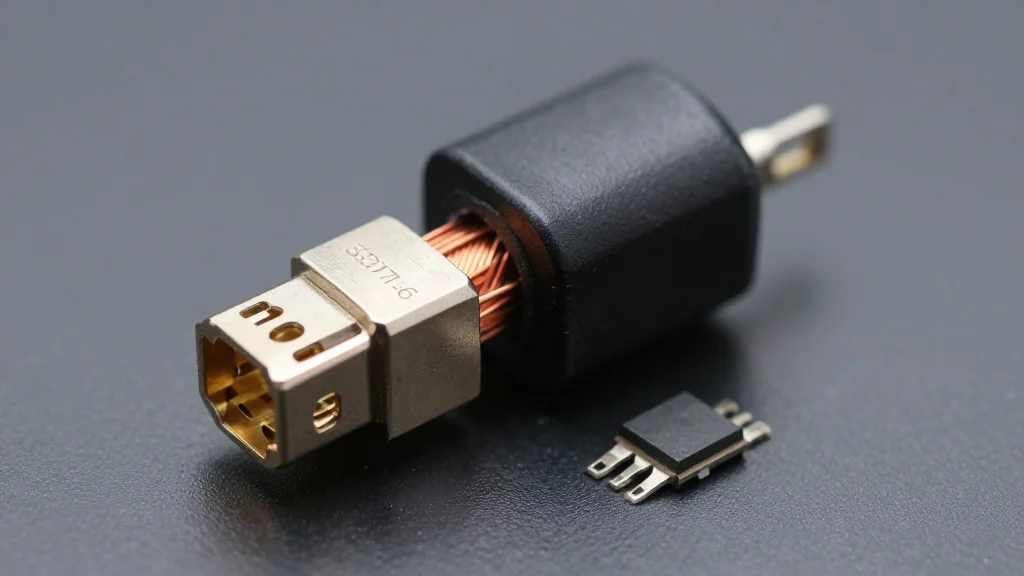
The REF_SPE_T1S reference platform, a joint effort by Arrow, Microchip, Bourns and Amphenol, showcases how an integrated magnetics solution can address those challenges. Built around Microchip’s LAN8670 10BASE‑T1S PHY, the board incorporates a Bourns component that merges an isolation transformer with a common‑mode choke, delivering superior common‑mode noise rejection and galvanic isolation compared with capacitor‑only schemes. The IEC 63171‑6‑compliant Amphenol connector completes the chain, ensuring compliance with EMC standards and stable link performance even in electrically noisy settings. Engineers can directly compare transformer‑based and capacitor‑based isolation on a USB‑powered evaluation board.
By providing a ready‑to‑use schematic, test firmware and real‑time measurement tools, the platform shortens the development cycle for SPE‑enabled products and reduces the risk of costly redesigns. Its support for both point‑to‑point and multidrop topologies makes it suitable for a range of applications, from factory‑floor automation to HVAC and smart‑building control. As OEMs accelerate the migration away from legacy bus systems, solutions like REF_SPE_T1S will be instrumental in delivering reliable, low‑speed Ethernet at the edge, ultimately expanding SPE’s market share and driving broader Ethernet adoption across the industrial IoT landscape.
Reference platform targets robust 10BASE-T1S Ethernet design
Comments
Want to join the conversation?
Loading comments...