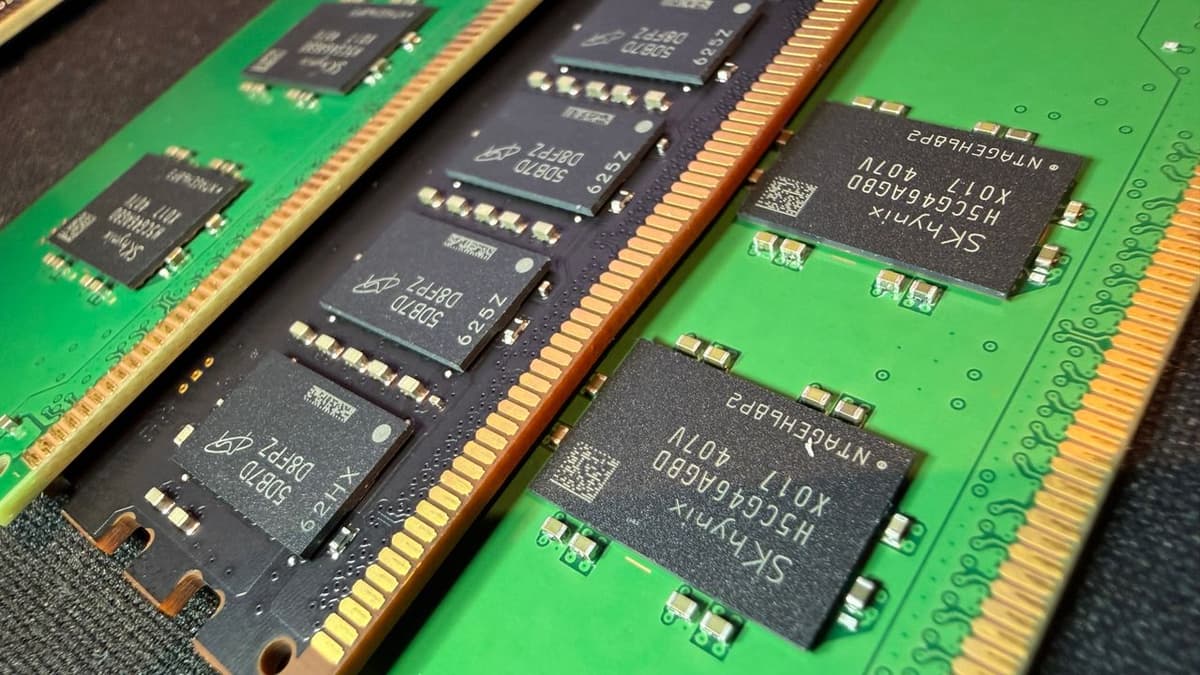
'Regardless of the Type of Offer, Available Capacity Is Essentially Zero Right Now': SK Hynix Is Reportedly Being Swamped with 'Unprecedented' Offers to Secure Memory Chips
Companies Mentioned

Why It Matters
The tight supply threatens revenue growth for hardware manufacturers and could accelerate consolidation in the PC and consumer‑electronics sectors. Securing additional capacity now will shape competitive dynamics through 2028.
Key Takeaways
- •SK Hynix reports near‑zero available memory capacity
- •Big‑tech firms propose hundred‑million‑dollar lithography equipment
- •Long‑term contracts risk locking SK Hynix into lower prices
- •Samsung and Micron also chasing multi‑year supply deals
- •PC‑builder and motherboard sales falling amid chip shortage
Pulse Analysis
The current memory crunch stems from a confluence of soaring demand for high‑performance computing, AI workloads, and data‑center expansion, outpacing the incremental capacity upgrades of the industry’s three major players. SK Hynix, which controls roughly 30% of the global DRAM market, finds itself at the epicenter of this imbalance. Companies are not merely placing orders; they are offering to fund new fab equipment—ultraviolet lithography machines valued in the hundreds of millions—to accelerate production. While such capital injections could relieve short‑term pressure, they also raise strategic questions about control over future technology roadmaps and pricing power.
SK Hynix’s cautious stance on long‑term contracts reflects a broader industry dilemma. Binding agreements that lock in lower pricing may guarantee revenue streams, yet they could erode margins as chip prices stabilize or fall. Samsung and Micron are pursuing similar multi‑year negotiations, suggesting a tacit acknowledgment that securing supply is now as critical as product innovation. For downstream manufacturers—gaming‑PC builders like Maingear, motherboard makers such as MSI and Asus—the uncertainty translates into inventory shortages, delayed product launches, and squeezed profit margins, potentially prompting consolidation or exits from vulnerable market segments.
Looking ahead, the memory supply gap is unlikely to close before 2028, when Micron’s new Taiwan fab is slated to ramp up. In the interim, firms that can negotiate flexible, price‑adjustable contracts or secure strategic equity stakes in capacity‑expansion projects may gain a competitive edge. Investors should monitor SK Hynix’s contract pipeline and capital‑allocation decisions, as they will signal how the memory market will evolve and which players will emerge as the dominant suppliers in the post‑crisis era.
'Regardless of the type of offer, available capacity is essentially zero right now': SK hynix is reportedly being swamped with 'unprecedented' offers to secure memory chips
Comments
Want to join the conversation?
Loading comments...