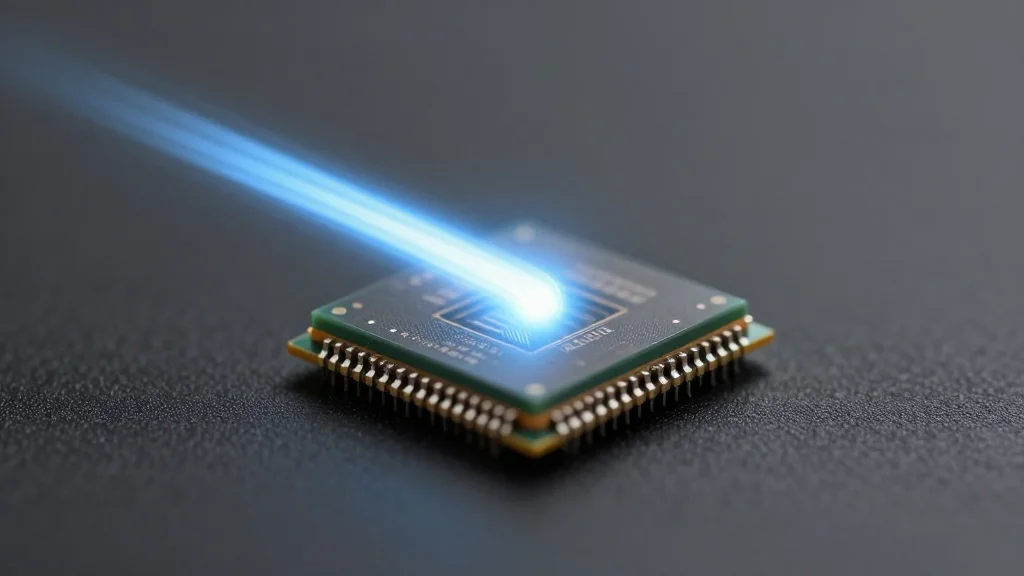
Researchers Built a Switch 1,000 Times Faster than Today's AI Chips, and It Barely Generates Any Heat
Why It Matters
The breakthrough tackles the heat‑power bottleneck of high‑performance computing, offering a path to far more energy‑efficient AI hardware and extending battery life for consumer electronics.
Key Takeaways
- •Magnetic switch operates 1,000× faster than current AI accelerators
- •Uses Mn₃Sn antiferromagnet, achieving picosecond switching
- •Consumes a fraction of energy and produces minimal heat
- •Could reduce data‑center power costs and extend battery life
- •Still requires system‑level integration to boost overall computing speed
Pulse Analysis
The relentless demand for AI inference has driven semiconductor manufacturers to push clock speeds and transistor densities, but the resulting heat and power draw are becoming limiting factors for both data centers and mobile devices. Traditional silicon transistors switch in nanoseconds, and each gigahertz of speed adds measurable thermal load that must be dissipated with expensive cooling infrastructure. As energy costs climb and sustainability targets tighten, the industry is actively seeking alternatives that can break the heat‑power‑performance trade‑off without sacrificing computational throughput.
The University of Tokyo team’s breakthrough hinges on a spintronic switch built from the antiferromagnetic alloy manganese‑tin (Mn₃Sn). By delivering a 40‑picosecond electrical pulse, the device flips its magnetic orientation, representing a binary 0 or 1, at a rate a thousand times faster than the fastest commercial AI accelerators. Because the operation relies on electron spin rather than charge movement, resistive losses are dramatically lower, translating into a fraction of the energy consumption and virtually no temperature rise. This proof‑of‑concept demonstrates that picosecond switching is experimentally viable.
If the technology can be mass‑produced, it promises to reshape the power envelope of future processors, enabling cooler, more energy‑efficient data‑center racks and extending battery life in smartphones and edge AI modules. However, a faster switch alone does not automatically accelerate entire workloads; integration with memory hierarchies, software stacks, and system‑level architectures will be essential. Investors and OEMs are watching closely, as successful commercialization could unlock a new class of ultra‑low‑heat computing platforms within the next five years.
Researchers built a switch 1,000 times faster than today's AI chips, and it barely generates any heat
Comments
Want to join the conversation?
Loading comments...