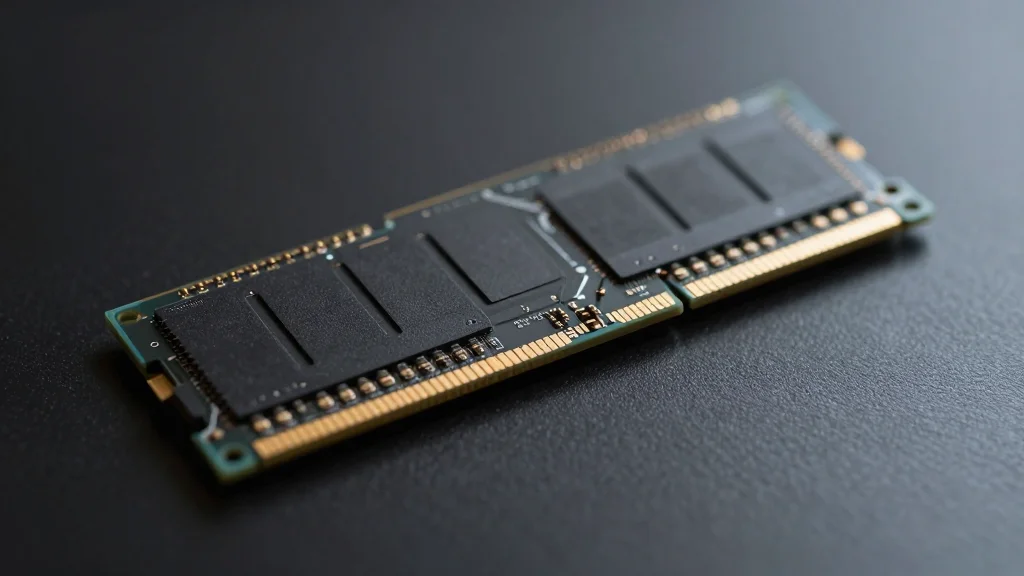
Rethinking System Design Amid the DRAM Crunch
Companies Mentioned
Why It Matters
Rising DRAM costs and supply constraints directly affect AI deployment economics and time‑to‑market, forcing firms to prioritize memory‑efficient designs. This accelerates the move to edge AI and domain‑specific models, reshaping the hardware‑software value chain.
Key Takeaways
- •DRAM prices up 3‑4×, lead times lengthening for high‑capacity modules
- •AI designers shift to low‑memory models to cut BOM by ~$100
- •Edge accelerators enable on‑chip inference, reducing DRAM dependence
- •Smaller domain‑specific models improve latency, power, and supply security
- •Hybrid deployment moves continuous tasks to edge, heavy tasks to cloud
Pulse Analysis
The current DRAM crunch stems from manufacturers channeling production into DDR5 and high‑bandwidth memory (HBM) for data‑center workloads, leaving traditional capacity chips in short supply. Prices for high‑capacity modules have surged three to fourfold compared with a year ago, and even hyperscalers report partial order fulfillment. This supply squeeze is not a fleeting blip; forecasts predict continued scarcity, compelling AI hardware planners to reassess component strategies and cost models.
In response, designers are embracing memory‑efficient architectures. Purpose‑built edge AI accelerators now execute full inference pipelines on‑chip, eliminating the need for external DRAM and shaving up to $100 off the bill‑of‑materials per device. Smaller language and vision models, optimized for 1‑2 GB memory footprints, deliver comparable accuracy for many routine tasks while boosting power efficiency and reliability. By reducing the "memory tax," firms mitigate both price volatility and lead‑time risk, gaining a competitive edge in markets where latency and privacy are paramount.
The broader implication is a hybrid deployment paradigm. Continuous, latency‑critical functions migrate to edge devices equipped with compact, domain‑specific models, while the cloud retains responsibility for heavyweight, infrequent processing. This rebalances performance metrics: memory efficiency, supply‑chain resilience, and total cost of ownership now sit alongside raw compute power. As the DRAM shortage persists, companies that design for constraint rather than abundance will secure more predictable scaling pathways and stronger market positioning.
Rethinking System Design Amid the DRAM Crunch
Comments
Want to join the conversation?
Loading comments...