RISC-V And GPU Synergy In Practice: A Path Towards High-Performance SoCs
Companies Mentioned
Why It Matters
The CPU‑GPU synergy accelerates time‑to‑market for AI‑enabled edge devices, while the open RISC‑V ecosystem lowers design risk and cost for chipmakers.
Key Takeaways
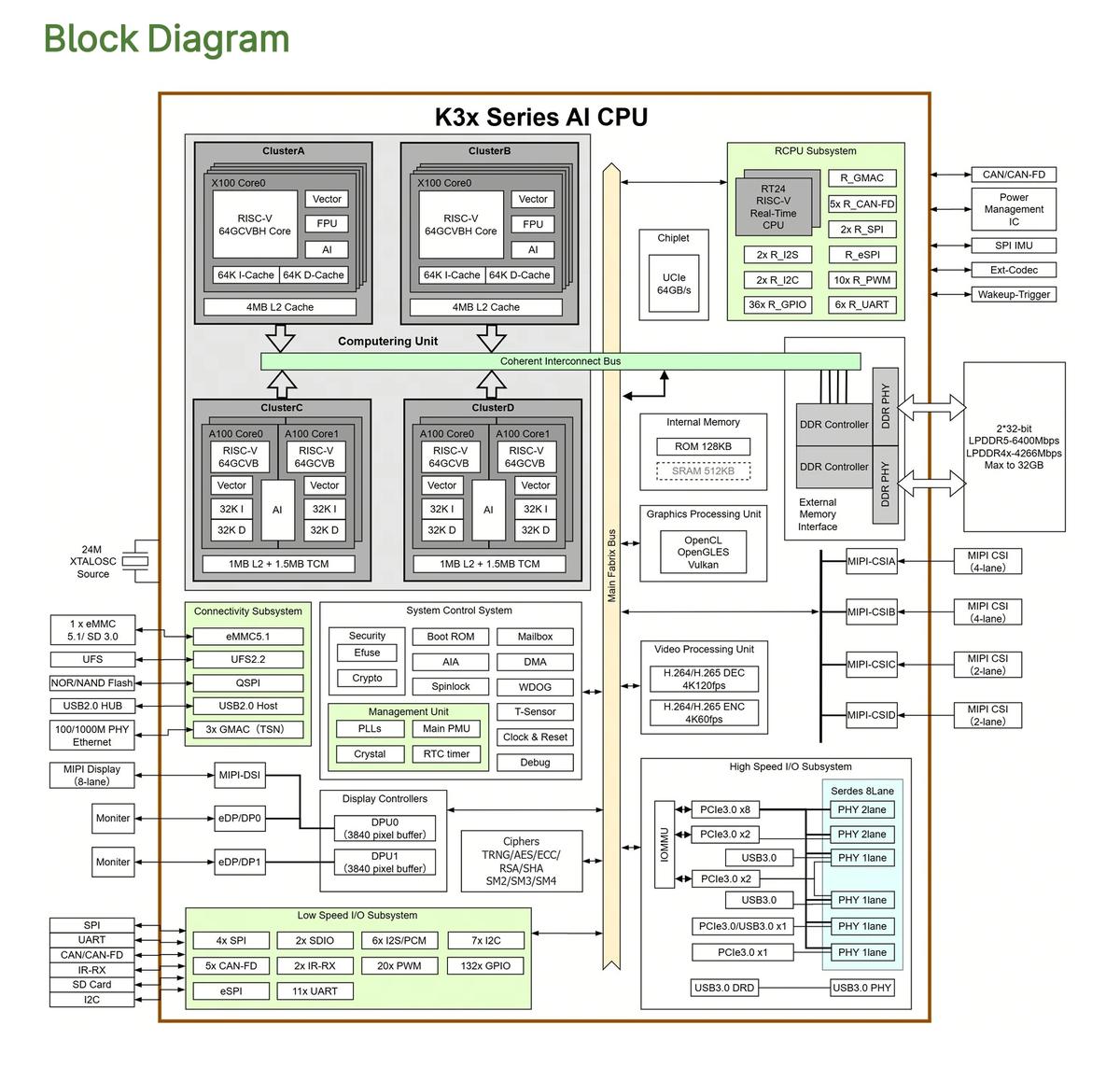
- •SpacemiT K3 runs 2.4 GHz RISC‑V cores delivering ~130 K DMIPS.
- •K3 integrates up to 60 TOPS INT4 AI compute for 30B‑parameter models.
- •Imagination BXM‑4‑64 GPU adds full Linux graphics and Vulkan support.
- •Ubuntu OS available on K3, easing hardware‑software integration for developers.
- •Mature GPU ecosystem reduces design complexity and speeds time‑to‑market.
Pulse Analysis
The open‑source RISC‑V architecture is rapidly maturing from a niche instruction set to a mainstream CPU foundation for heterogeneous SoCs. Chip designers are attracted by its royalty‑free licensing, modular IP, and the ability to customize cores for specific workloads. As edge AI and high‑performance computing demand ever‑greater efficiency, integrating specialized accelerators alongside a flexible CPU becomes essential, positioning RISC‑V as a strategic alternative to traditional x86 and ARM solutions.
Integrating a capable GPU, such as Imagination’s BXM‑4‑64, transforms a RISC‑V SoC from a pure compute engine into a complete platform. The GPU delivers hardware‑accelerated graphics, Vulkan‑compatible compute, and a mature open‑source driver ecosystem that aligns with the RISC‑V software stack. This combination reduces the need for separate display processors, streamlines driver development, and enables developers to deploy full Linux desktop environments or sophisticated visual AI applications on a single chip, thereby shortening development cycles.
Looking ahead, the K3 example signals a broader industry shift toward tightly coupled CPU‑GPU‑AI architectures built on open standards. For semiconductor firms, this means faster time‑to‑market, lower NRE costs, and the ability to differentiate through custom extensions rather than proprietary licensing. Automotive, robotics, and smart‑camera markets stand to benefit from the reduced power envelope and integrated graphics capabilities, while the growing RISC‑V ecosystem promises continued software support and cross‑vendor collaboration, cementing its role in the next generation of high‑performance edge devices.
RISC-V And GPU Synergy In Practice: A Path Towards High-Performance SoCs
Comments
Want to join the conversation?
Loading comments...