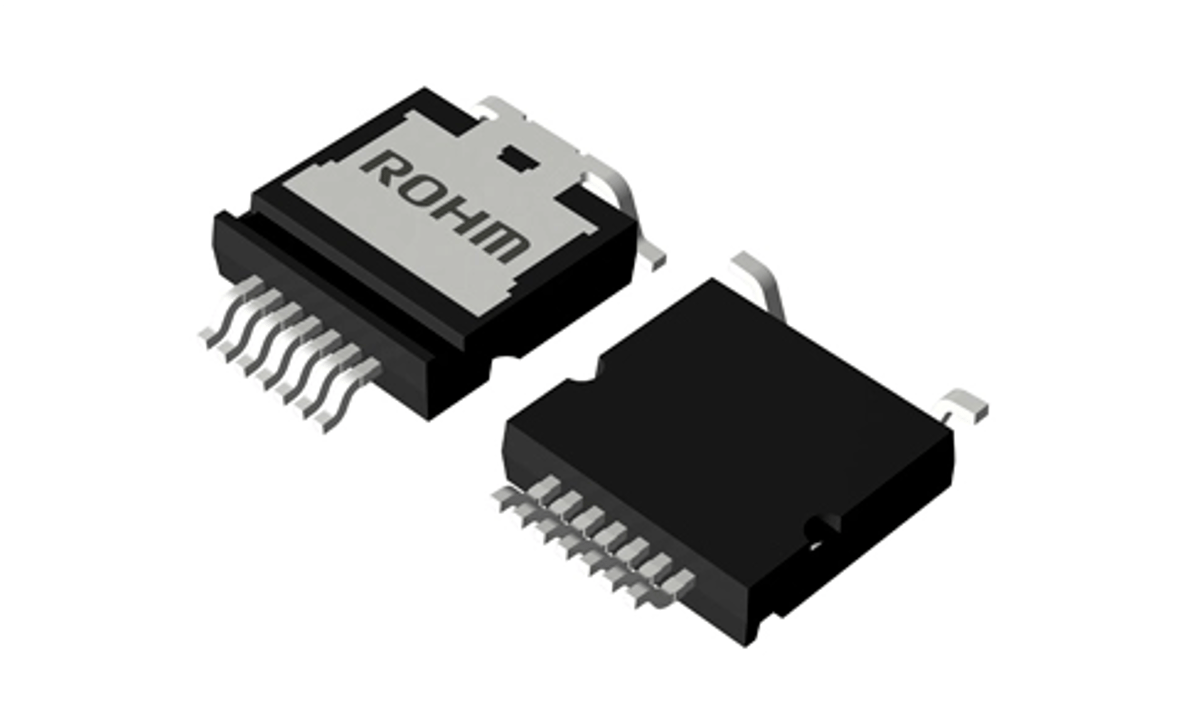
ROHM Launches TSC3PAK Package for SiC MOSFETs Enhancing Heat Dissipation and Reliability
Why It Matters
The package bridges the gap between high‑power SiC performance and automated surface‑mount assembly, lowering system cost while improving reliability for next‑generation electric‑vehicle and industrial power converters.
Key Takeaways
- •TSC3PAK offers TO-247-level heat dissipation in a surface-mount form
- •6.66 mm creepage supports 1200 V peak in Pollution Degree 2
- •4th‑gen SiC MOSFETs cut switching losses, boosting efficiency
- •Mass production started June 2026, with simulation models for rapid design
Pulse Analysis
Silicon‑carbide (SiC) MOSFETs have become the cornerstone of high‑efficiency power conversion, yet their adoption has been hampered by packaging constraints. Traditional through‑hole formats like TO‑247 provide excellent thermal paths but demand manual assembly and larger board real‑estate, limiting scalability in modern electric‑vehicle (EV) platforms that favor surface‑mount technology (SMT). By integrating a top‑side heat‑dissipation structure within a compact 14 × 18.58 × 3.5 mm footprint, ROHM’s TSC3PAK resolves this tension, enabling designers to retain thermal performance while leveraging fully automated SMT lines.
The TSC3PAK’s technical edge lies in its proprietary groove architecture, which creates a class‑leading 6.66 mm creepage distance. This spacing meets the 1,200 V peak rating required for Pollution‑Degree‑2 environments, a critical safety metric for onboard chargers (OBCs) and electric compressors that operate under high voltage stress. Coupled with ROHM’s fourth‑generation SiC devices—characterized by ultra‑low on‑resistance and rapid switching—the package reduces switching losses and improves overall system efficiency. For industrial customers, such as server power supplies and photovoltaic inverters, the combination of high thermal capability and robust insulation translates into longer device lifetimes and tighter form‑factor constraints.
From a market perspective, ROHM’s move signals a strategic push to capture a larger share of the rapidly expanding SiC ecosystem, projected to exceed $10 billion by 2030. By offering ready‑to‑use simulation models, the company shortens the design‑to‑production cycle, a decisive advantage for OEMs racing to meet stricter efficiency standards and cost targets. The TSC3PAK’s launch also pressures competitors to innovate packaging solutions that reconcile high power density with automated assembly, potentially accelerating the broader shift toward SiC‑based power architectures across automotive and industrial sectors.
ROHM launches TSC3PAK package for SiC MOSFETs enhancing heat dissipation and reliability
Comments
Want to join the conversation?
Loading comments...