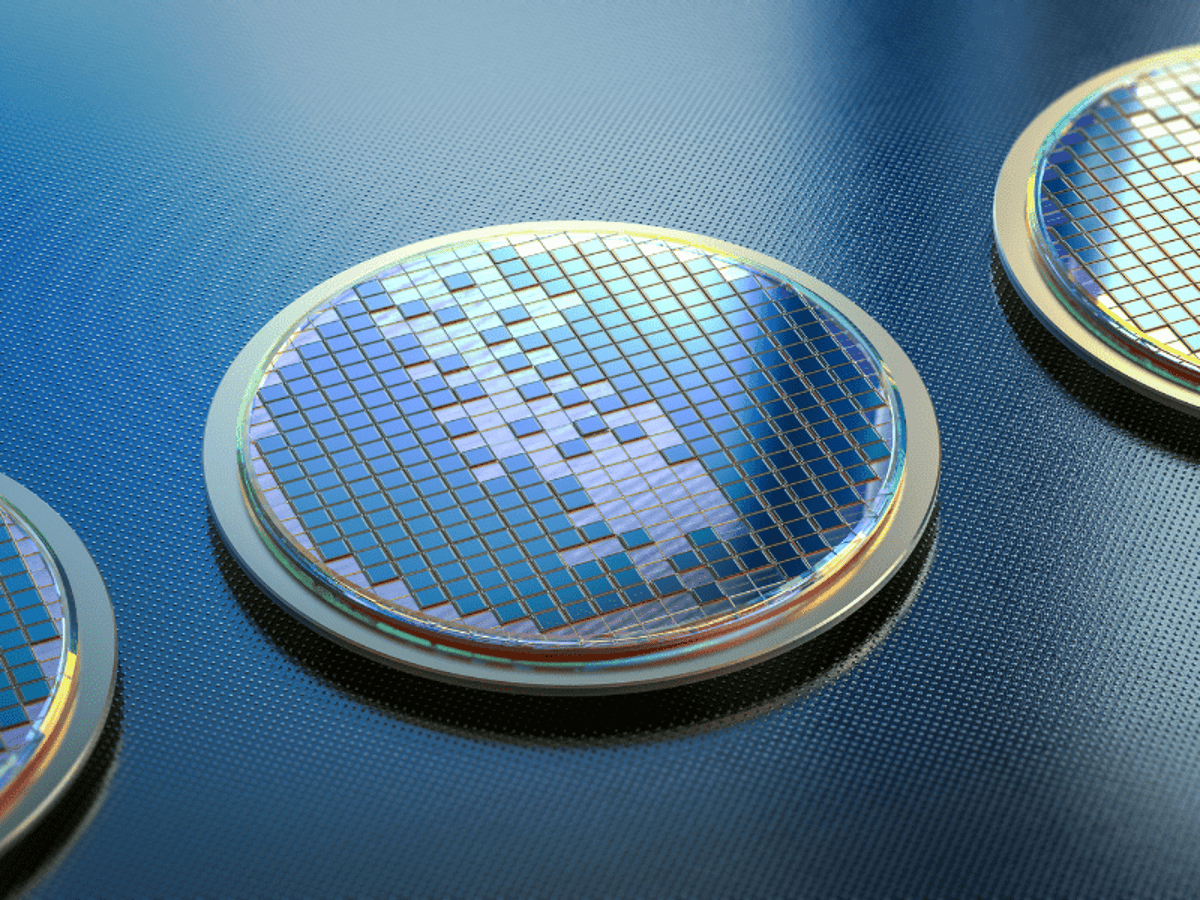
ROHM Semiconductor and AIXTRON Scale GaN Power Production for AI and EV Markets
Companies Mentioned
Why It Matters
In‑house GaN production strengthens ROHM’s supply‑chain resilience and accelerates its ability to meet soaring AI and EV power‑electronics demand, giving it a competitive edge over rivals still reliant on outsourced fabs.
Key Takeaways
- •ROHM will produce 8‑inch GaN wafers in‑house using AIXTRON’s G10 platform.
- •In‑house epitaxy gives ROHM tighter quality control and faster scheduling.
- •650V GaN HEMTs target AI data centers; 100V devices serve AI accelerators.
- •Vertical integration reduces reliance on external foundries amid rising demand.
- •GaN power market projected to hit $3 billion by 2030.
Pulse Analysis
The ROHM‑AIXTRON partnership marks a decisive step toward vertical integration in the compound‑semiconductor arena. By installing AIXTRON’s G10‑GaN platform, ROHM can produce 8‑inch GaN epitaxial wafers directly at its Hamamatsu facility, eliminating a critical bottleneck in its supply chain. This in‑house capability not only improves wafer uniformity and throughput but also enables rapid iteration on process tweaks, giving the Japanese firm a tighter feedback loop between device design and manufacturing.
GaN’s superior power density, thermal performance and switching efficiency make it the material of choice for next‑generation AI accelerators and electric‑vehicle powertrains. ROHM’s 650 V HEMTs are positioned for high‑power data‑center converters, while its 100 V devices address the lower‑voltage, high‑frequency needs of GPU‑driven AI workloads. By controlling epitaxy, ROHM can fine‑tune breakdown voltage and on‑resistance characteristics, delivering devices that outpace silicon in efficiency and size—key factors for reducing energy consumption in massive server farms and lightweight EV chargers.
The broader market outlook reinforces the strategic timing of this move. Analysts forecast the global GaN power‑device market to grow to roughly $3 billion by 2030, driven by AI‑intensive computing and the rapid electrification of transport. Companies that secure reliable, high‑volume GaN supply chains will command premium pricing and faster time‑to‑market. ROHM’s integration with AIXTRON thus not only safeguards its production capacity but also positions it to capture a larger share of a fast‑expanding, high‑margin segment, pressuring competitors still dependent on third‑party foundries to reconsider their own vertical strategies.
ROHM Semiconductor and AIXTRON scale GaN power production for AI and EV markets
Comments
Want to join the conversation?
Loading comments...