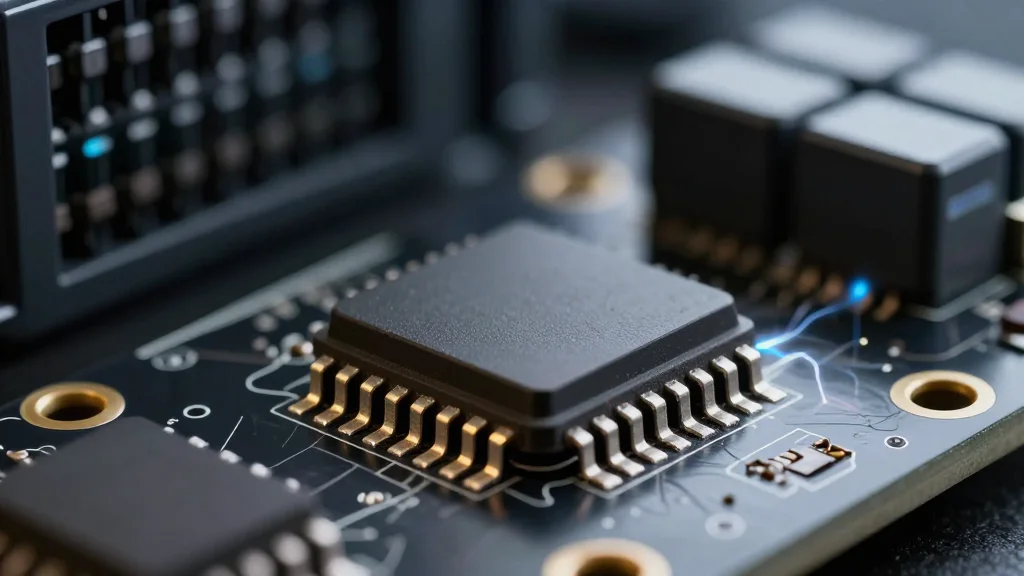
ROHM’s 750V SiC MOSFET Adopted in Battery Backup Unit for AI Servers
Why It Matters
By enabling higher voltage, lower‑loss power delivery, the SiC MOSFET helps AI data centers meet soaring energy demands while improving reliability during outages. This accelerates the transition to HVDC systems, a critical step for scaling generative‑AI workloads cost‑effectively.
Key Takeaways
- •ROHM's SCT4013DLL enables 750 V operation in AI server BBUs
- •SiC MOSFET reduces loss and tolerates up to 175 °C junction temperature
- •HVDC architectures lower transmission losses for high‑power AI data centers
- •560 V battery packs benefit from 750 V‑rated SiC devices
Pulse Analysis
The rapid expansion of generative AI has pushed data‑center power consumption into the megawatt range, prompting designers to abandon traditional low‑voltage AC distribution in favor of high‑voltage direct current (HVDC). HVDC reduces I²R losses across long rack‑to‑rack runs and simplifies power‑conversion stages, but it also demands components that can handle higher stress. Silicon‑carbide (SiC) devices, with their superior bandgap and thermal conductivity, have emerged as the preferred technology for these high‑voltage, high‑efficiency applications.
ROHM's SCT4013DLL exemplifies the next generation of SiC power transistors tailored for AI server BBUs. Rated at 750 V and capable of withstanding junction temperatures of 175 °C, the MOSFET fits within a ±400 V power architecture while providing the headroom needed for emerging 800 VDC designs where battery packs sit near 560 V. Its low on‑resistance and fast switching minimize conversion loss, ensuring that backup power can be delivered instantly during grid disturbances without overheating the compact BBU enclosure.
The adoption of this SiC MOSFET signals a broader market trend: AI‑focused OEMs are standardizing on HVDC platforms to improve energy efficiency and reduce total cost of ownership. As more server manufacturers integrate SiC‑based BBUs, supply chains for wide‑bandgap semiconductors are expected to tighten, potentially driving further innovation and price reductions. Companies that can deliver reliable, high‑temperature SiC solutions will likely secure a strategic advantage in the burgeoning AI infrastructure ecosystem.
ROHM’s 750V SiC MOSFET adopted in battery backup unit for AI servers
Comments
Want to join the conversation?
Loading comments...