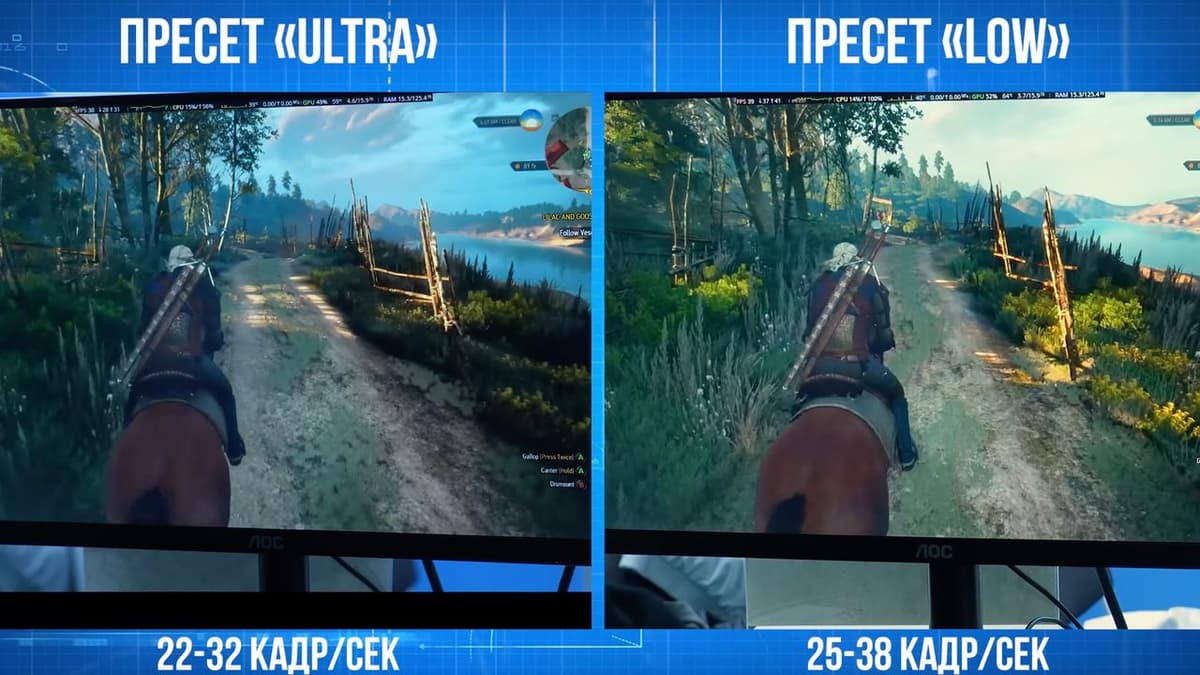
Russian-Chinese Irtysh 32-Core CPU Runs The Witcher 3 at 30+ FPS — Heavyweight Chip Still Imposes CPU Bottleneck Despite Impressive Specs
Why It Matters
The demonstration highlights both Russia’s drive for technological independence and the practical limitations of sanction‑driven alternatives, signaling challenges for broader adoption in gaming and enterprise workloads.
Key Takeaways
- •Irtysh C632 delivers 22‑32 FPS on ultra settings at 1080p.
- •Processor uses LoongArch LA664 cores licensed from China’s Loongson.
- •Lack of x86 support forces Linux + Box64/Proton, adding overhead.
- •CPU bottleneck persists despite 32 cores and 2.1 GHz clock.
- •Sanctions drive Russia to rebrand Loongson chips, limiting ecosystem maturity.
Pulse Analysis
Sanctions have forced Russia to look east for a replacement to the x86 CPUs that dominate its data‑center and consumer markets. By licensing Loongson’s LoongArch LA664 architecture, Springboard Electronics introduced the Irtysh series, positioning them as a domestic alternative that can theoretically match AMD Zen 3 and Intel Ice Lake performance. The partnership underscores a broader geopolitical shift where Chinese semiconductor IP becomes a strategic export, enabling Russia to assemble its own chips without violating export controls.
In practice, the Irtysh C632’s gaming test reveals a stark performance gap. Running *The Witcher 3* at 1080p, the 32‑core chip produced only 22‑32 FPS on ultra settings, a fraction of the 100+ FPS achievable on mainstream Intel or AMD platforms with the same Radeon RX 9600 XT GPU. The bottleneck stems from both the modest 2.1 GHz clock and the overhead of Linux‑only operation, which relies on Box64 and Steam Proton to translate Windows binaries. These compatibility layers erode efficiency, making the processor unsuitable for high‑end gaming or latency‑sensitive workloads.
The broader implication is twofold. First, Russia’s push for a sovereign chip ecosystem may succeed in political terms but faces an uphill battle in performance and software support, limiting its appeal to niche or government‑only environments. Second, the exposure of LoongArch to a wider market could accelerate its maturation, especially if Chinese partners continue to refine the architecture. For global chipmakers, the Irtysh saga serves as a reminder that sanctions can spur alternative supply chains, yet technical parity remains the decisive factor for adoption across the industry.
Russian-Chinese Irtysh 32-core CPU runs The Witcher 3 at 30+ FPS — heavyweight chip still imposes CPU bottleneck despite impressive specs
Comments
Want to join the conversation?
Loading comments...