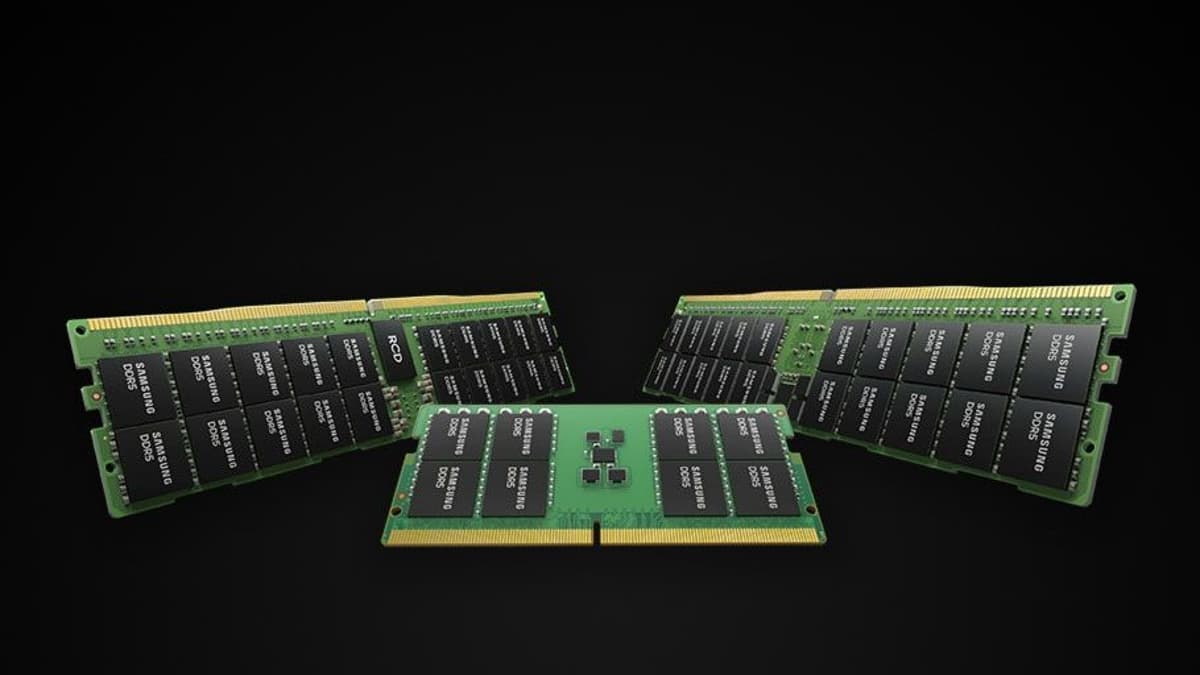
Samsung and SK Hynix Warn AI-Driven Memory Shortages Could Last Until 2027 and Beyond, as HBM Demand Explodes — Customers Already Reserving Supply Years Ahead, While the Wider DRAM Market Begins to Tighten
Companies Mentioned
Why It Matters
Extended memory scarcity could throttle AI data‑center growth and push server costs higher, while reinforcing Samsung and SK Hynix’s pricing leverage in the DRAM market.
Key Takeaways
- •HBM demand drives multi‑year memory shortages through 2027
- •Samsung and SK Hynix control >90% of global DRAM market
- •Customers pre‑booked memory allocations up to 2027
- •AI‑related memory shortages may tighten conventional DRAM supply
- •Record operating profits: Samsung $36.1B, SK Hynix $27.8B Q1 2026
Pulse Analysis
The surge in artificial‑intelligence workloads has turned high‑bandwidth memory into a bottleneck for the semiconductor industry. HBM’s stacked architecture delivers the bandwidth needed for modern GPUs and accelerators, but its complex manufacturing process limits output. As AI models grow in size and inference workloads multiply, data‑center operators are locking in supply through multi‑year contracts, effectively pulling capacity away from traditional DRAM lines. This dynamic explains why Samsung and SK Hynix, which together dominate more than 90% of global DRAM, are issuing scarcity warnings that extend to 2027 and possibly 2030.
Beyond the immediate crunch, the ripple effects are reshaping the broader memory market. With manufacturers reallocating wafer and packaging resources toward higher‑margin HBM, conventional DRAM for servers, PCs, and mobile devices faces tighter availability and rising prices. Enterprises may see cost pressures not only in compute but also in storage, as AI‑driven data centers demand larger SSD capacities. In response, firms are accelerating capital expenditures—Samsung’s Xi’an plant received a 67.5% YoY boost, and SK Hynix poured over $1 billion into its Wuxi and Dalian sites—but such facilities require years to reach full throughput, leaving a supply gap in the near term.
Strategically, the prolonged shortage could cement the market power of the incumbent trio—Samsung, SK Hynix, and Micron—while opening opportunities for alternative memory technologies. Emerging solutions like 3D X‑DRAM and Z‑Angle Memory aim to lower power consumption and improve scalability, yet they remain in early development stages. For investors and data‑center planners, the key takeaway is to anticipate higher memory pricing, factor longer lead times into capacity planning, and monitor the rollout of next‑generation memory as a potential hedge against the ongoing AI‑driven demand surge.
Samsung and SK hynix warn AI-driven memory shortages could last until 2027 and beyond, as HBM demand explodes — customers already reserving supply years ahead, while the wider DRAM market begins to tighten
Comments
Want to join the conversation?
Loading comments...