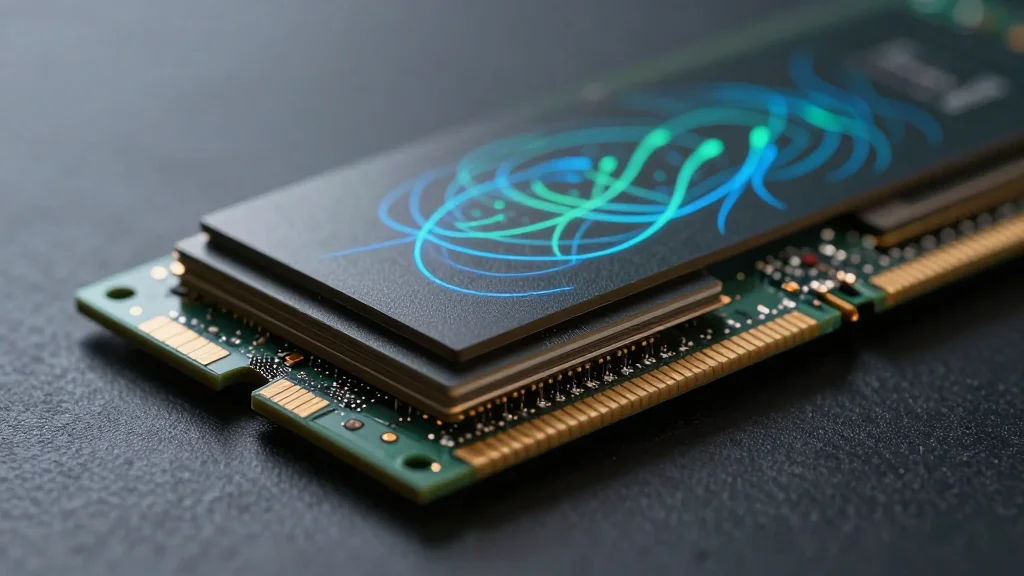
Samsung Devotes Over Half of Pyeongtaek Foundry to HBM4 Base Dies, Secures OpenAI Supply Deal

Why It Matters
Samsung’s reallocation of more than half of its Pyeongtaek capacity to HBM4 base dies signals a decisive bet on AI‑centric memory, a segment that commands higher margins and faster growth than conventional server DRAM. By securing a contract with OpenAI, Samsung not only diversifies its customer base beyond NVIDIA and AMD but also embeds itself in the supply chain of one of the most influential AI research organizations, potentially locking in long‑term demand for future Titan generations. The move also highlights a structural shift in the semiconductor ecosystem: memory manufacturers are increasingly leveraging advanced logic nodes to produce specialized components, blurring the line between memory and foundry businesses. This convergence could accelerate innovation cycles for AI accelerators, but it also raises questions about capacity constraints and the ability of foundries to balance competing workloads across a rapidly expanding AI market.
Key Takeaways
- •Samsung allocates >50% of Pyeongtaek’s 30,000‑wafer/month capacity to HBM4 base dies.
- •Utilization on HBM4 lines has reportedly exceeded 90% as internal orders surge.
- •Samsung’s 2026 HBM4 output projected at >5.5 billion gigabits, with OpenAI ranking third in volume.
- •Server DRAM prices rose ~100% QoQ since H2 2025, prompting the strategic shift to HBM4.
- •OpenAI’s Titan chip, co‑designed with Broadcom, will use Samsung‑supplied HBM4 starting H2 2026.
Pulse Analysis
Samsung’s decision to devote a majority of its flagship Pyeongtaek foundry to HBM4 base dies is more than a capacity tweak; it is a strategic repositioning that aligns the company with the high‑growth AI memory segment. Historically, Samsung’s memory division handled both DRAM and HBM production, but the migration of HBM4 to the foundry arm leverages the 4 nm process, delivering better power efficiency and higher performance—attributes that AI chip designers prize. This internal realignment also mitigates the risk of under‑utilized capacity that has plagued the foundry business amid a slowdown in traditional server DRAM demand.
The OpenAI contract, while still reported as a rumor, could be a game‑changer. OpenAI’s Titan chip is expected to be a reference design for a new class of AI workloads that prioritize bandwidth over raw compute. By becoming the exclusive HBM4 supplier, Samsung not only secures a high‑visibility customer but also gains a foothold in the ecosystem of custom AI silicon, where design wins often translate into multi‑year supply agreements. Competitors such as TSMC and Intel will need to respond, either by accelerating their own HBM roadmaps or by courting other AI startups.
Looking forward, Samsung must balance the aggressive scaling of HBM4 with the need to keep its broader foundry portfolio flexible. If AI demand continues its exponential trajectory, the company could see its foundry utilization climb well above 95%, but any slowdown or supply chain disruption could expose the risks of over‑concentration. Investors will watch Samsung’s quarterly capacity reports closely, as they will reveal whether the HBM4 bet delivers the anticipated premium margins and whether the partnership with OpenAI evolves into a longer‑term supply relationship that could shape the next generation of AI hardware.
Samsung Devotes Over Half of Pyeongtaek Foundry to HBM4 Base Dies, Secures OpenAI Supply Deal
Comments
Want to join the conversation?
Loading comments...