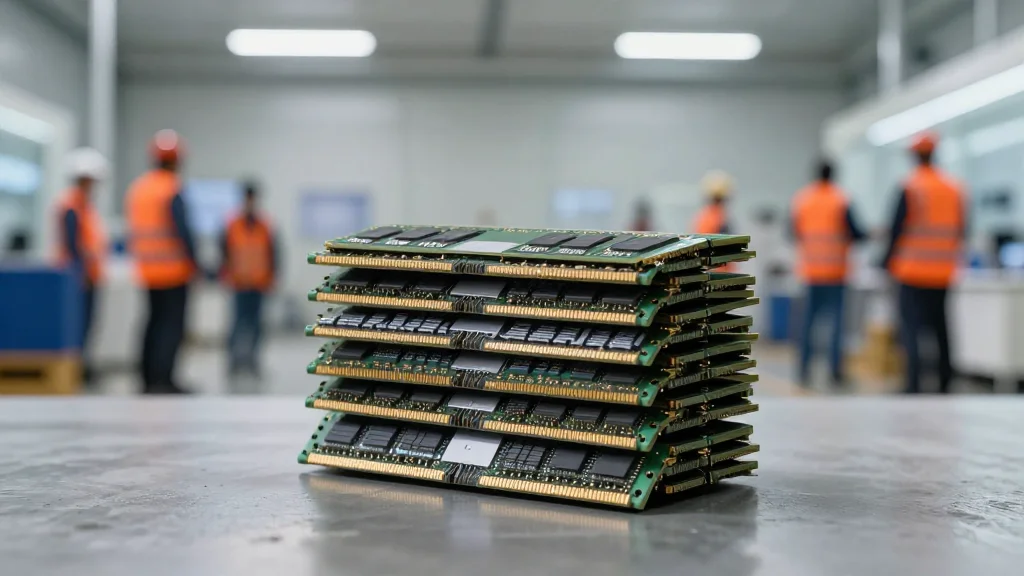
Samsung Labor Rally Threatens Global RAM Supply as Workers Demand 15% Profit Share

Companies Mentioned
Why It Matters
The Samsung labor dispute sits at the intersection of two critical trends: soaring AI‑driven demand for high‑bandwidth memory and rising labor activism in South Korea’s tech sector. A production slowdown at Samsung would tighten an already scarce DRAM supply, pushing up costs for cloud providers, server OEMs, and ultimately end‑users of AI‑enabled devices. Moreover, the outcome will set a precedent for how memory‑chip makers balance profit‑sharing with competitive compensation, influencing talent retention across the industry. If Samsung concedes to the union’s demands, it could narrow the compensation gap with SK Hynix, potentially stabilizing its workforce but also raising operating costs. Conversely, a stalemate could trigger a strike that amplifies price volatility in the DRAM market, prompting customers to seek alternative suppliers or redesign systems to use less memory, thereby reshaping the AI hardware ecosystem.
Key Takeaways
- •Samsung’s labor union demands 15% of operating profit (~$27 billion) for memory‑chip workers.
- •Union threatens an 18‑day strike starting May 21 if demands are not met.
- •AI data centers now consume ~70% of high‑end memory chips, tightening supply.
- •SK Hynix’s recent bonus reforms (≈$400,000 per employee) fuel Samsung workers’ grievances.
- •Potential strike could push DRAM prices higher and delay AI hardware deployments.
Pulse Analysis
Samsung’s labor unrest is more than a local HR issue; it is a flashpoint for the global AI hardware supply chain. The company’s memory‑chip division accounts for a sizable share of worldwide DRAM output, and any production dip reverberates through cloud providers, OEMs, and end‑users. Historically, labor actions in South Korea have been short‑lived, but the scale of this protest—tens of thousands of workers—suggests a new level of organization and bargaining power, driven by the dramatic profit spikes from AI workloads.
From a competitive standpoint, Samsung’s reluctance to match SK Hynix’s bonus structure reflects a broader industry tension: balancing cost discipline with the need to retain top talent in a capital‑intensive, technology‑driven market. If Samsung yields, it may set a new compensation benchmark that could compress margins across the memory sector, forcing firms to innovate on cost efficiencies or shift focus to higher‑margin products like HBM4. If negotiations fail, the resulting supply shock could accelerate the diversification of memory sourcing, prompting customers to hedge against single‑source risk by increasing inventory buffers or exploring alternative technologies such as emerging non‑volatile memory.
Looking ahead, the resolution of this dispute will likely influence investor sentiment toward the broader semiconductor space. A swift settlement could reassure markets that supply constraints are manageable, supporting a continued rally in AI‑related equities. Conversely, a protracted strike would underscore the fragility of the supply chain, potentially prompting regulatory scrutiny over labor practices in critical tech sectors. Stakeholders should monitor Samsung’s negotiation timeline closely, as the outcome will shape both the pricing dynamics of DRAM and the strategic posture of AI hardware manufacturers worldwide.
Samsung Labor Rally Threatens Global RAM Supply as Workers Demand 15% Profit Share
Comments
Want to join the conversation?
Loading comments...