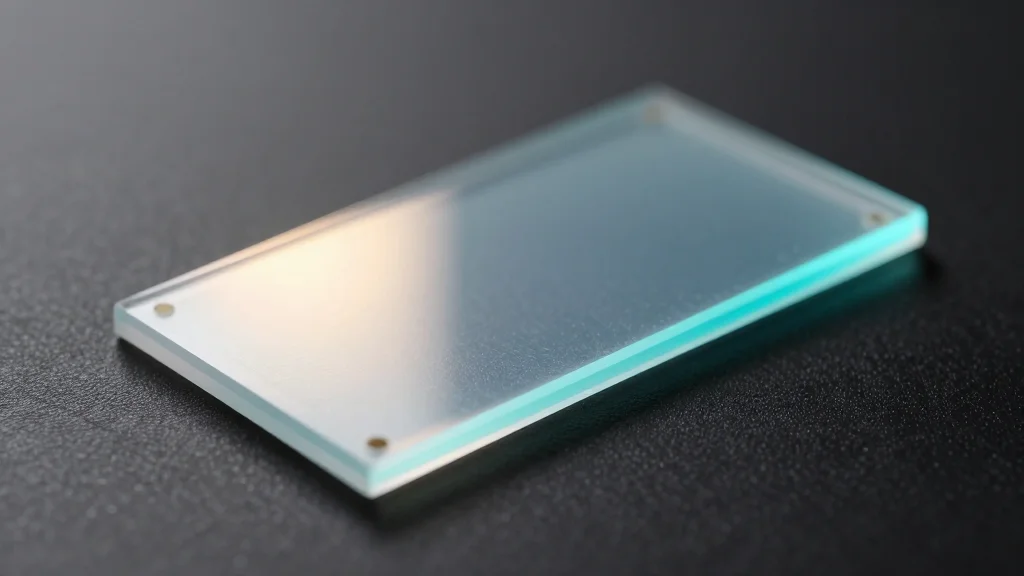
Self-Charging Perovskite Display Prototype Hits 26.7% Solar Efficiency

Why It Matters
Self‑charging displays could reshape power budgeting across the consumer electronics ecosystem. By harvesting ambient light, devices could reduce reliance on large batteries, enabling thinner form factors and longer usage cycles for smartphones, smart watches, and low‑power IoT panels. Moreover, the low‑temperature, solution‑based fabrication of perovskites opens the door to flexible and transparent screens, expanding design possibilities for wearables and automotive interiors. Beyond consumer gadgets, the technology offers a route to truly autonomous sensor networks that operate indefinitely without external power. In remote or hard‑to‑reach environments, a display that powers itself from room light could support status dashboards, safety indicators, or edge‑AI interfaces without the logistical burden of battery replacement.
Key Takeaways
- •Dual‑function perovskite diode reaches 26.7% certified solar efficiency and ~31% LED external quantum efficiency.
- •Porous alumina islands (e‑Al₂O₃) of ~5 µm × 0.5 µm are embedded via electrostatic assembly to reconcile thickness mismatches.
- •LED layer thickness requirement (~50 nm) and solar cell thickness (~800 nm) are simultaneously satisfied in one architecture.
- •Potential to reduce display power consumption by harvesting indoor lighting, extending battery life for mobile devices.
- •Researchers aim to demonstrate a full‑color, roll‑to‑roll printable panel within 12‑18 months.
Pulse Analysis
The perovskite dual‑function diode represents a convergence of two previously divergent research streams—high‑efficiency LEDs and solar cells—into a single hardware platform. Historically, the hardware community has treated energy harvesting and display emission as mutually exclusive, largely because the optical and electrical design constraints conflict. By introducing a porous alumina scaffold that simultaneously lowers the effective refractive index and preserves charge mobility, the team has engineered a material system that sidesteps the classic trade‑off. This is a classic example of hardware innovation driven by materials science: the breakthrough does not rely on new circuit architectures or software algorithms, but on a clever re‑thinking of the semiconductor’s physical geometry.
From a market perspective, the timing aligns with a broader industry push toward ultra‑low‑power devices. Smartphone manufacturers are already exploring under‑display fingerprint sensors and micro‑LEDs; a self‑charging screen could be the next logical step in the power‑saving hierarchy. However, commercialization will hinge on two practical challenges: large‑area uniformity of the e‑Al₂O₃ islands and long‑term stability of perovskite under continuous illumination and thermal cycling. The latter has been a persistent pain point for perovskite solar cells, where encapsulation strategies are still evolving. If the research team can demonstrate that their architecture tolerates real‑world stressors, supply‑chain partners may accelerate adoption, especially in emerging markets where cost sensitivity is paramount.
Strategically, the breakthrough could force incumbent display manufacturers—OLED and LCD leaders—to reassess their roadmap. While OLEDs already offer high contrast and flexibility, they still draw power from the battery. A perovskite‑based display that can partially offset its own consumption would create a new value proposition: longer battery life without sacrificing visual performance. In the longer term, the technology could enable truly autonomous edge devices, where the display, sensor, and processor all draw from a single, ambient‑light‑harvested power budget, redefining the hardware economics of the Internet of Things.
Self-Charging Perovskite Display Prototype Hits 26.7% Solar Efficiency
Comments
Want to join the conversation?
Loading comments...