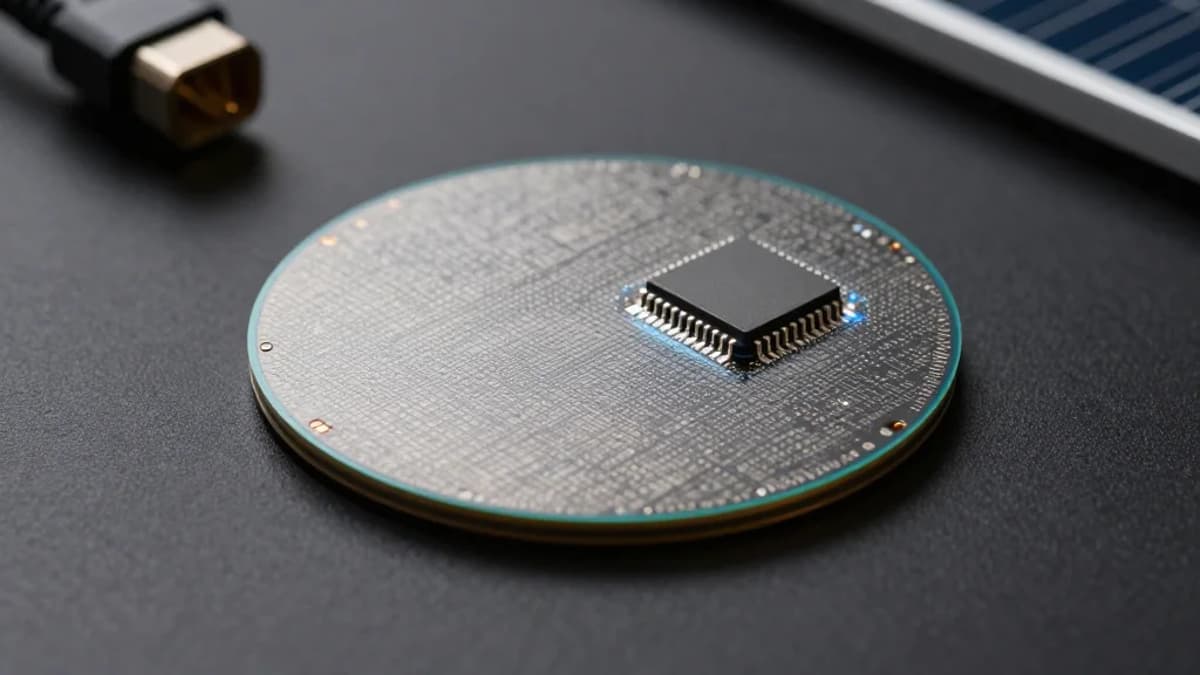
SemiQ Partners with Distributor NAC Semi Across North America
Why It Matters
By coupling SemiQ’s rugged SiC devices with NAC Semi’s technical support network, the alliance shortens time‑to‑market for high‑power solutions, strengthening North America’s competitive edge in EV and renewable‑energy infrastructure.
Key Takeaways
- •SemiQ adds 150 mm SiC wafers to NAC’s catalog
- •Distribution covers EV chargers, solar inverters, high‑voltage supplies
- •NAC provides field‑application engineering support for SemiQ products
- •Partnership speeds North American SiC market penetration
- •Customers gain single‑source SiC power solutions
Pulse Analysis
Silicon‑carbide is rapidly emerging as the material of choice for high‑efficiency power conversion, thanks to its superior thermal conductivity and lower switching losses compared with silicon. SemiQ’s portfolio, which includes 150 mm epitaxial wafers and rugged MOSFETs, addresses the performance demands of electric‑vehicle chargers, utility‑scale solar inverters and industrial power supplies. By aligning with NAC Semi, SemiQ taps into a distribution model that blends catalog convenience with the deep technical expertise traditionally reserved for larger distributors, effectively bridging a gap that has slowed SiC adoption in many design houses.
NAC Semi’s “demand‑creation” approach goes beyond simple parts stocking; the firm embeds field‑application engineers (FAEs) within customer projects to co‑design solutions and accelerate qualification cycles. This hands‑on support is especially valuable in the SiC space, where designers often face steep learning curves around device thermal management and gate‑drive optimization. The partnership therefore promises faster design iterations, reduced engineering risk, and a more predictable supply chain for high‑volume manufacturers targeting the burgeoning EV charging network and renewable‑energy sectors.
The broader market implication is a potential shift in North American power‑electronics supply dynamics. As OEMs and OEM‑level suppliers race to meet stricter efficiency standards and carbon‑reduction mandates, ready access to reliable SiC components becomes a strategic advantage. SemiQ’s collaboration with NAC Semi not only expands its geographic footprint but also signals confidence in the scalability of its technology. Stakeholders can expect heightened competition among SiC vendors, faster price reductions, and a cascade of innovation in high‑voltage applications across the continent.
SemiQ partners with distributor NAC Semi across North America


Comments
Want to join the conversation?
Loading comments...