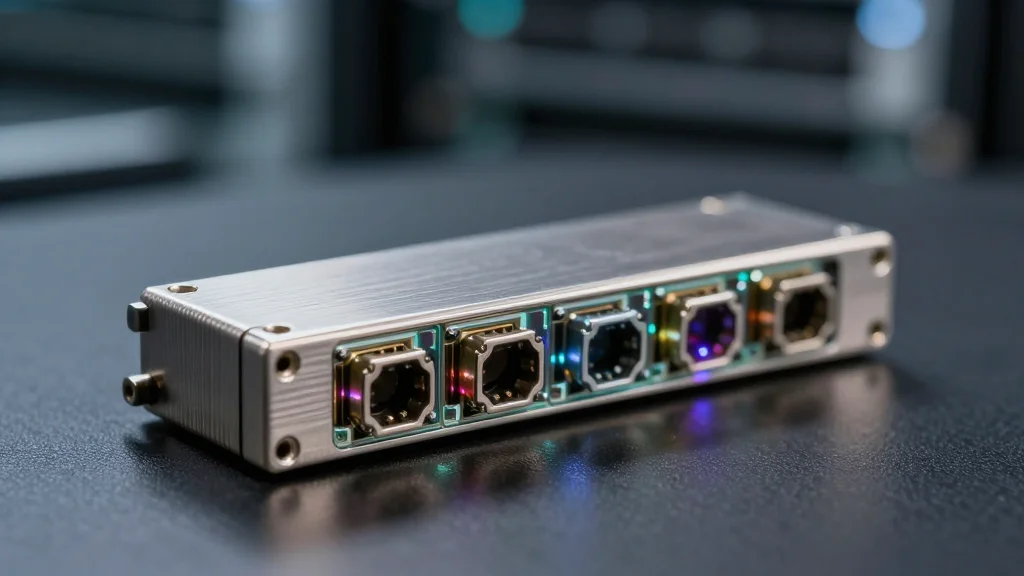
Seoul Viosys Targets $60B AI Data Center Optical Communications Market
Why It Matters
The shift from copper to optical interconnects is critical for AI‑driven data centers, and Seoul Viosys’ integrated transceiver approach could accelerate adoption while its patent moat protects market entry. Success would reshape supply chains and create new revenue streams in a high‑growth sector.
Key Takeaways
- •Seoul Viosys aims at $60 B AI data‑center optical market
- •Proprietary “No‑wire/No‑package” patents enable 1 µm photonic devices
- •Expanding from VCSEL components to full transceiver solutions
- •Engaged with two global interconnect leaders for joint development
- •Holds ~1,800 micro‑opto patents, creating strong barrier to entry
Pulse Analysis
AI‑driven workloads are pushing data‑center bandwidth requirements beyond the limits of traditional copper interconnects, prompting a rapid migration to optical solutions. Analysts estimate the AI‑focused optical communications market could exceed $60 billion by the early 2030s, driven by demand for low‑latency, high‑throughput links in hyperscale facilities. This transition not only reduces power consumption but also enables denser server architectures, making optical transceivers a strategic commodity for cloud providers and enterprise IT alike.
Seoul Viosys differentiates itself through its "No‑wire/No‑package" (WICOP) technology, which eliminates conventional bonding and packaging steps, boosting light‑extraction efficiency and thermal performance at micrometer scales. Backed by roughly 5,000 opto‑semiconductor patents—including about 1,800 micro‑opto patents—the firm can produce 1 µm‑class VCSEL and micro‑LED devices that meet 100 G (25 G×4) standards. Its long‑standing collaboration with UCSB’s Nobel‑winning photonics team has yielded ultra‑small devices, positioning Seoul Viosys to supply not just components but end‑to‑end transceiver modules that integrate drivers, packaging, and optical engines.
The company’s business model is evolving from component sales to a full‑solution provider, leveraging strategic alliances with two global data‑interconnect leaders and exploring joint ventures across the United States, Japan, and emerging markets like India. While operating losses persist, sustained multi‑tens‑of‑millions‑dollar R&D spend underscores a commitment to capture market share before competitors can close the patent gap. If Seoul Viosys secures OEM contracts, it could reshape the optical supply chain, generate recurring revenue, and solidify its role in the next wave of AI‑centric data‑center infrastructure.
Seoul Viosys Targets $60B AI Data Center Optical Communications Market
Comments
Want to join the conversation?
Loading comments...