Servers Don’t Fail Randomly: The Structural Causes Behind Large Scale Hardware Incidents
Why It Matters
Understanding these systemic risk vectors lets operators prevent costly, large‑scale outages and protect service continuity, a critical competitive advantage for cloud and enterprise providers.
Key Takeaways
- •Firmware and BIOS updates can trigger fleet‑wide outages
- •Power transition testing is often omitted despite being a major risk
- •PCIe link marginality leads to cascading failures under load
- •Validation must include long‑term stress and recovery scenarios
- •Uniform server configurations amplify systemic defects
Pulse Analysis
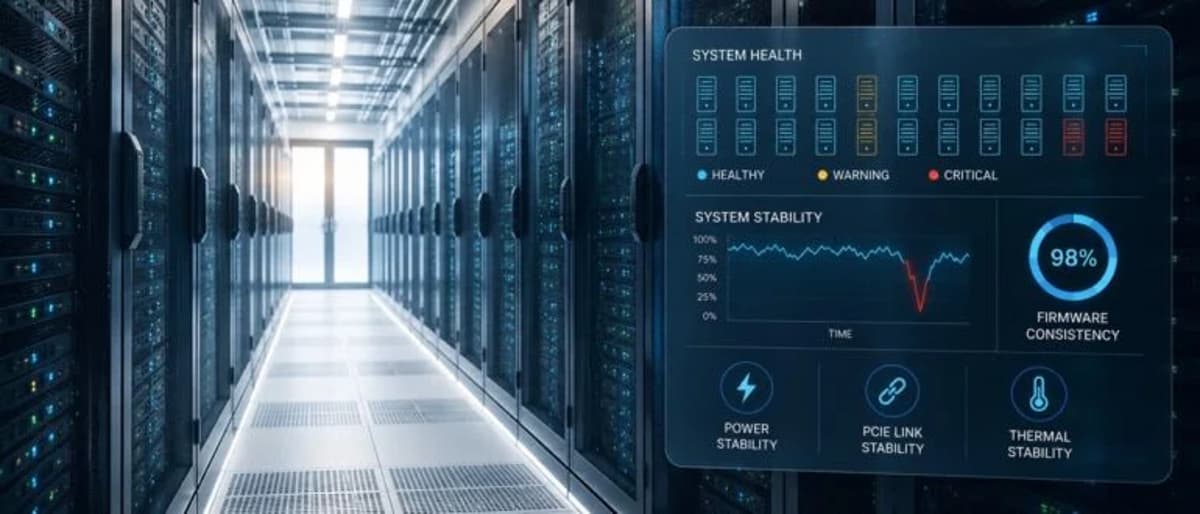
The shift from component‑level failures to platform‑wide incidents reflects how modern servers rely on tightly coupled firmware, power, and I/O subsystems. A bad BIOS tweak or a marginal PCIe timing change can propagate across thousands of identical machines, turning a minor bug into a data‑center‑wide disruption. This structural vulnerability challenges traditional reliability models that assumed independent, isolated component wear and tear.
To mitigate these risks, validation pipelines must move beyond “boots and passes” checklists. Engineers need to simulate repeated power cycles, large‑scale firmware rollbacks, and sustained PCIe stress under realistic workloads. Observability‑driven testing that captures performance drift, error‑correction trends, and thermal throttling provides early warning of silent degradation before it manifests as an outage. Incorporating recovery path verification ensures that systems can rebound gracefully during peak demand.
For operators, the business impact is stark: a single undetected firmware defect can halt services for thousands of customers, erode trust, and incur millions in downtime costs. By adopting risk‑focused validation—continuous coverage, diversified stress scenarios, and explicit recovery testing—organizations can dramatically reduce outage frequency, improve mean‑time‑to‑recovery, and safeguard revenue streams. Companies that invest in these practices gain a competitive edge in an increasingly reliability‑driven market.
Servers Don’t Fail Randomly: The Structural Causes Behind Large Scale Hardware Incidents
Comments
Want to join the conversation?
Loading comments...