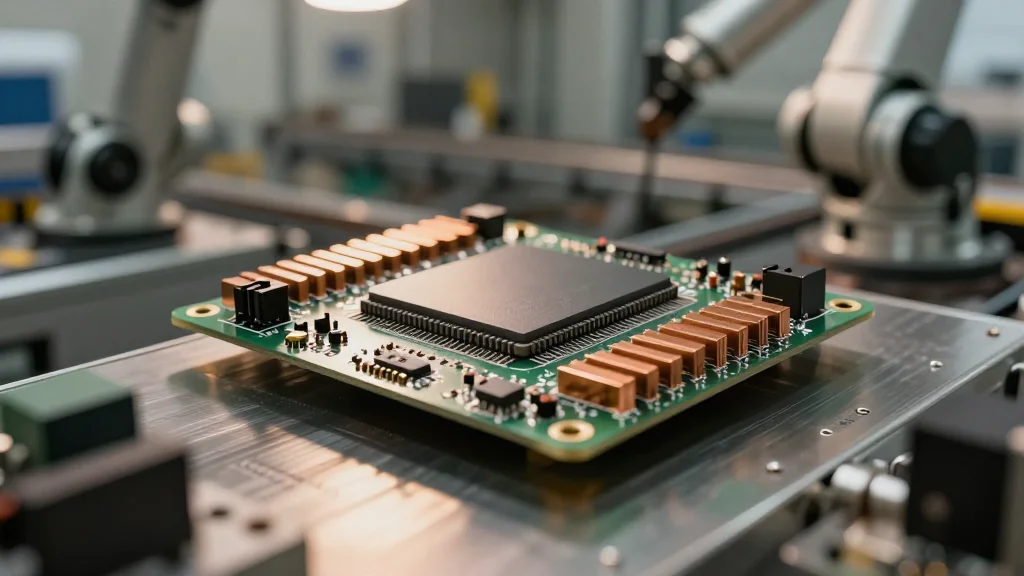
Silicon Choices Grow in Importance as Industrial AI Moves Closer to the Factory Floor
Why It Matters
Edge‑focused silicon and lifecycle‑aware software unlock faster defect detection, lower bandwidth costs, and higher operational uptime, giving manufacturers a competitive edge.
Key Takeaways
- •Edge AI reduces latency, enabling real‑time defect detection
- •Power‑efficient silicon essential for always‑on industrial inference
- •Longevity and stable software support outweigh peak performance
- •Heterogeneous processors handle vision, audio, vibration workloads
- •Secure, lifecycle‑managed updates prevent model drift on factory floor
Pulse Analysis
Manufacturers are no longer comfortable sending raw sensor streams to distant data centers for analysis. The need for millisecond‑level decisions in quality inspection, predictive maintenance, and safety monitoring forces AI inference onto the edge, where the data originates. By processing vision, audio, and vibration inputs locally, factories cut bandwidth expenses, reduce exposure to cyber‑threats, and meet deterministic latency requirements that cloud round‑trips cannot satisfy. This architectural shift also enables hybrid models, where the edge handles immediate actions while the cloud aggregates insights for long‑term optimization.
The hardware underpinning this transformation must prioritize sustained performance per watt rather than peak teraflops. Industrial equipment runs continuously for years, so silicon that delivers consistent compute within tight power envelopes and offers long‑term availability is paramount. Heterogeneous platforms—combining CPUs, GPUs, DSPs, and dedicated AI accelerators—provide the flexibility to handle multimodal workloads such as high‑resolution vision and low‑power vibration analysis on a single board. Open, modular edge AI solutions further simplify integration, allowing system designers to tailor compute resources to specific use cases without vendor lock‑in.
Equally critical is the software lifecycle that sits atop the silicon. Secure, over‑the‑air updates, rollback capabilities, and automated drift monitoring keep models accurate as lighting, material, or mechanical conditions evolve on the shop floor. Fleet‑level management tools orchestrate model retraining and deployment across dozens of machines, ensuring uniform performance while minimizing downtime. As these ecosystems mature, manufacturers can expect more autonomous factories where machines not only sense their environment but also act reliably, driving productivity gains and new business models built on edge‑centric AI.
Silicon Choices Grow in Importance as Industrial AI Moves Closer to the Factory Floor
Comments
Want to join the conversation?
Loading comments...