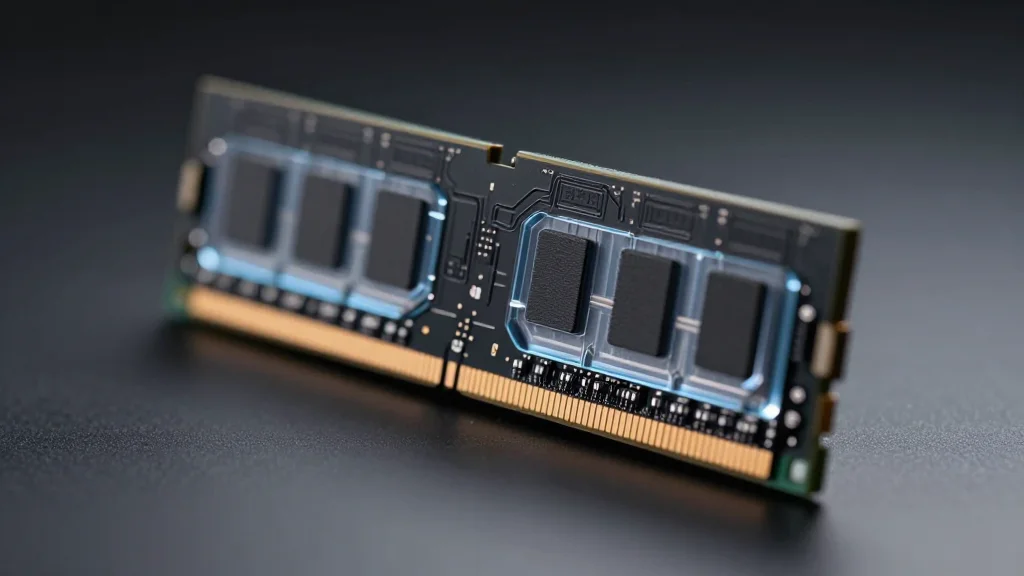
SK Hynix Unveils iHBM Thermal Solution, Cutting HBM5 Heat Resistance by 30%

Companies Mentioned
Why It Matters
Thermal management is the bottleneck that limits how much compute power AI accelerators can deliver. By reducing thermal resistance, SK Hynix’s iHBM directly addresses this constraint, enabling higher clock speeds and longer runtimes without costly data‑center cooling upgrades. The move also eases supply‑chain pressure: a more efficient memory package can be produced at wafer level, potentially lowering the price premium that has plagued HBM5 amid the global "RAMpocalypse." Beyond immediate cost savings, the iHBM solution could influence the competitive dynamics of the memory market. Samsung and Micron have focused on scaling density, but SK Hynix’s emphasis on thermal efficiency may shift buyer preferences toward platforms that promise better reliability and lower total‑cost‑of‑ownership. This could reshape vendor negotiations, affect fab capacity allocations, and accelerate the rollout of AI‑centric hardware across cloud providers and enterprise data centers.
Key Takeaways
- •SK Hynix’s iHBM cuts thermal resistance of HBM5 by ~30%, improving heat dissipation.
- •The solution embeds cooling elements within the memory package and uses wafer‑level packaging for mass production.
- •iHBM is compatible with existing System‑in‑Package architectures, requiring minimal redesign.
- •Global AI demand has driven a "RAMpocalypse," with HBM orders projected to outstrip supply through 2028.
- •Early validation with GPU vendors is planned for late 2026, with volume shipments expected in early 2027.
Pulse Analysis
The iHBM announcement signals a strategic pivot from pure density scaling to holistic system efficiency in the HBM market. Historically, memory vendors have chased higher gigabit‑per‑square‑millimeter figures, but the thermal envelope of AI accelerators has become the limiting factor as models grow to trillions of parameters. By embedding a dedicated heat‑path inside the stack, SK Hynix is effectively turning the memory package into a micro‑cooling system, a concept that could become a new design paradigm if yield targets are met.
From a market perspective, the timing is critical. AI‑driven workloads have pushed HBM demand beyond the capacity of existing fabs, inflating prices and prompting OEMs to seek any efficiency gains. iHBM’s wafer‑level approach promises lower per‑unit costs compared with post‑packaging cooling solutions, potentially easing the price pressure that has hurt smaller system integrators. If SK Hynix can demonstrate reliable yields, it may force competitors to accelerate their own thermal‑focused roadmaps, intensifying R&D spending in a segment that has traditionally been under‑invested.
Looking forward, the broader implication is a shift toward co‑design of memory and compute. As AI workloads become more power‑intensive, the line between silicon and cooling blurs; thermal solutions will be evaluated alongside bandwidth and latency. iHBM could thus be the first of a series of integrated thermal‑memory products that enable the next wave of AI hardware—think exascale HPC clusters and edge AI devices that must operate within tight thermal envelopes. Companies that master this integration will likely capture the most lucrative contracts in the burgeoning AI infrastructure market.
SK Hynix Unveils iHBM Thermal Solution, Cutting HBM5 Heat Resistance by 30%
Comments
Want to join the conversation?
Loading comments...