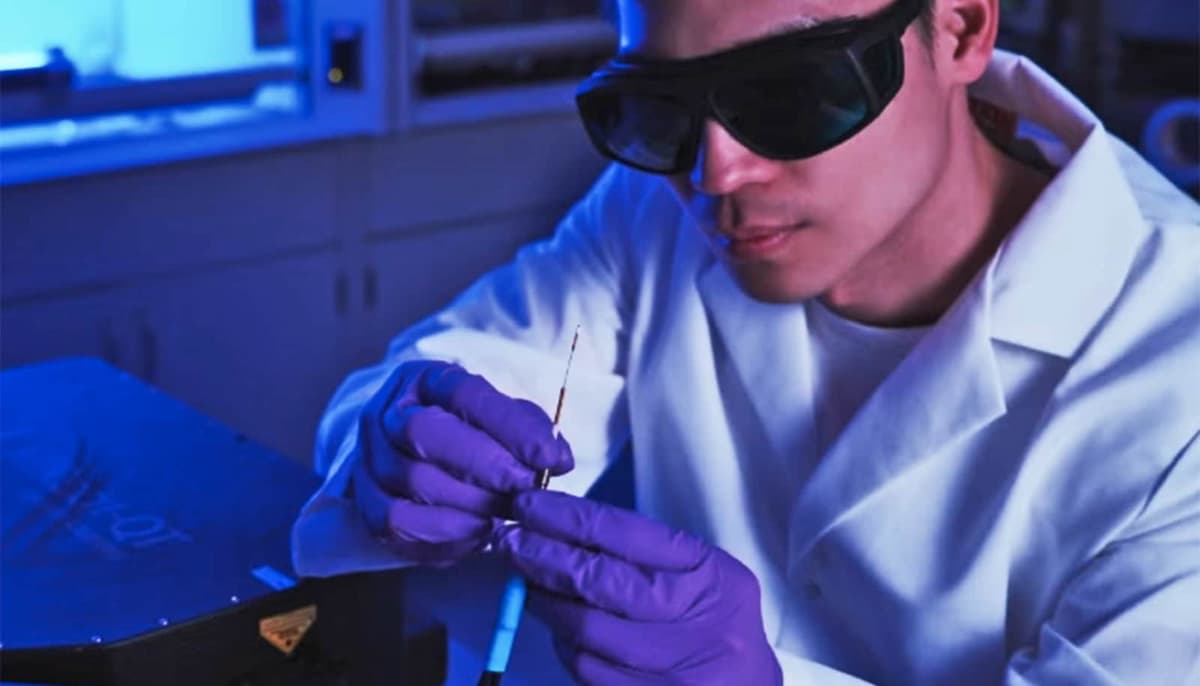
Smallest-of-Its Kind Probe Tracks Several Key Health Signals
Why It Matters
Real‑time, multi‑analyte monitoring can accelerate clinical decision‑making in critical care and enable personalized health tracking for consumers. The probe’s compact size and non‑disruptive design address key limitations of existing invasive measurement methods.
Key Takeaways
- •1.1 mm diameter makes it the smallest fiber probe for biomarker monitoring
- •Simultaneous detection of glucose, lactate, and ethanol in tissue
- •Real-time data eliminates delays inherent in microdialysis sampling
- •Potential to transition from ICU tool to wearable wellness device
- •Patent filed; licensing could accelerate commercial adoption in healthcare market
Pulse Analysis
The new mid‑infrared fiber probe represents a leap forward in point‑of‑care diagnostics, marrying optical spectroscopy with a ultra‑thin, biocompatible design. By integrating two silver‑halide fibers—one for light delivery and another gold‑coated mirror for collection—the system captures distinct spectral signatures of glucose, lactate, and ethanol. This approach sidesteps the bulk and latency of traditional microdialysis, delivering continuous, in‑situ measurements without disturbing surrounding tissue. The probe’s 1.1 mm diameter, housed in a PEEK tube, sets a new benchmark for minimally invasive sensors, opening doors for deployment in delicate environments such as the brain or sub‑cutaneous tissue.
Clinicians stand to gain a powerful tool for rapid metabolic assessment, especially in high‑stakes settings like intensive care units. Real‑time insight into glucose levels can refine insulin therapy for diabetic patients, while lactate monitoring flags sepsis or tissue hypoxia before overt symptoms appear. Ethanol detection adds value for managing intoxication, addiction treatment, and alcohol‑related injuries. Compared with microdialysis, which requires sample extraction, offline analysis, and introduces a lag of minutes to hours, the fiber probe delivers instantaneous data, enabling clinicians to intervene within seconds—a critical advantage when managing traumatic brain injury or other metabolic crises.
Beyond the hospital, the probe’s scalability hints at a future where continuous health monitoring becomes commonplace in consumer wearables. The underlying quantum cascade laser technology is already finding its way into compact devices, and the patent filed by the university’s commercialization arm paves the way for industry partnerships. As the market for remote patient monitoring and personalized wellness expands, a device that can track multiple metabolites simultaneously could become a cornerstone of next‑generation health platforms, driving both clinical outcomes and new revenue streams for tech‑enabled healthcare companies.
Smallest-of-its kind probe tracks several key health signals
Comments
Want to join the conversation?
Loading comments...