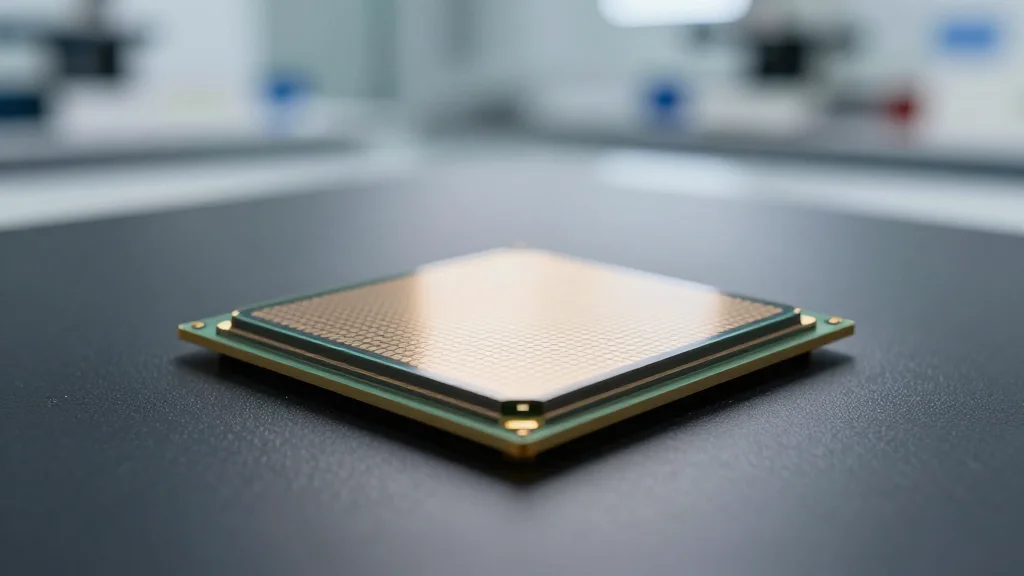
Sony LYT-901: Inside Sony's First 200MP LYTIA Image Sensor
Why It Matters
The LYT‑901 raises the performance ceiling for mobile cameras, forcing OEMs to redesign optics and software to exploit the extra resolution and HDR depth. Its advanced architecture also sets a roadmap for future sensor generations across the industry.
Key Takeaways
- •First 200 MP sensor in Sony's LYTIA lineup.
- •Stacked back‑illuminated CMOS with hybrid bonding.
- •Quad‑Quad Bayer Coding boosts effective pixel density.
- •Full‑pixel phase‑detection autofocus and DCG‑HDR integrated.
- •TechInsights reverse‑engineered using TSMC 5nm process data.
Pulse Analysis
The smartphone camera market has become a primary battleground for differentiation, with manufacturers betting on ever‑higher pixel counts and sophisticated computational photography. Sony, long the dominant supplier of mobile image sensors, has responded with the LYT‑901, a 200‑megapixel device that pushes the envelope beyond the 108‑MP norm seen in recent flagship phones. By delivering unprecedented resolution in a single chip, Sony aims to give OEMs a clear hardware advantage that can be leveraged by AI‑driven image processing pipelines, potentially redefining what consumers expect from a pocket‑sized camera.
At the heart of the LYT‑901 is a stacked back‑illuminated CMOS architecture built on TSMC’s 5‑nanometer node, employing hybrid bonding to tightly couple the pixel layer with a dedicated logic tier. The sensor adopts Quad‑Quad Bayer Coding, effectively quadrupling the native Bayer pattern to increase light‑capture efficiency without enlarging pixel size. Integrated full‑pixel phase‑detection autofocus delivers rapid, accurate focusing across the entire frame, while DCG‑HDR (dual‑conversion‑gain HDR) expands dynamic range by switching gain modes on a per‑pixel basis. These innovations collectively enable high‑resolution stills and video with reduced noise and richer tonal detail.
The introduction of the LYT‑901 has immediate ramifications for the supply chain and product roadmaps of smartphone makers. OEMs that can secure early access to the sensor will need to redesign lens assemblies and image‑signal processors to handle the data throughput of 200 MP, but the payoff is a differentiated camera experience that can command premium pricing. Competitors such as Samsung and Omnivision are likely to accelerate their own high‑resolution sensor programs, intensifying the race for next‑generation computational imaging. For investors and technology strategists, the LYT‑901 serves as a bellwether for the next wave of mobile visual innovation.
Sony LYT-901: Inside Sony's First 200MP LYTIA Image Sensor
Comments
Want to join the conversation?
Loading comments...