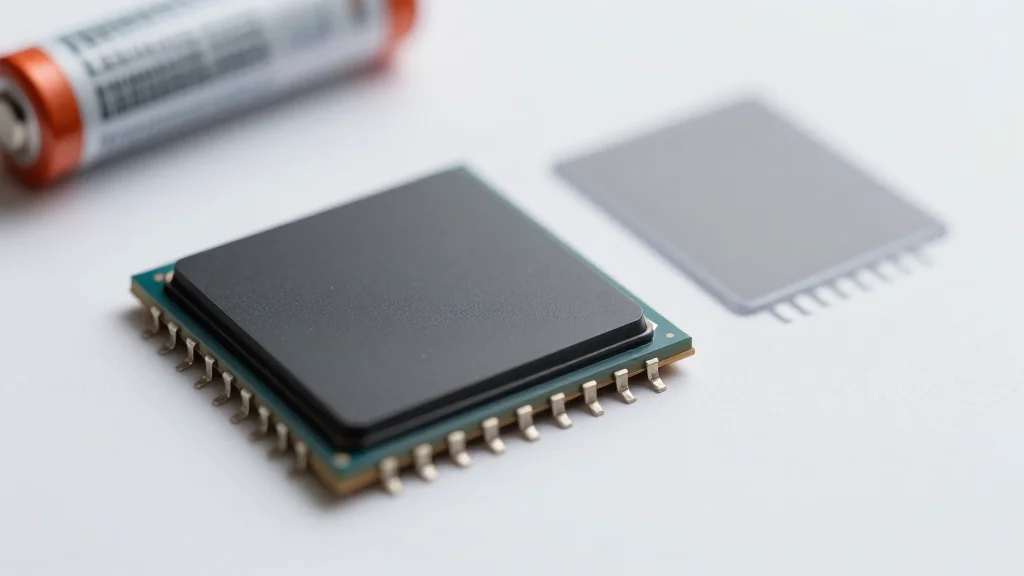
Sony Unveils IMX711 X‑ray CMOS Sensor, Claims Industry‑Fastest 26,100 Fps Imaging

Companies Mentioned
Why It Matters
The IMX711 represents a leap forward in X‑ray sensor technology, addressing two long‑standing challenges: high‑speed imaging and low‑noise detection in low‑flux environments. By delivering photon‑level energy data on a single chip, the sensor enables more sophisticated analysis techniques, such as elemental mapping and combined structural‑chemical inspection, which are critical for next‑generation battery and semiconductor manufacturing. Moreover, the sensor’s performance aligns with the growing demand for AI‑enhanced inspection, where richer data feeds translate into more accurate defect detection and higher yields. Beyond immediate industrial applications, the IMX711 could influence the broader hardware ecosystem. Its direct‑conversion architecture may inspire similar designs in other high‑energy imaging domains, including medical diagnostics and security scanning, where speed and precision are equally vital. The collaboration with RIKEN also highlights the importance of research partnerships in accelerating hardware innovation, a model that could be replicated across other sensor categories.
Key Takeaways
- •Sony announces IMX711 X‑ray CMOS sensor with 26,100 fps maximum frame rate
- •Low‑noise performance of 34 e‑rms enables high‑precision measurements in low‑flux conditions
- •Developed jointly with RIKEN, leveraging a pixel structure invented by Dr. Takaki Hatsui
- •Sensor provides both integrated X‑ray energy data and photon‑level energy information on a single chip
- •Targeted at high‑speed inspection of batteries, semiconductors and scientific measurement equipment
Pulse Analysis
Sony’s IMX711 launch arrives at a pivotal moment for industrial inspection hardware. Historically, X‑ray imaging has been constrained by a trade‑off between speed and noise: high‑frame‑rate sensors introduced significant charge saturation, while low‑noise sensors operated at modest speeds. By integrating Sony’s charge‑saturation suppression circuitry with RIKEN’s pixel design, the IMX711 appears to break that trade‑off, delivering a frame rate that eclipses prior benchmarks while maintaining a noise floor comparable to the best low‑flux sensors. This technical achievement could force competitors to accelerate their own direct‑conversion roadmaps, especially as the semiconductor and battery sectors demand ever‑faster throughput to keep up with production volumes.
The sensor’s ability to output photon‑level energy data is equally consequential. Modern inspection systems increasingly rely on AI models that differentiate materials based on subtle spectral signatures. Providing richer, more granular data directly from the sensor reduces the need for downstream processing and can improve model accuracy. In practice, manufacturers could see higher defect‑detection rates and lower false‑alarm ratios, translating into cost savings and higher yields. This aligns with a broader industry shift toward data‑centric manufacturing, where sensor fidelity becomes a competitive differentiator.
Looking ahead, the IMX711 may serve as a catalyst for broader adoption of direct‑conversion X‑ray technology beyond niche inspection tools. If Sony can scale production cost‑effectively, we could see the sensor integrated into medical imaging devices, security scanners, and even scientific research instruments that require rapid, high‑resolution X‑ray capture. The partnership with RIKEN also signals a template for future hardware breakthroughs: leveraging academic expertise to solve deep‑tech challenges while relying on corporate manufacturing prowess to bring products to market. As AI‑driven analytics continue to dominate the inspection landscape, hardware that can feed richer, faster data streams will be the linchpin of the next wave of productivity gains.
Sony Unveils IMX711 X‑ray CMOS Sensor, Claims Industry‑Fastest 26,100 fps Imaging
Comments
Want to join the conversation?
Loading comments...