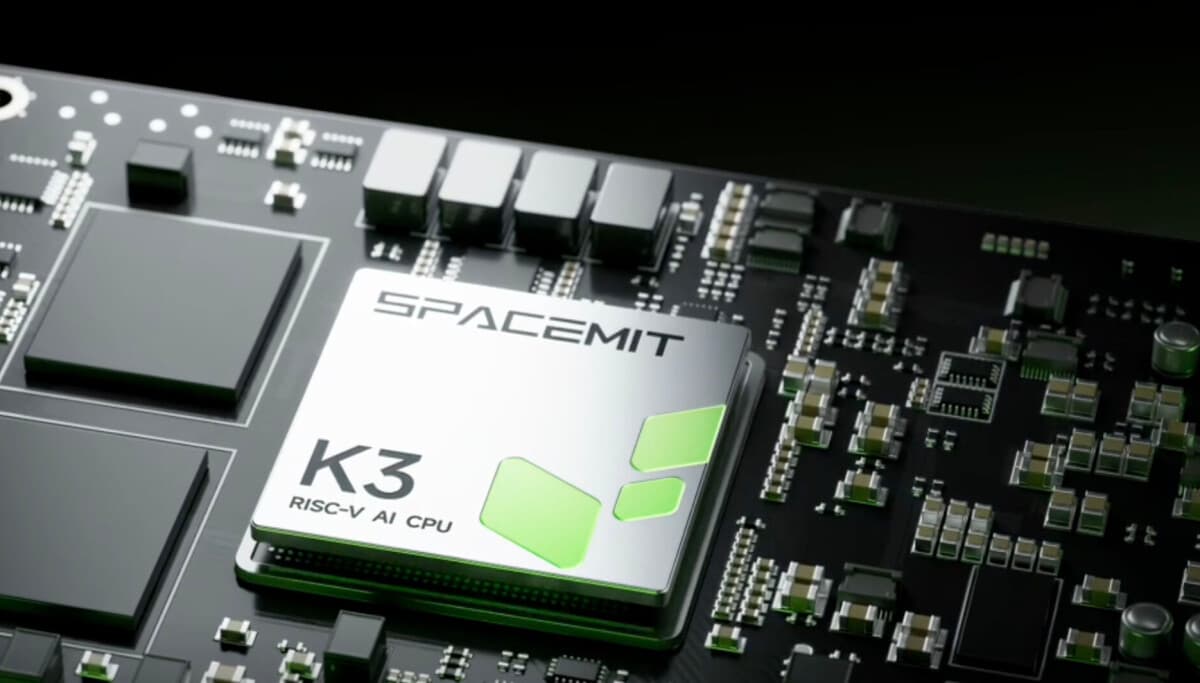
SpacemiT Shows Off Usably Quick RISC-V Mini Desktop

Companies Mentioned
Why It Matters
The K3 brings full‑vector and hypervisor‑ready RISC‑V to mainstream Linux desktops, opening new markets for high‑performance, low‑power computing while its premium price sets an early benchmark for RISC‑V pricing.
Key Takeaways
- •SpacemiT K3 features 16 cores: eight X100 + eight AI cores
- •K3 meets RISC‑V RVA23 spec, enabling vector math and hypervisor
- •Benchmarks show K3 outperforms Raspberry Pi 5 and SiFive P550
- •Miniature Pico‑ITX board priced around $400, double Raspberry Pi cost
- •Ubuntu 25.10 runs natively on K3, delivering smooth 4K video
Pulse Analysis
The emergence of RVA23‑compliant silicon marks a turning point for the RISC‑V ecosystem. Until now, Ubuntu’s RISC‑V edition could only run under QEMU because no hardware met the RVA23 vector‑math and hypervisor requirements. SpacemiT’s K3 SoC satisfies those specs, giving developers a native Linux platform that can exploit full vector acceleration and secure virtualization, two capabilities that were previously confined to x86 and ARM ecosystems. This alignment with Canonical’s roadmap signals broader industry endorsement and could accelerate software porting to RISC‑V.
Performance-wise, the K3’s 16‑core architecture—half general‑purpose X100 cores, half AI‑optimized A100 cores—delivers a noticeable edge over popular hobbyist boards. Independent testing by Phoronix and CNX Software shows the K3 surpassing the Raspberry Pi 5 in compute‑heavy benchmarks and beating the SiFive P550, a long‑standing reference board. The board’s support for up to 32 GB of LPDDR5‑6400 RAM, dual M.2 slots, and 10 GbE connectivity positions it as a viable low‑power desktop or edge‑AI node, albeit at a premium price of roughly $400, about twice the cost of a high‑end Raspberry Pi.
The commercial availability of an RVA23‑ready device could reshape the competitive landscape for Chinese and global silicon vendors. SpacemiT, previously a niche player, now demonstrates that Chinese firms can produce high‑spec RISC‑V hardware that meets Western software standards. As enterprises look to diversify away from ARM and x86 for cost, security, and supply‑chain reasons, the K3 may act as a catalyst for broader adoption, prompting rivals to accelerate their own RVA23 roadmaps and potentially driving prices down over the next few years.
SpacemiT shows off usably quick RISC-V mini desktop
Comments
Want to join the conversation?
Loading comments...