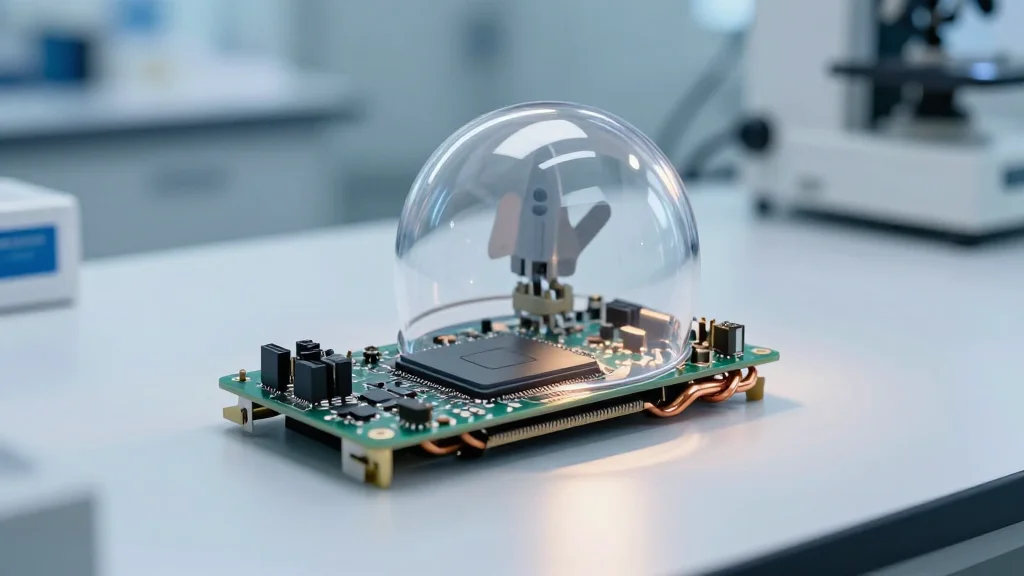
SpaceX May Build Its Own GPUs to Reduce Chip Supply Risks
Companies Mentioned
Why It Matters
In‑house AI chips could give SpaceX tighter control over performance and costs, bolstering its satellite, launch and AI services. The strategy also reflects a broader industry shift toward vertical integration to hedge supply‑chain risks.
Key Takeaways
- •SpaceX lists GPU production as a “substantial capital expenditure” in its S‑1
- •Initiative linked to Terafab complex, a joint venture with Tesla, xAI, Intel
- •Goal: reduce dependence on Nvidia and mitigate supply‑chain risks
- •Company still expects to source most compute hardware from external vendors
- •Timeline and exact chip specifications remain undefined
Pulse Analysis
The rapid expansion of artificial‑intelligence workloads has exposed a fragile semiconductor supply chain, prompting firms from cloud providers to automakers to reassess their hardware strategies. SpaceX’s S‑1 filing highlights that the company views GPU availability as a material operational risk, especially as its Starlink constellation and autonomous rocket systems demand ever‑greater compute power. By flagging in‑house GPU production as a capital priority, SpaceX signals a willingness to invest heavily in custom silicon to secure predictable pricing and delivery.
At the heart of this initiative is the Terafab project, a massive manufacturing hub slated for Austin, Texas. Co‑led by Tesla, SpaceX, xAI and Intel, the complex is envisioned as a one‑stop shop for the next generation of processors powering electric vehicles, humanoid robots and space‑based data centers. For SpaceX, integrating GPU design into Terafab could streamline development cycles, align hardware specifications with its unique aerospace requirements, and create synergies across Musk’s portfolio of companies. The collaboration also offers Intel a foothold in the high‑performance AI market, while Tesla gains access to bespoke chips for its autonomous driving stack.
Building cutting‑edge GPUs, however, is a capital‑intensive endeavor that typically demands billions of dollars, advanced lithography equipment and a supply chain of specialized materials. Success hinges on securing a reliable fab partner, mastering design‑to‑silicon validation, and achieving economies of scale. If SpaceX can overcome these hurdles, it may set a precedent for other vertically integrated tech firms seeking to insulate themselves from geopolitical tensions and component shortages. Even a partial rollout could reshape the competitive dynamics of the AI chip market, pressuring incumbents like Nvidia to reconsider pricing and supply strategies.
SpaceX may build its own GPUs to reduce chip supply risks
Comments
Want to join the conversation?
Loading comments...