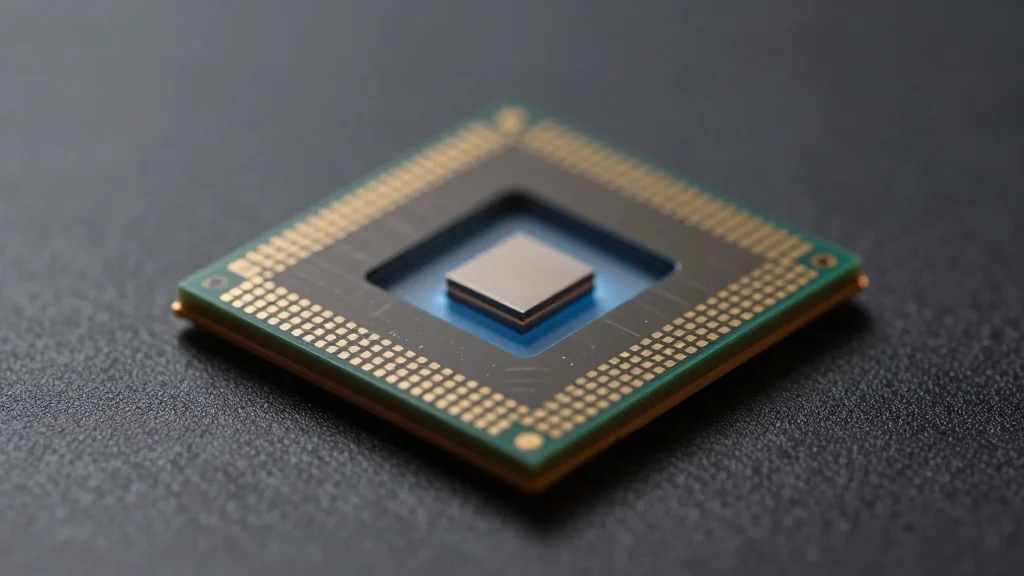
Study Pinpoints Phase‑mismatch Errors Undermining MEMS Gyroscope Precision

Why It Matters
Accurate angular‑rate sensing is a linchpin for emerging autonomous technologies. By pinpointing the phase‑error mechanisms that most erode MEMS gyroscope performance, the study equips manufacturers with a focused calibration strategy, potentially extending device lifetimes and reducing failure rates in safety‑critical systems. The temperature‑dependent nature of these errors also underscores the need for adaptive sensor firmware, a shift that could become a new industry standard. Beyond immediate product improvements, the research highlights a broader methodological shift: rather than applying blanket corrections, sensor designers will increasingly rely on loop‑specific diagnostics to optimize performance. This precision‑engineering mindset may spill over into other MEMS domains, such as accelerometers and pressure sensors, accelerating the overall maturity of micro‑electromechanical systems in high‑reliability markets.
Key Takeaways
- •Phase‑mismatch errors in the sense‑mode feedback path degrade scale factor and zero‑rate output the most.
- •Drive‑mode phase errors have little impact on force‑to‑rebalance rate accuracy, even when compensated.
- •Error magnitudes vary from –20 °C to 50 °C, demanding temperature‑aware calibration.
- •Targeted compensation can improve MEMS gyroscope stability without costly hardware redesign.
- •The MEMS inertial sensor market is projected to surpass $10 billion by 2028.
Pulse Analysis
The study’s granular dissection of control‑loop errors arrives at a pivotal moment for the MEMS industry. Historically, manufacturers have treated gyroscope calibration as a monolithic process, applying uniform offsets to counteract drift. This approach, while simple, has become a liability as devices are pushed into harsher environments and tighter performance envelopes. By demonstrating that sense‑mode feedback errors dominate precision loss, the research forces a re‑evaluation of design priorities: silicon layout, loop bandwidth, and on‑chip temperature sensors will now be co‑optimized to enable dynamic error correction.
From a competitive standpoint, firms that can integrate the proposed selective calibration into their sensor IP will likely capture a premium segment of the market—autonomous vehicles, UAVs, and aerospace platforms that cannot tolerate the few‑degree errors typical of current MEMS gyroscopes. Early adopters could differentiate themselves with higher reliability guarantees, potentially commanding higher margins. Conversely, vendors that continue to rely on legacy calibration pipelines risk obsolescence as OEMs demand tighter specifications.
Looking ahead, the research opens a pathway for closed‑loop, AI‑driven calibration schemes that continuously monitor temperature and operational mode to adjust compensation in real time. Such smart sensors could blur the line between low‑cost MEMS devices and expensive tactical gyroscopes, democratizing high‑precision navigation across consumer and industrial applications. The industry’s next challenge will be to standardize these adaptive algorithms and validate them across the diverse supply chain that produces MEMS components worldwide.
Study pinpoints phase‑mismatch errors undermining MEMS gyroscope precision
Comments
Want to join the conversation?
Loading comments...