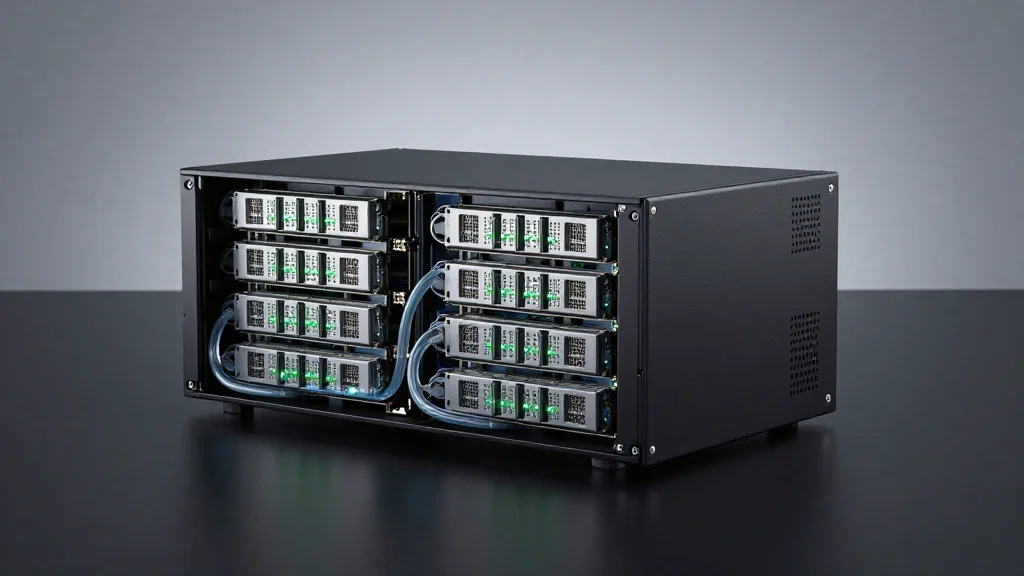
Supermicro Unveils DCBBS Blueprints for NVIDIA Vera Rubin, Scaling AI Factories to 1 GW

Companies Mentioned
Why It Matters
The Supermicro blueprints translate NVIDIA’s cutting‑edge Rubin silicon into a repeatable, vendor‑agnostic deployment model, lowering the barrier for enterprises to build AI super‑computers that rival the world’s largest hyperscale clusters. By standardizing the compute‑to‑cooling‑to‑power stack, the solution could accelerate the timeline for training next‑generation foundation models, which in turn drives advances in natural language processing, scientific simulation and autonomous systems. Moreover, the ability to scale from 5 MW to 1 GW within a single architectural framework reshapes the economics of AI infrastructure. Operators can start with modest power footprints and expand as workloads mature, reducing upfront capital risk while preserving a path to exascale performance. This modularity also eases the strain on regional power grids, as utilities can plan incremental upgrades rather than a single massive draw.
Key Takeaways
- •Supermicro’s DCBBS blueprints cover a 1,152‑GPU unit with 331 TB HBM4 memory
- •Blueprints support power envelopes from 5 MW up to 1 GW
- •NVIDIA Vera Rubin NVL72 entered full production, unlocking a $200 B AI infrastructure market
- •Rubin platform delivers up to 50 PFLOPs inference and 35 PFLOPs training performance
- •Over 20 system builders—including Dell, HPE, Lenovo and Supermicro—are manufacturing Rubin‑based solutions
Pulse Analysis
Supermicro’s move to package NVIDIA’s Vera Rubin platform into a turnkey blueprint reflects a broader industry trend toward commoditizing AI‑heavy data‑center design. Historically, building a petascale AI cluster required bespoke engineering teams to reconcile power, cooling and networking constraints. The DCBBS approach abstracts those complexities, allowing operators to focus on workload orchestration rather than infrastructure integration. This could compress the deployment cycle from years to months, a competitive advantage for firms racing to train trillion‑parameter models.
From a competitive standpoint, the partnership pits Supermicro against traditional hyperscale operators that have long relied on in‑house engineering. By offering a vendor‑neutral, modular solution, Supermicro may capture a slice of the emerging market for private AI factories, especially among enterprises and research labs that lack the scale of Amazon or Google but still need exascale compute. The inclusion of advanced liquid‑cooling and power‑distribution designs also positions the blueprint as a sustainable alternative, addressing growing scrutiny over the carbon footprint of AI training.
Looking ahead, the real test will be the first gigawatt‑class deployment. If Supermicro can demonstrate that its blueprint delivers the promised performance per watt and cost efficiencies, it could set a new industry standard, prompting rivals like Dell and HPE to develop comparable modular stacks. Conversely, any bottlenecks in power delivery or cooling at scale could reaffirm the need for bespoke engineering, tempering the hype around plug‑and‑play AI factories. The next 12‑18 months will therefore be decisive in shaping whether AI infrastructure becomes a commodity or remains a bespoke, high‑touch service.
Supermicro Unveils DCBBS Blueprints for NVIDIA Vera Rubin, Scaling AI Factories to 1 GW
Comments
Want to join the conversation?
Loading comments...