Tata Electronics and ASML Partner on India’s First Semiconductor Fab
Companies Mentioned
Why It Matters
The fab reduces India’s reliance on imported chips, bolstering self‑sufficiency and supporting high‑growth sectors like electric vehicles and AI. It also deepens Indo‑European tech ties, encouraging further foreign capital in the country’s semiconductor supply chain.
Key Takeaways
- •Tata Electronics to build $11 billion fab in Gujarat.
- •ASML will supply lithography equipment for 300 mm wafer line.
- •Plant targets automotive, mobile and AI chip markets.
- •Partnership highlights India’s push for semiconductor self‑sufficiency.
- •Deal signed before Indian‑EU free‑trade talks.
Pulse Analysis
India has been accelerating its semiconductor strategy, earmarking billions of dollars in subsidies to lure chip‑making facilities and reduce reliance on imports. The government’s “Make in India” agenda targets a self‑sufficient ecosystem that can feed the country’s booming automotive, mobile and artificial‑intelligence sectors. By attracting world‑class equipment makers, India hopes to close the technology gap that has left it dependent on foreign fabs for advanced nodes. The new Dholera project marks the first front‑end plant built entirely on Indian soil.
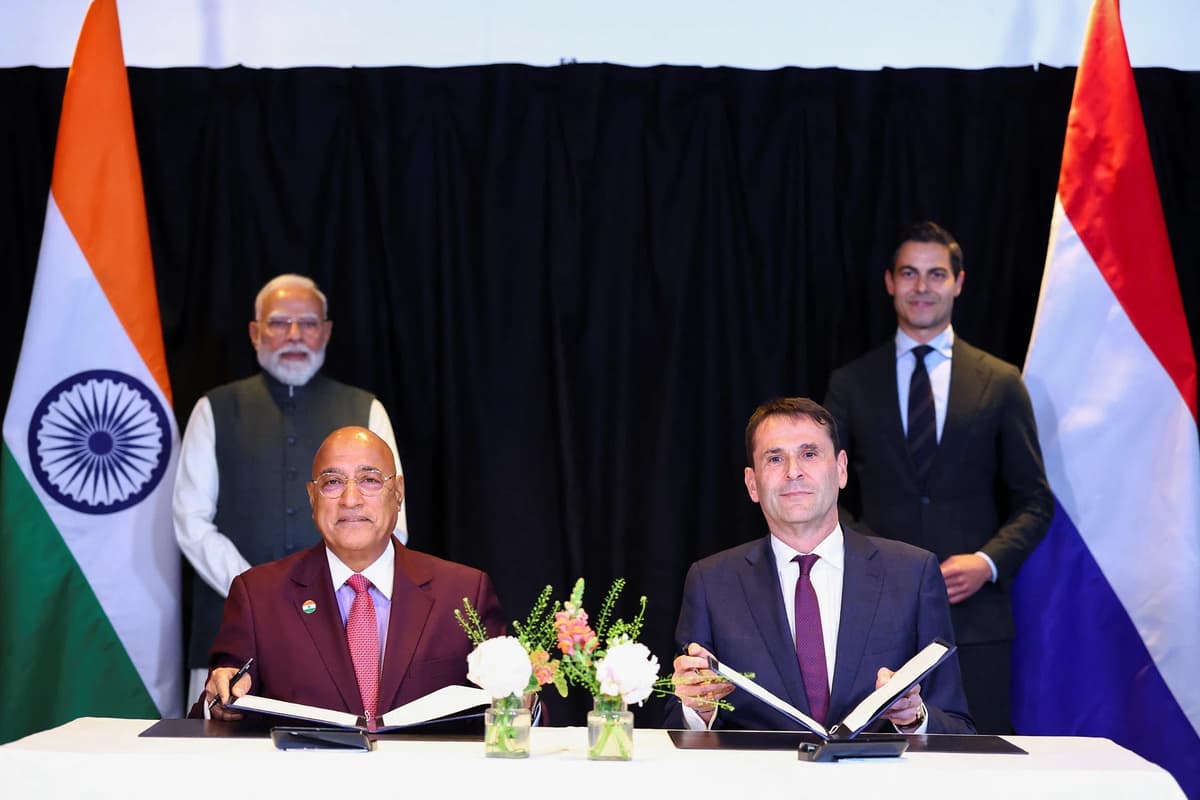
The partnership between Tata Electronics and Dutch lithography leader ASML brings cutting‑edge extreme‑ultraviolet (EUV) and deep‑ultraviolet tools to the planned 300‑millimetre fab in Gujarat. With an estimated US $11 billion capital outlay, the facility will produce mature‑node chips that power vehicles, smartphones and AI accelerators. ASML’s involvement guarantees access to the most advanced patterning equipment, shortening the learning curve for Tata’s manufacturing team. The agreement, signed in the presence of Prime Ministers Modi and Jetten, underscores the strategic depth of Indo‑Dutch cooperation.
The deal signals a turning point for India’s chip supply chain and could catalyze further foreign investment as the nation negotiates a free‑trade agreement with the European Union. Local production shortens lead times, mitigates geopolitical risks, and creates a skilled workforce in Gujarat. For global chipmakers, the fab offers a new customer base for advanced equipment and materials, while Indian firms gain a reliable source of domestically produced semiconductors. Ultimately, the project strengthens India’s position in the competitive global semiconductor landscape.
Tata Electronics and ASML partner on India’s first semiconductor fab
Comments
Want to join the conversation?
Loading comments...