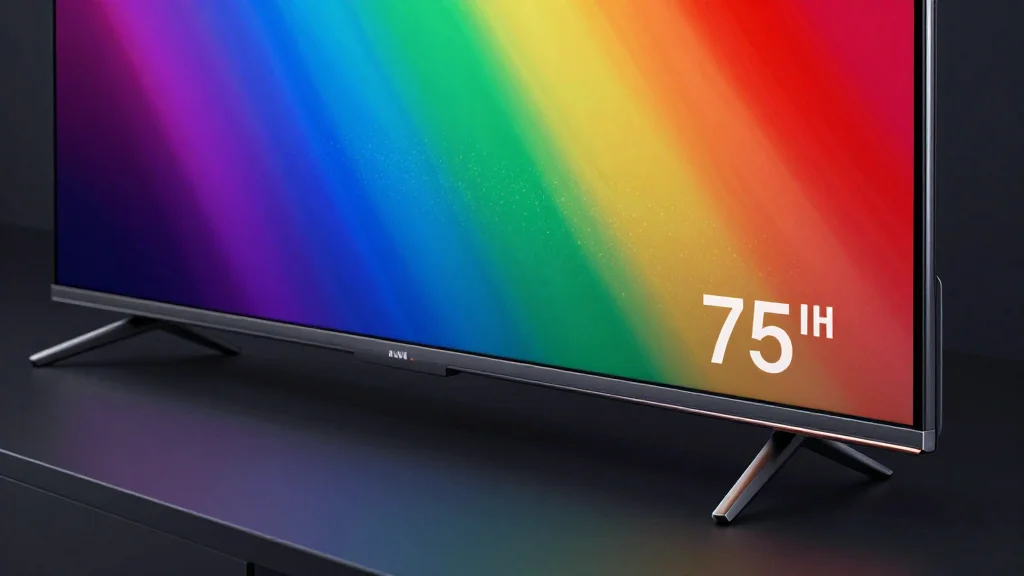
TCL’s Super Quantum Dot Mini‑LED TVs Launch Globally, Targeting Premium Display Market

Why It Matters
Super Quantum Dot Mini‑LED TVs represent a convergence of backlight engineering and quantum‑dot chemistry that could redefine the premium TV value curve. By delivering OLED‑level color gamut and contrast control while surpassing OLED brightness, TCL challenges the long‑standing belief that higher performance must come at a premium price. This shift may accelerate the adoption of Mini‑LED as the dominant LCD‑based platform for large‑screen, high‑dynamic‑range content, influencing supply‑chain dynamics for LED manufacturers and quantum‑dot material suppliers. For consumers, the technology promises brighter, more vivid images in well‑lit rooms—a critical advantage as streaming services and live‑sports broadcasts increasingly rely on HDR formats. Retailers and OEMs will need to reassess pricing strategies and inventory allocations, while content creators may begin optimizing workflows for the higher peak luminance that SQD‑Mini LED panels can sustain.
Key Takeaways
- •TCL launches SQD‑Mini LED TVs (C7L, C8L, X11L) with up to 10,000‑nit peak brightness and >20,000 local dimming zones.
- •Entry‑level 55‑inch model priced at £1,099 (~$1,400), flagship 98‑inch at £3,999 (~$5,080), undercutting comparable OLEDs.
- •Advanced Color Purity Algorithm and reformulated quantum dots deliver DCI‑P3 color coverage on par with OLED panels.
- •TechRadar review notes TCL’s 55‑inch model is three times brighter than LG’s OLED (245 nits vs 760 nits full‑screen).
- •TCL plans additional sizes (85‑inch, 98‑inch) and a $999 entry‑level model for Q4 2026, targeting holiday sales.
Pulse Analysis
TCL’s SQD‑Mini LED rollout is more than a product launch; it is a strategic bet that the premium TV market is ready to abandon the OLED‑centric narrative that has dominated the last decade. OLED’s chief advantage—perfect blacks—has been eroded by advances in local dimming and quantum‑dot color purity, while its Achilles heel—limited brightness—remains a barrier for bright‑room HDR consumption. By delivering 10,000‑nit peaks, TCL not only solves the brightness problem but also leverages the inherent cost efficiencies of LCD manufacturing, allowing it to price aggressively.
The timing is crucial. The 2026 World Cup and a surge in HDR streaming create a demand spike for bright, color‑accurate displays. TCL’s pricing undercuts LG and Sony by up to 30%, forcing premium OEMs to justify higher price tags with features beyond raw luminance, such as superior contrast ratios, self‑emissive pixel control, or ecosystem integration. This could catalyze a wave of hybrid approaches—like Samsung’s QD‑OLED or Sony’s OLED‑Mini‑LED hybrids—aimed at marrying OLED contrast with Mini‑LED brightness.
Supply‑chain implications are equally significant. Mini‑LED backlights require high‑density LED arrays and sophisticated driver ICs, prompting semiconductor fabs to expand capacity. Quantum‑dot manufacturers will see heightened demand for the reformulated crystals that underpin SQD’s color purity, potentially accelerating R&D into even narrower emission spectra. If TCL’s early adopters validate the bloom‑control claims in real‑world settings, we may witness a rapid shift in OEM roadmaps, with Mini‑LED becoming the default platform for 75‑inch‑plus premium TVs by 2028. The next few quarters will be a litmus test for whether SQD‑Mini LED can sustain its performance edge and price advantage against the evolving OLED landscape.
TCL’s Super Quantum Dot Mini‑LED TVs Launch Globally, Targeting Premium Display Market
Comments
Want to join the conversation?
Loading comments...