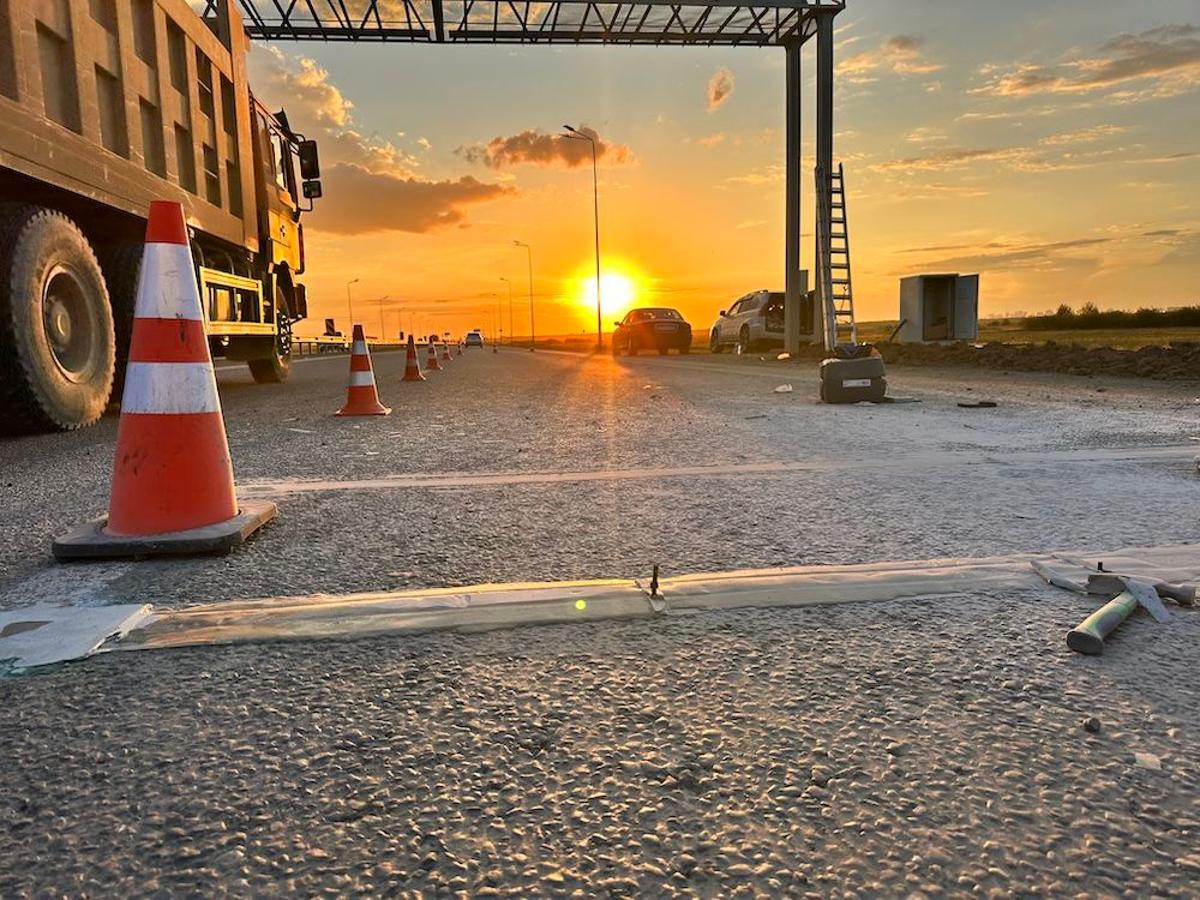
TECH PROFILE: Kazakhstan’s HS-WIM Success Story with Intercomp
Why It Matters
Automated HS‑WIM enforcement protects road infrastructure while reducing administrative overhead, setting a scalable model for other nations facing overload challenges. The success showcases the commercial viability of strain‑gauge technology in harsh climates.
Key Takeaways
- •Intercomp strain gauge sensors installed on over 100 lanes by 2025
- •Fully automated fines introduced after Dec 2024 legislative change
- •Pilot tests in Astana recorded >300 overloads within days
- •Strain gauge strips outperformed piezoelectric alternatives in stability
- •Kazakhstan’s model draws interest from other heavy‑load nations
Pulse Analysis
High‑speed weigh‑in‑motion (HS‑WIM) systems are essential for modern road networks, offering real‑time monitoring of truck weights without disrupting traffic flow. Among sensor options, strain‑gauge strip technology stands out for its long‑term stability, minimal recalibration needs, and resilience to extreme temperature swings—critical factors for countries like Kazakhstan with harsh climates. Compared with piezoelectric sensors, strain gauges deliver more consistent measurements, lower maintenance costs, and higher system uptime, making them attractive for large‑scale deployments.
Kazakhstan’s rollout illustrates how strategic technology selection and local expertise can accelerate HS‑WIM adoption. After pilot installations in Astana proved accuracy—detecting over 300 overloaded vehicles within days—the government expanded to six control points around the capital and later to a nationwide network. Integration with Poland’s APM Pro software enabled sophisticated validation algorithms, while a December 2024 legal amendment shifted enforcement from semi‑automatic to fully automated, instantly issuing electronic fines via SMS and linking directly to the Ministry of Transport’s database. This automation has streamlined enforcement, reduced human error, and created a transparent deterrent for overloaded trucks.
The Kazakh experience provides a blueprint for other jurisdictions seeking to safeguard infrastructure and enforce weight limits efficiently. By demonstrating that strain‑gauge sensors can deliver reliable data at scale, the project opens market opportunities for sensor manufacturers and software providers worldwide. Nations with extensive highway systems and variable weather conditions are likely to consider similar HS‑WIM solutions, driving demand for integrated hardware‑software packages that combine durability, precision, and automated enforcement capabilities.
TECH PROFILE: Kazakhstan’s HS-WIM success story with Intercomp
Comments
Want to join the conversation?
Loading comments...