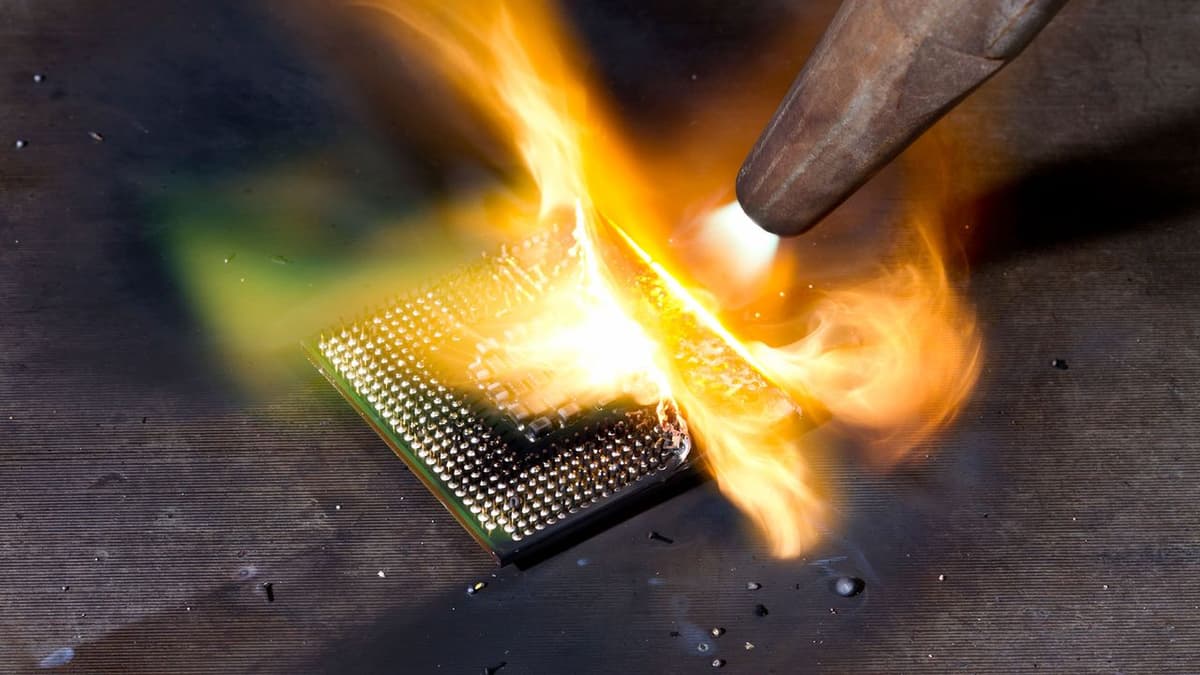
Tech Teardown Specialist Delids a Xeon with a Blowtorch and Hunting Knife — Wood Chopping Block Makes a Worthy Stage for the Sacrifice
Why It Matters
The stunt underscores a growing appetite among hardware hobbyists for ultra‑aggressive DIY cooling and silicon inspection, while highlighting safety and reliability risks that could affect aftermarket cooling demand.
Key Takeaways
- •Hackinator delids Intel Xeon Silver 4110 using blowtorch, knife
- •Wood chopping block serves as makeshift workbench for CPU
- •Process removes IHS, then burns substrate to free die
- •Etching paste reveals intricate silicon die patterns
- •Unconventional method rivals clinical delidding but risks damage
Pulse Analysis
Delidding—a process of removing a CPU’s integrated heat spreader—has long been a niche technique for enthusiasts seeking lower temperatures through direct‑die cooling. Traditionally, the procedure relies on controlled heating, precision tools, and meticulous cleaning to avoid damaging the fragile silicon. The Intel Xeon Silver 4110, a server‑grade chip known for its robust architecture, is rarely the subject of such extreme treatment, making Hackinator’s video an outlier that captures attention across the enthusiast community.
In the video, Hackinator abandons the usual lab‑grade approach, opting for a hot‑air soldering gun, a Gerber hunting knife, and a blowtorch, all staged on a wooden chopping block. The dramatic setup not only serves as a visual hook but also demonstrates that, with enough determination, even high‑end server processors can be stripped down to their bare die. While the resulting die shot is impressive—showcasing shimmering silicon patterns after etching—the method introduces significant thermal and mechanical stress, raising questions about the practicality of such tactics for anyone beyond a spectacle‑driven audience.
The broader implication is twofold: first, the video fuels curiosity about direct‑die cooling solutions, potentially expanding the market for specialized aftermarket coolers and die‑level inspection tools. Second, it serves as a cautionary tale; the aggressive use of open flames and crude prying tools can compromise chip integrity, leading to reliability concerns for users who might attempt to replicate the process. As the DIY hardware scene continues to push boundaries, manufacturers and cooling vendors will need to balance innovation with education to ensure that enthusiasm doesn’t translate into costly hardware failures.
Tech teardown specialist delids a Xeon with a blowtorch and hunting knife — wood chopping block makes a worthy stage for the sacrifice
Comments
Want to join the conversation?
Loading comments...