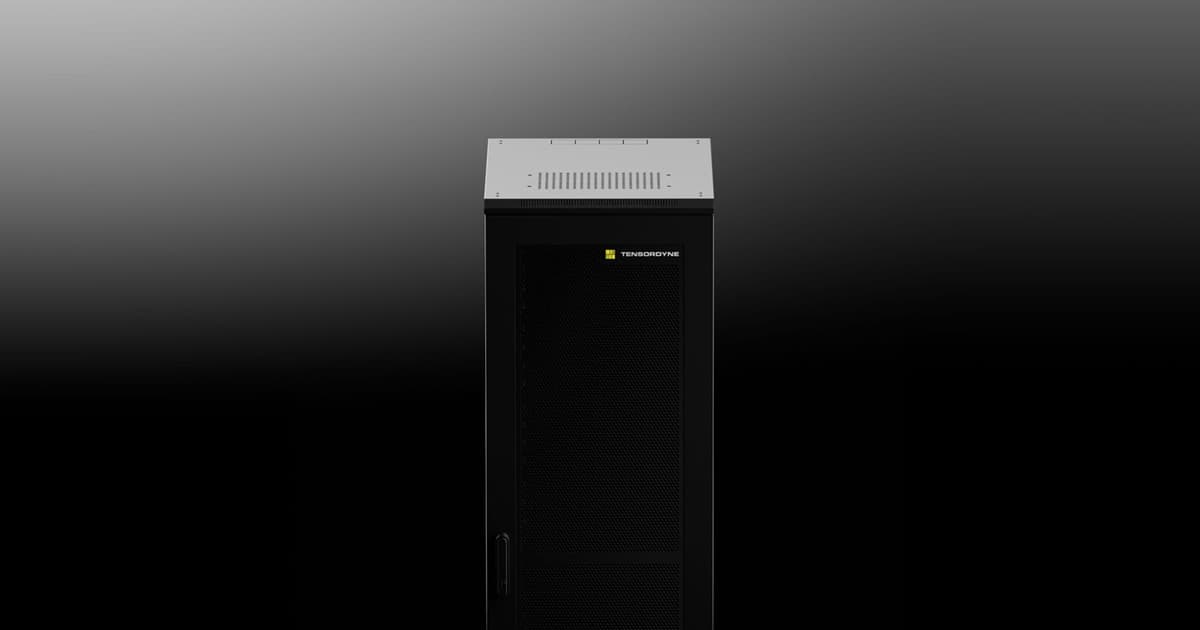
Tensordyne Tapes Out New Inferencing Chip
Why It Matters
The Napier chip offers a rare combination of speed and energy efficiency, challenging Nvidia’s dominance in AI inference and lowering total cost of ownership for large‑scale AI deployments.
Key Takeaways
- •Tensordyne's Napier chip uses TSMC 3nm process
- •TDN 72 pod delivers 76.7 PFLOPS FP16 at 30 kW
- •Pod claims higher tokens‑per‑watt than Nvidia NLV72 rack
- •Over $200M LOIs secured from hyperscalers and sovereign operators
- •Series D funding planned after $211M total raised
Pulse Analysis
The AI inference market is at a tipping point, as enterprises grapple with soaring demand for real‑time model serving while battling ballooning power bills. Traditional GPU‑centric racks, exemplified by Nvidia’s NLV72, deliver raw performance but often at prohibitive energy costs. Tensordyne’s decision to move to TSMC’s 3 nm node reflects a broader industry shift toward ultra‑dense, low‑power silicon that can sustain high throughput without the thermal penalties of older process technologies. By integrating compute, memory, and networking from first principles, the Napier processor aims to close the performance‑per‑watt gap that has limited broader AI adoption.
Technically, the Napier‑powered TDN 72 pod packs 76.7 petaflops of FP16 compute into a single air‑cooled enclosure consuming just 30 kW. When four pods are combined, the resulting rack offers 306 petaflops at 120 kW, a claim that translates to a superior tokens‑per‑watt metric compared with Nvidia’s comparable offering. This efficiency could reshape data‑center architecture, reducing the need for multi‑rack, bolted‑together systems and enabling tighter floor‑space utilization. Moreover, the partnership with Broadcom provides access to advanced IP and packaging, further enhancing signal integrity and power delivery—critical factors for inference workloads that demand low latency and high reliability.
From a business perspective, Tensordyne’s momentum is underscored by more than a dozen letters of intent totaling over $200 million, signaling strong market appetite among hyperscalers, neocloud providers, and sovereign AI operators. The company’s $211 million fundraising track record, including a $102 million Series C in 2024, positions it well for a forthcoming Series D to scale production. As the firm pivots from autonomous‑vehicle chips to broader AI infrastructure, its success could diversify the inference ecosystem, offering customers a cost‑effective alternative that accelerates AI deployment at scale while curbing operational expenditures.
Tensordyne tapes out new inferencing chip
Comments
Want to join the conversation?
Loading comments...