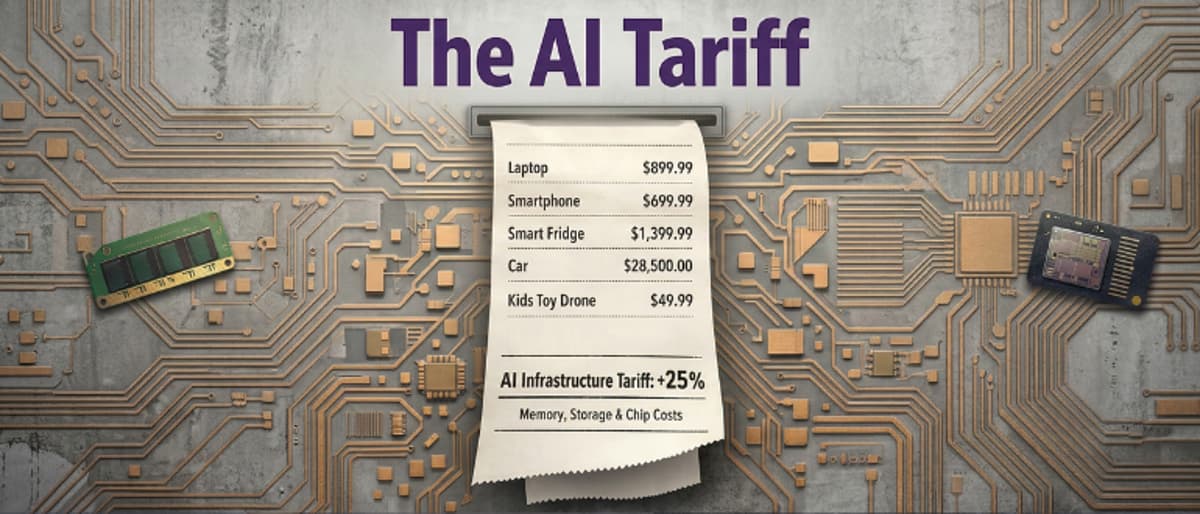
The AI Tariff We Are All Going to Pay (And It’s Not Energy Prices)
•March 10, 2026
0
Why It Matters
AI‑driven semiconductor shortages will lift the cost of everyday devices and feed inflation, reshaping consumer spending and corporate budgeting across the tech ecosystem.
Key Takeaways
- •AI servers hoarding DRAM spikes memory prices 300%
- •Laptop and phone costs projected to rise 20‑30%
- •Hyperscalers securing 40% of global RAM capacity
- •Dual AI tax: supply squeeze plus on‑device AI chips
- •Inflation risk as semiconductor costs ripple through economy
Pulse Analysis
The surge in artificial‑intelligence training workloads has turned memory and storage into a strategic commodity. Major cloud providers are signing multi‑year contracts that reserve large slices of DRAM and NAND output, effectively crowding out traditional OEMs. This concentration is amplified by the fact that the global memory market is dominated by three manufacturers—Samsung, SK Hynix and Micron—while advanced wafer production rests on a handful of foundries such as TSMC. The resulting bottleneck drives component prices up sharply, creating a cost cascade that ripples through the entire supply chain.
For consumers, the impact is immediate and visible. Laptops that once shipped with 8‑16 GB of RAM now face price tags 20‑30% higher as manufacturers pass on the inflated component costs. Smartphones, smart appliances, and even automobiles are integrating dedicated neural processing units, which demand additional silicon, memory and flash storage. This “double AI tax” mirrors the cryptocurrency boom’s GPU shortage but operates on a far larger scale, affecting virtually every device that relies on semiconductor chips. The net effect is a noticeable premium on new hardware across all market segments.
Beyond the gadget aisle, the AI tariff poses macro‑economic challenges. Semiconductors are embedded in everything from medical equipment to industrial machinery, so rising chip prices can feed broader inflationary pressures. Mitigating this trend would require either a rapid expansion of fab capacity—a capital‑intensive, multi‑year endeavor—or a slowdown in AI infrastructure spending, both of which appear unlikely in the near term. Consequently, businesses and consumers should anticipate sustained price pressures and factor them into budgeting and product‑development strategies.
The AI Tariff We Are All Going to Pay (And it’s Not Energy Prices)
0
Comments
Want to join the conversation?
Loading comments...