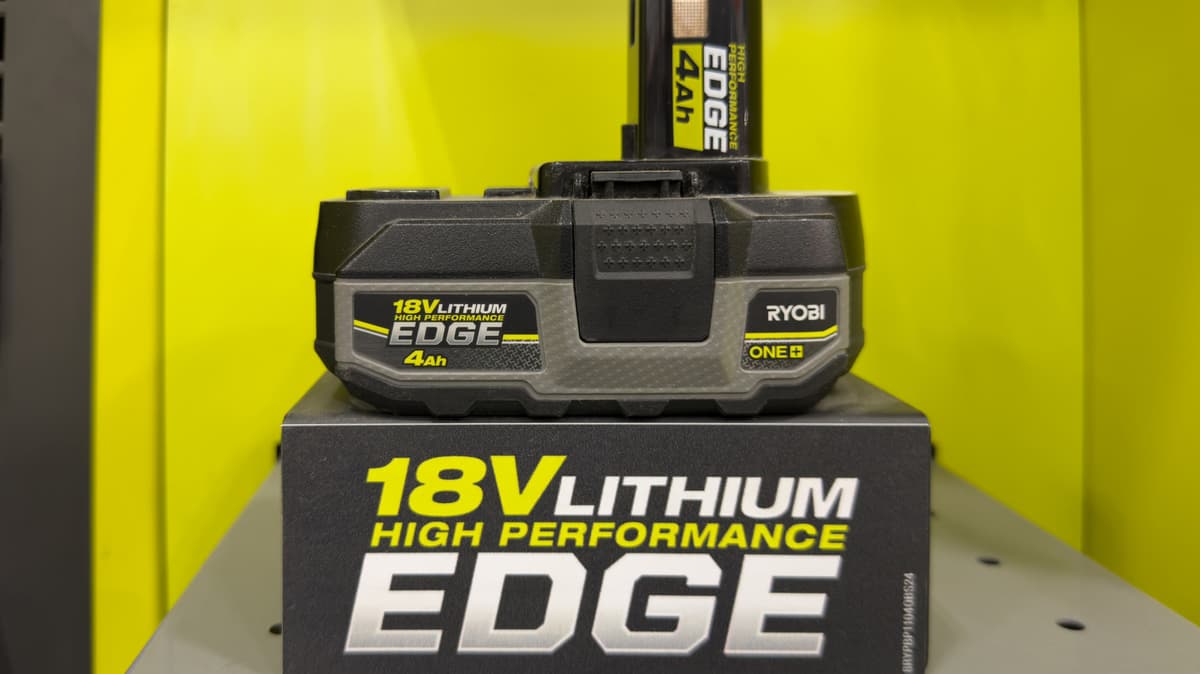
The Battery Mistake That's Making Your Ryobi Tools Run Down Quickly
Why It Matters
Choosing the correct Ah‑rated battery directly impacts tool efficiency, safety, and the overall cost of ownership for both hobbyists and professionals in the fast‑growing cordless‑tool market.
Key Takeaways
- •Use higher Ah batteries for heavy-duty Ryobi tools.
- •Low-capacity batteries drain quickly and can overheat on high-load tools.
- •Clean terminals and store batteries in temperature‑stable indoor spaces.
- •Avoid fully charging or fully depleting batteries for extended periods.
- •Match battery model to tool specifications per Ryobi’s packaging.
Pulse Analysis
The cordless power‑tool segment has exploded in the past decade, driven by advances in lithium‑ion chemistry and the convenience of interchangeable battery platforms. Ryobi, positioned as a budget‑friendly alternative to premium brands, leverages its 18V ONE+ ecosystem to cover everything from drills to mowers. However, the market’s price sensitivity often leads consumers to prioritize cost over capacity, overlooking the critical role of Amp‑Hour ratings in delivering consistent torque and runtime for demanding applications.
Understanding Ah ratings is essential for maximizing tool performance. A 2 Ah pack stores roughly half the energy of a 4 Ah unit, translating to noticeably shorter operating periods on high‑draw tools such as circular saws or brushless motors. Moreover, undersized batteries generate excess heat under load, accelerating cell degradation and raising safety concerns. Compared with competitors like DeWalt or Milwaukee, Ryobi’s broader Ah range offers flexibility, but users must align the battery’s energy density with the tool’s power profile to avoid premature failures.
Beyond selecting the appropriate pack, battery longevity hinges on disciplined upkeep. Regularly wiping contacts prevents resistance buildup, while storing packs at moderate temperatures—ideally between 50°F and 70°F—preserves capacity. Charging habits also matter; keeping batteries between 20% and 80% charge reduces stress on the cells, extending their useful life. As Li‑ion technology continues to evolve, future Ryobi releases may incorporate smart‑charge algorithms and higher‑density cells, but the fundamentals—matching Ah to tool demand and practicing good storage—will remain the cornerstone of reliable cordless performance.
The Battery Mistake That's Making Your Ryobi Tools Run Down Quickly
Comments
Want to join the conversation?
Loading comments...