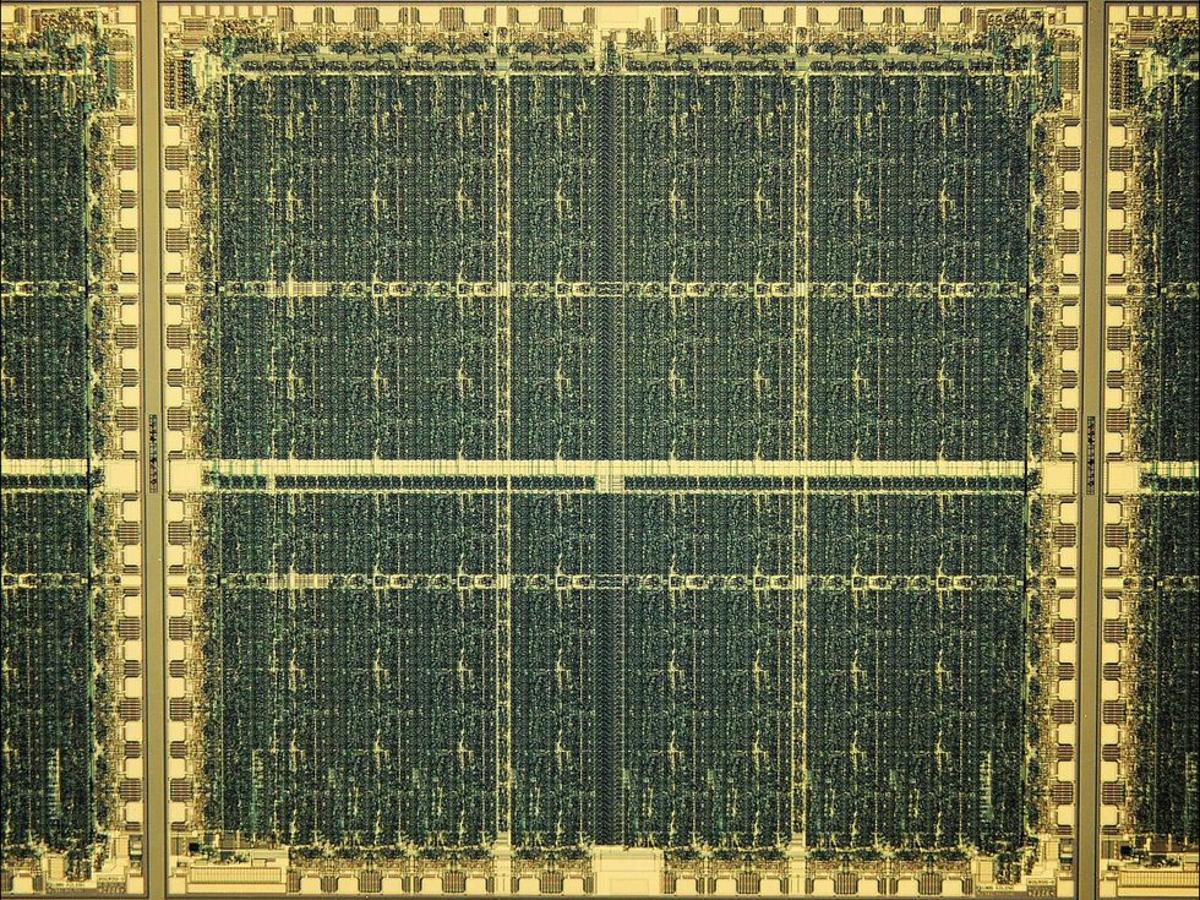
The Chip That Made Hardware Rewriteable
Why It Matters
FPGAs dramatically accelerate hardware innovation, lowering cost and time‑to‑market, which reshapes semiconductor economics and enables heterogeneous computing across startups and industry giants.
Key Takeaways
- •First FPGA, XC2064, launched 1985 with 64 logic blocks
- •Reconfigurable hardware cuts ASIC development from 24 months to 3‑6 months
- •FPGAs bridge CPUs and ASICs, offering speed with software‑level flexibility
- •Modern FPGAs integrate DSP, memory, and crypto engines for AI workloads
Pulse Analysis
The 1985 introduction of Xilinx’s XC2064 marked a paradigm shift in semiconductor design. By embedding programmable logic blocks and routing memory, the first FPGA turned silicon into a software‑defined platform, enabling engineers to iterate hardware without costly mask sets. This breakthrough gave rise to the fabless model, where design expertise resides with system architects while foundries handle manufacturing, a structure that underpins today’s silicon ecosystem.
Technical advances have turned the humble 64‑block device into a powerhouse capable of hosting hundreds of millions of gates, integrated DSP slices, high‑speed transceivers, and dedicated cryptographic engines. High‑level synthesis tools now translate C/C++ code into bitstreams, and lookup‑table (LUT) architectures allow complex functions to be fetched from on‑chip memory rather than recomputed. These capabilities have propelled FPGAs into AI inference, 5G/6G base stations, and real‑time medical imaging, where latency and parallelism are critical.
From a business perspective, FPGAs compress product development timelines from years to months, reducing upfront capital expenditures and allowing rapid response to evolving standards. Startups and research labs can prototype advanced architectures without committing to ASIC production runs, while large OEMs use FPGAs for post‑silicon updates and feature differentiation. As heterogeneous computing becomes the norm, the flexibility of reconfigurable hardware ensures that FPGAs will remain a strategic asset for delivering performance, adaptability, and cost efficiency in the next generation of electronic systems.
The Chip That Made Hardware Rewriteable
Comments
Want to join the conversation?
Loading comments...