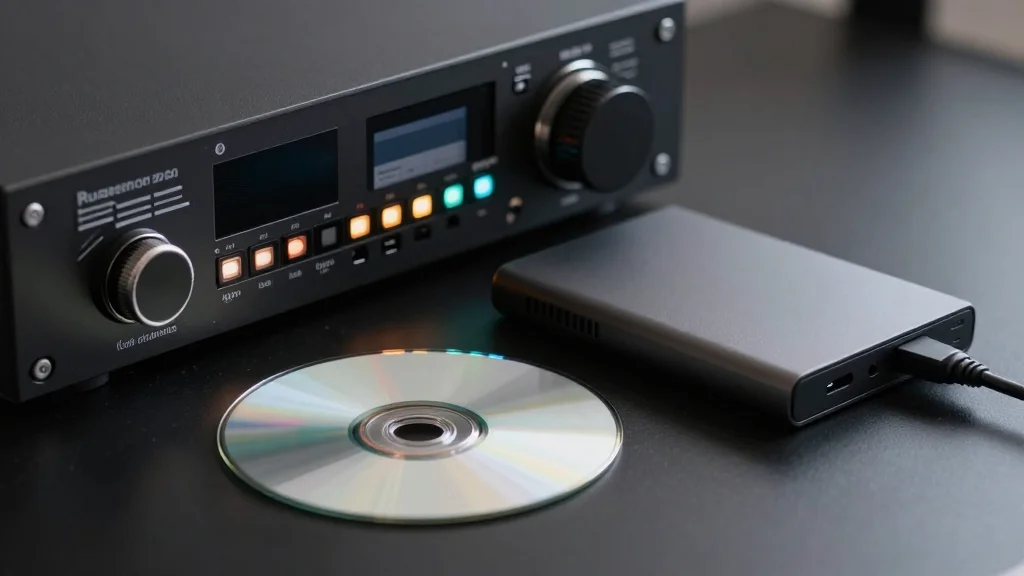
The First CD Recorder Was Shockingly Expensive – Guess How Much
Why It Matters
The debut of professional CD recorders marked the shift from analog tape to digital mastering, reshaping broadcast workflows. Subsequent price drops democratized the technology, fueling the home media creation boom that defined the late‑1990s digital era.
Key Takeaways
- •Denon DN‑770R launched at $20,000 in 1991
- •Ancillary gear pushed total cost to $120,000
- •Blank CD‑Rs cost $35‑$40, single‑use only
- •HP SureStore 4020i hit market for $995 in 1995
- •CD recorders enabled home media production boom late 1990s
Pulse Analysis
The Denon DN‑770R’s 1991 debut signaled the first practical move from read‑only CDs to writable discs, but its $20,000 price tag and the need for roughly $100,000 of supporting equipment kept it firmly in the professional realm. Radio stations and audio post‑production facilities saw immediate value: faster turnaround for demo discs, reliable archiving, and seamless distribution to affiliates, all without the wear and degradation inherent to analog tape. Yet the high entry cost limited adoption to well‑funded broadcasters, making the technology a status symbol rather than a ubiquitous tool.
Within a year, other manufacturers such as Sony, Philips, and Yamaha released entry‑level professional CD recorders priced above $10,000, gradually lowering the barrier for smaller studios. Simultaneously, the cost of blank CD‑Rs hovered around $35‑$40, a steep price compared with reusable cassette tape but acceptable for one‑off master copies. These early adopters proved the medium’s durability and audio fidelity, prompting the industry to invest in digital mastering consoles and synchronization gear that would later become standard in broadcast chains.
The real democratization arrived in 1995 when HP launched the SureStore 4020i for $995, a price point that small businesses and hobbyists could afford. This consumer‑grade drive could write both data and audio CDs, igniting a surge in home‑produced mixtapes, data backups, and independent music distribution. As CD‑R drives and media prices continued to fall, the format became a staple of personal computing until DVDs, flash storage, and cloud services eventually supplanted it. The early pricing dynamics of CD recorders thus illustrate how a high‑cost professional technology can cascade into mass‑market adoption, reshaping media creation and consumption patterns.
The first CD recorder was shockingly expensive – guess how much
Comments
Want to join the conversation?
Loading comments...