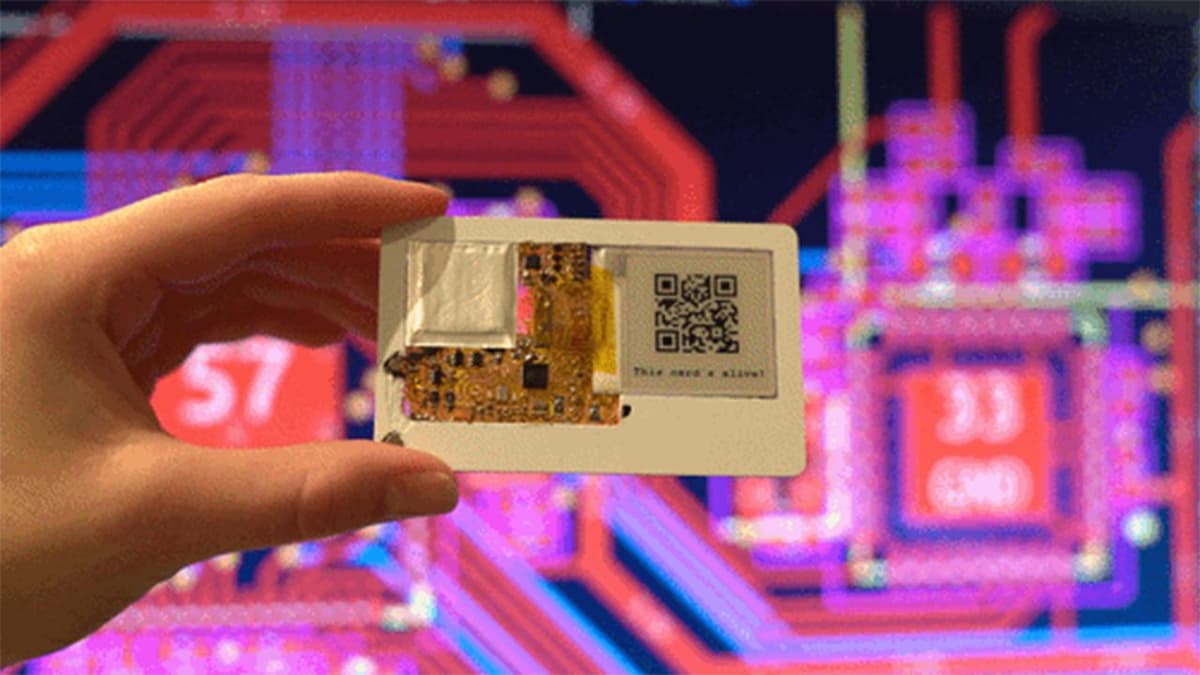
Tiny Credit Card Computer Includes eInk Screen and Is Just 1mm Thick — Muxcard Is Powered by the ESP32-C3 Microcontroller
Companies Mentioned
Why It Matters
By squeezing a Wi‑Fi‑enabled MCU, display and sensors into a 1 mm card, the Muxcard showcases a new class of ultra‑thin edge devices that could reshape IoT, secure authentication and wearable computing.
Key Takeaways
- •Muxcard fits ISO/IEC 7810 ID‑1 dimensions, 1 mm thick.
- •Powered by ESP32‑C3 RISC‑V MCU with Wi‑Fi and 320 KB SRAM.
- •Includes 1.54‑inch 200×200 ePaper display with partial updates.
- •Features NFC read/write, accelerometer, and 30 mAh rechargeable LiPo.
- •Prototype lacks USB‑C, microSD, touch buttons; ruggedization needed.
Pulse Analysis
The push toward ever‑thinner electronics has accelerated as developers seek to embed intelligence in everyday objects. The Muxcard, a 1 mm‑thick credit‑card‑form factor computer, is a striking example of this trend. Built around Espressif’s ESP32‑C3 RISC‑V MCU, it delivers Wi‑Fi connectivity, 320 KB of SRAM and a modest 384 KB ROM, while a 1.54‑inch ePaper screen provides low‑power visual feedback. Open‑source schematics on GitHub invite hobbyists and engineers to experiment, positioning the device as a sandbox for ultra‑compact hardware innovation.
Technical constraints dominate the Muxcard’s design. A 30 mAh LiPo battery, thin enough to sit within the card’s profile, limits runtime to a few hours of active use, but the ePaper display’s partial‑update capability conserves energy when idle. Integrated NFC (RC522) and a LIS2DW12 accelerometer enable contactless data exchange and motion‑triggered wake‑ups, expanding potential use cases from secure access tokens to on‑the‑go sensor nodes. The 1 mm thickness forces trade‑offs: USB‑C, microSD slots and tactile buttons are absent in the prototype, and the chassis remains fragile, highlighting the engineering challenges of packing conventional interfaces into a card‑sized envelope.
If the Muxcard’s roadmap—adding a slimmer LiPo cell, ruggedizing the housing, and integrating richer I/O—materializes, it could catalyze a wave of edge‑computing modules that blend seamlessly into wallets, ID badges or smart cards. Compared with the Raspberry Pi’s evolution from a credit‑card‑sized board to a versatile platform, the Muxcard pushes the envelope further by collapsing the third dimension. Its open‑source nature may spur community‑driven enhancements, accelerating adoption in sectors such as logistics, secure authentication and wearable health monitoring, and potentially redefining how developers think about the physical limits of computing devices.
Tiny credit card computer includes eInk screen and is just 1mm thick — Muxcard is powered by the ESP32-C3 microcontroller
Comments
Want to join the conversation?
Loading comments...