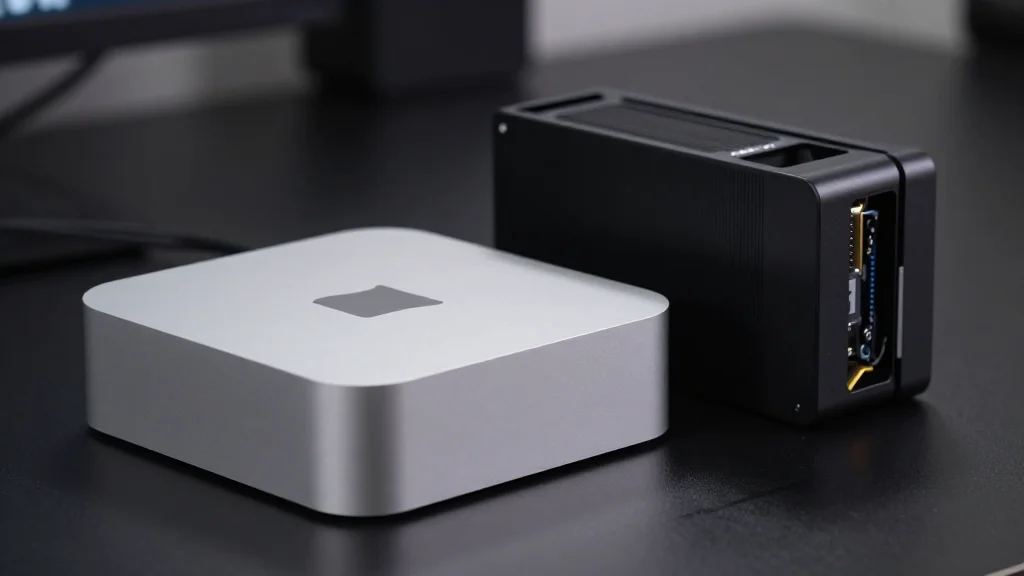
TinyGPU Driver Lets Mac Mini Use External AMD/Nvidia GPUs for AI Workloads

Companies Mentioned
Why It Matters
The TinyGPU approval bridges a long‑standing gap between Apple’s tightly integrated hardware and the flexible compute demands of modern AI. By enabling external GPUs without compromising system integrity, developers can now run large language models and other intensive workloads on affordable Mac Minis, expanding the macOS AI ecosystem. This could shift purchasing decisions away from traditional workstations toward Apple’s more portable, energy‑efficient devices, influencing hardware sales, software development priorities, and the competitive dynamics between Apple and PC‑based AI platforms. Furthermore, the move signals Apple’s willingness to accommodate third‑party acceleration solutions, a departure from its historic reluctance to support eGPUs on Apple Silicon. If the approach proves stable, it may encourage other accessory makers to develop specialized AI hardware for macOS, spurring a new niche market and potentially driving innovation in driver architecture and cross‑platform AI toolchains.
Key Takeaways
- •TinyGPU driver receives official Apple approval for macOS 12.1+
- •External AMD RDNA3 and Nvidia Ampere GPUs can accelerate AI models on Mac Mini
- •Nvidia support requires Docker Desktop; AMD runs natively
- •Apple’s removal of the Mac Pro makes eGPU a primary high‑performance option
- •TinyGPU enables running large models like Qwen 2.5 27B locally on macOS
Pulse Analysis
Apple’s decision to endorse TinyGPU marks a subtle but meaningful shift in its hardware philosophy. Historically, Apple has prioritized a closed ecosystem, limiting external compute to preserve performance consistency and security. By allowing a third‑party driver to interface directly with high‑end GPUs, Apple acknowledges the growing importance of on‑device AI, where latency and data privacy outweigh raw graphics performance.
From a market perspective, the move could erode the advantage of Windows‑based workstations that have long offered eGPU flexibility. Developers who have been constrained by the Mac Mini’s integrated GPU now have a cost‑effective upgrade path, potentially increasing macOS’s share in AI‑centric development environments. However, the reliance on Docker for Nvidia cards introduces a layer of complexity that may deter less technical users, suggesting that AMD’s native support will likely dominate early adoption.
Looking forward, the real test will be performance consistency across diverse AI workloads and the stability of the driver under sustained load. If TinyGPU can deliver reliable throughput comparable to native Linux or Windows setups, Apple may see a surge in AI‑focused macOS applications, from creative suites to scientific tools. Conversely, any stability issues could reinforce the perception that Apple’s hardware is best suited for its own silicon‑optimized workloads, limiting the broader impact of this development. The coming months will reveal whether TinyGPU becomes a niche solution for enthusiasts or a catalyst for a new wave of AI‑ready Macs.
TinyGPU Driver Lets Mac Mini Use External AMD/Nvidia GPUs for AI Workloads
Comments
Want to join the conversation?
Loading comments...