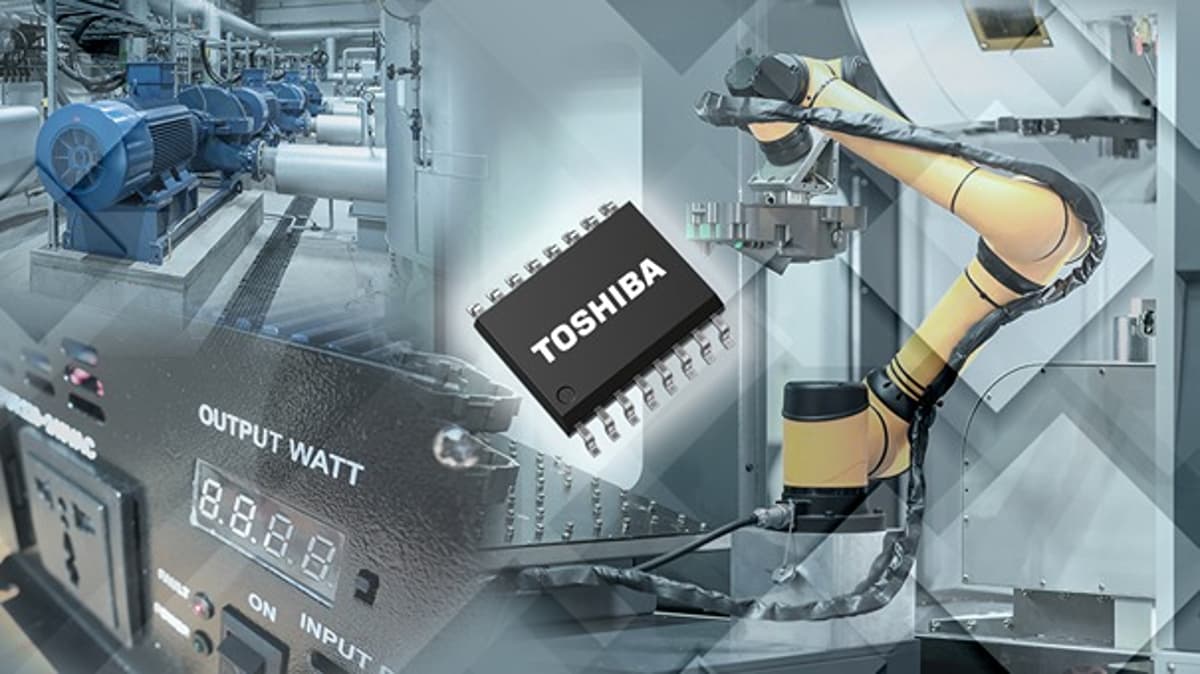
Toshiba Adds 125°C Quad-Channel Digital Isolators
Why It Matters
The high‑temperature capability and robust noise immunity enable reliable signal transmission in harsh industrial environments, supporting the growing adoption of SiC and GaN power devices.
Key Takeaways
- •125 °C operating limit meets extreme industrial temperature demands
- •Magnetic coupling gives 150 kV/µs common‑mode transient immunity
- •Quad‑channel options support diverse forward/reverse signal layouts
- •Data rates up to 150 Mbps suit high‑speed control loops
- •Immediate volume shipments expand Toshiba’s isolation portfolio for automation
Pulse Analysis
The surge in silicon‑carbide (SiC) and gallium‑nitride (GaN) power devices has reshaped industrial equipment design, pushing operating temperatures well beyond the traditional 85 °C ceiling. In such environments, signal integrity becomes a critical bottleneck, as electrical noise can corrupt control loops and cause costly downtime. Digital isolators—components that transmit data across an electrically insulated barrier—are essential for preserving communication reliability while protecting low‑voltage circuitry. Toshiba’s new DCL54xx01A series directly addresses this challenge by delivering isolation performance that tolerates the extreme heat generated by next‑generation power semiconductors.
The DCL54xx01A family distinguishes itself through Toshiba’s proprietary magnetic‑coupling isolation technology, which embeds both modulation and demodulation chips within a single package and transfers data via a magnetic field. This architecture yields a common‑mode transient immunity of 150 kV/µs, far exceeding typical industry benchmarks, and supports data rates up to 150 Mbps—suitable for high‑speed motor‑control and inverter applications. Packaged in a 16‑lead SOIC, the devices offer four forward channels, three forward plus one reverse, or two forward and two reverse configurations, giving system designers the flexibility to match diverse I/O requirements without adding extra components.
By launching a temperature‑rated, high‑speed isolator line, Toshiba strengthens its position in the industrial automation market and aligns with broader carbon‑neutrality goals. Reliable isolation reduces the need for oversized cooling systems, thereby cutting energy consumption in factories that are increasingly adopting SiC and GaN power stages. Competitors such as Analog Devices and Texas Instruments have introduced similar high‑temperature parts, but Toshiba’s combination of magnetic coupling, quad‑channel density, and immediate volume availability provides a compelling value proposition for OEMs seeking rapid time‑to‑market. As factories move toward edge‑computing and tighter control loops, the demand for robust, high‑temperature isolators is poised to accelerate.
Toshiba adds 125°C quad-channel digital isolators
Comments
Want to join the conversation?
Loading comments...