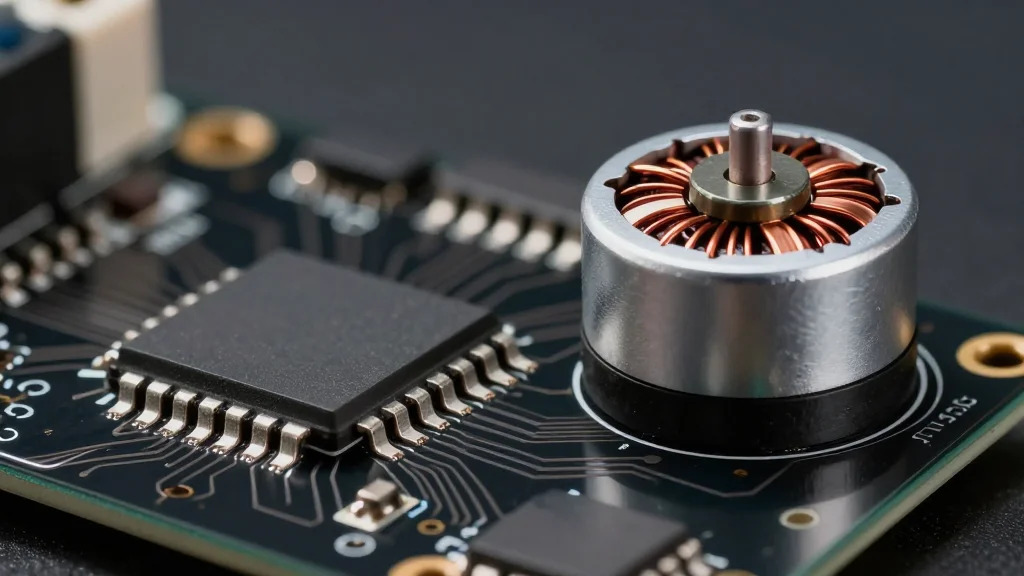
Toshiba Ships SmartMCD Samples with Zero-Speed Sensorless FOC for Automotive BLDC Motors
Companies Mentioned
Why It Matters
By removing the need for position sensors and noisy signal‑injection, the TB9M030FG enables quieter, more compact auxiliary drives, accelerating the electrification of vehicle subsystems and reducing OEM part counts.
Key Takeaways
- •TB9M030FG integrates MCU and gate driver in a single QFP48 package.
- •Zero‑speed sensorless FOC eliminates high‑frequency injection noise.
- •Built‑in vector engine offloads FOC calculations, shrinking firmware size.
- •Targeted for EV pumps, fans, and blowers, supporting AEC‑Q100 Grade 0.
Pulse Analysis
Sensor‑less control of three‑phase brushless DC motors has long been hampered by the need to infer rotor position at low speeds. Traditional techniques inject a high‑frequency voltage ripple into the drive waveform, which creates audible whine and adds complexity to the control loop. Toshiba’s proprietary zero‑speed sensorless FOC sidesteps this by using advanced estimation algorithms that start from a standstill, delivering smooth torque without the acoustic penalty that has plagued earlier designs.
The TB9M030FG’s integration of a 32‑bit Arm Cortex‑M0 core, gate driver, and a dedicated vector‑engine hardware marks a shift toward highly consolidated motor‑control solutions. By handling the intensive FOC math in dedicated hardware, the device reduces CPU load and trims firmware footprints, allowing designers to free up memory for additional features or safety functions. This level of integration is especially valuable for automotive auxiliary systems—electric water pumps, oil pumps, fans and blowers—where space, reliability, and low noise are paramount.
With engineering samples already in the hands of OEMs and tier‑1 suppliers, Toshiba is positioning the SmartMCD series to capture a growing segment of the EV market that demands quieter, more efficient auxiliary drives. The scheduled ramp‑up to mass production in January 2027 aligns with automakers’ timelines for next‑generation electric platforms. As competitors race to offer comparable sensor‑less solutions, Toshiba’s early‑stage deployment could set a benchmark for acoustic performance and integration density, influencing component selection decisions across the industry.
Toshiba ships SmartMCD samples with zero-speed sensorless FOC for automotive BLDC motors
Comments
Want to join the conversation?
Loading comments...