Two Neat Features in the Gigabyte W775-V10-L1 We Saw
Companies Mentioned
Why It Matters
Leak‑detection hardware brings data‑center‑level reliability to workstations, reducing risk for expensive GPU and AI workloads. The early adoption of PCIe Gen6 M.2 slots signals readiness for next‑generation storage bandwidth demands.
Key Takeaways
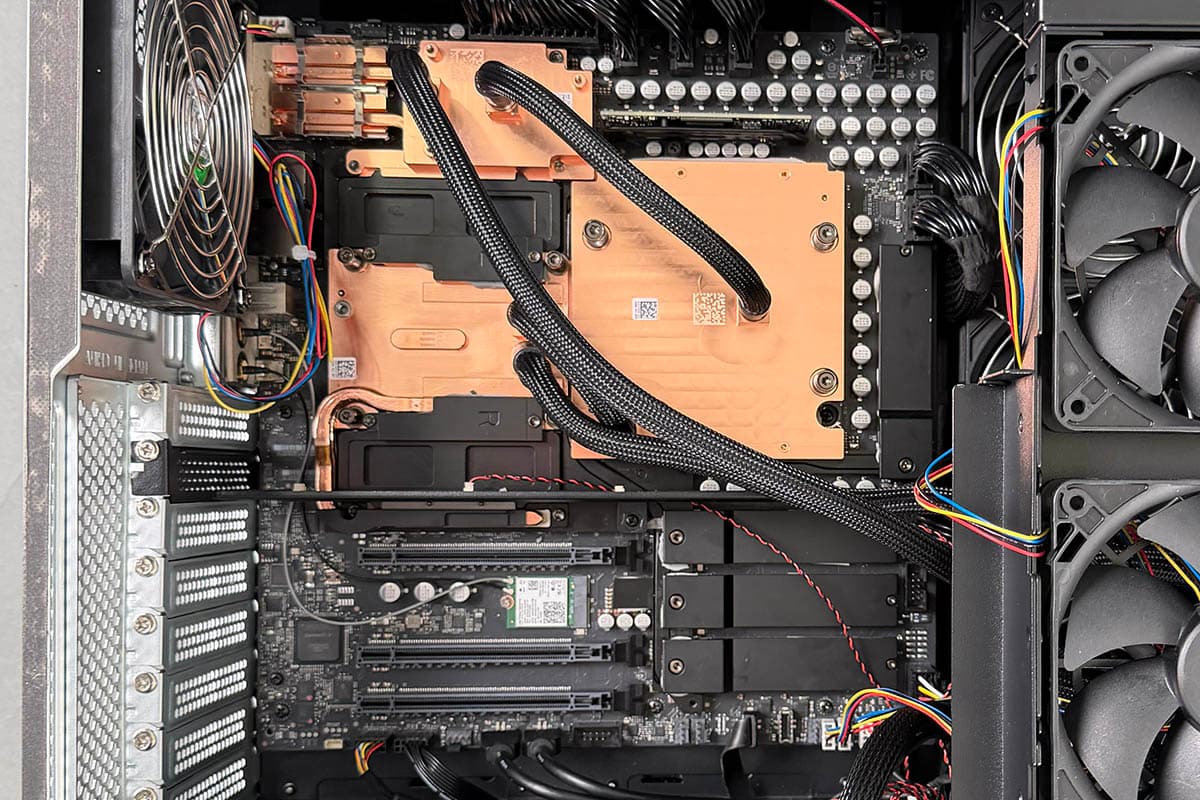
- •Leak‑detection tray installed under liquid‑cooling connectors.
- •Tray senses coolant leaks and triggers automatic shutdown.
- •System features first workstation with two PCIe Gen6 M.2 slots.
- •Uses NVIDIA GB300, ConnectX‑8 NIC, 1.6 kW power budget.
- •AI‑driven liquid‑cooling safety may reach DIY workstation market.
Pulse Analysis
The Gigabyte W775‑V10‑L1 showcased in Taipei blends high‑end AI server components with a workstation form factor. Powered by an NVIDIA GB300 accelerator, a ConnectX‑8 100 GbE NIC, and a Blackwell Ultra B300 GPU, the chassis draws up to 1.6 kW. The most eye‑catching addition is a slim black metal leak‑detection tray positioned beneath the liquid‑cooling fittings. Sensors embedded in the tray monitor coolant flow, and any breach triggers an immediate system shutdown, protecting expensive silicon and preventing damage to the surrounding infrastructure.
Beyond the safety feature, the W775‑V10‑L1 is the first workstation to ship with two PCIe Gen6 M.2 slots, even though Gen6 SSDs are not yet widely available. This forward‑looking design anticipates the rapid bandwidth growth demanded by AI workloads and large‑scale data sets. The inclusion of the P3809 BMC gives the box server‑grade remote management while still supporting up to RTX Pro 6000 Blackwell GPUs for graphics‑intensive tasks. Such hybrid capability blurs the line between traditional workstations and purpose‑built AI servers.
The leak‑detection tray signals a broader trend: AI‑driven data‑center cooling technologies are migrating into high‑performance workstations. As more engineers adopt liquid‑cooling loops for GPU‑heavy workloads, the risk of coolant spills becomes a real operational concern. By integrating sensor‑based shutoff mechanisms at the chassis level, manufacturers can offer enterprise‑grade reliability without requiring custom DIY modifications. If Gigabyte’s approach gains traction, we may see similar safety trays become standard in enthusiast builds, raising the overall durability of liquid‑cooled workstations and potentially opening a new market for third‑party sensor modules.
Two neat features in the Gigabyte W775-V10-L1 we saw
Comments
Want to join the conversation?
Loading comments...