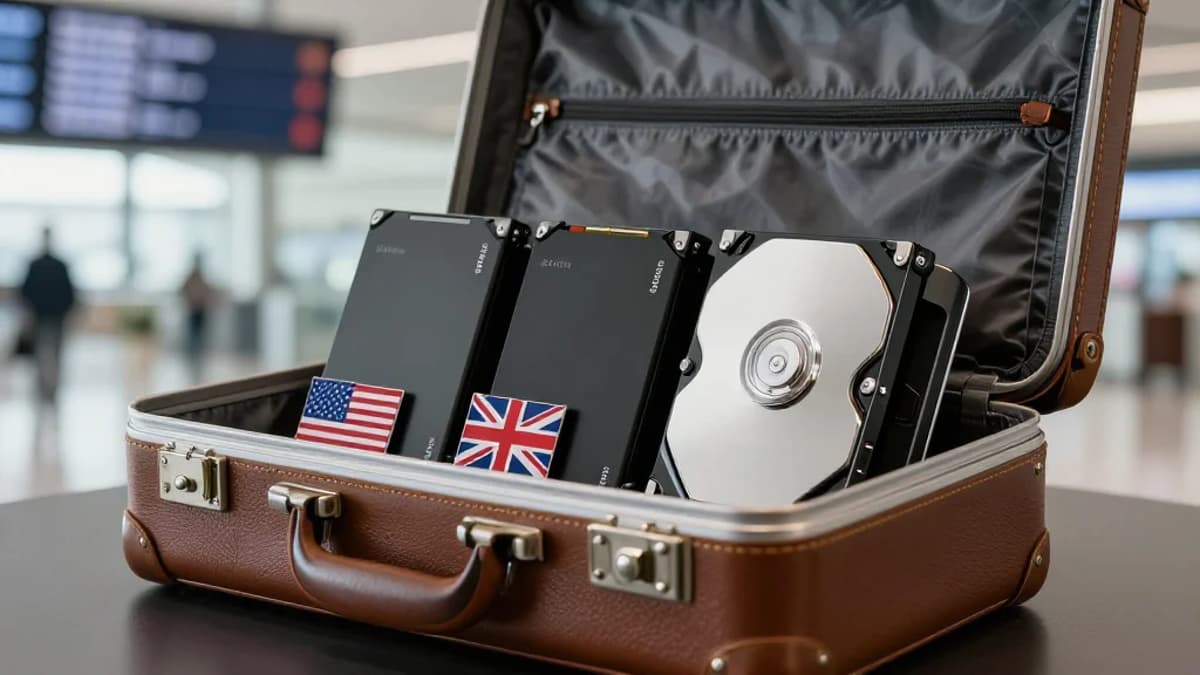
UK HDD Prices Drive Redditor to Fly US to Purchase HDDs and Save $2,000
•February 23, 2026
0
Why It Matters
The incident underscores how regional price disparities can make cross‑border sourcing financially attractive for enterprise and data‑hoarding buyers, prompting them to treat hardware acquisition as a strategic supply‑chain decision. It also warns of added risks such as warranty limitations and customs duties that can erode apparent savings.
Key Takeaways
- •UK 28TB HDDs cost ~£980 vs US $610.
- •Price gap exceeds $370 per drive, $3,700 total.
- •Buyer saved >$2,000 after airfare and lodging.
- •Quantity limits forced split orders between Best Buy and B&H.
- •Logistics, testing, customs add complexity to bulk procurement.
Pulse Analysis
The high‑capacity HDD market has become increasingly fragmented as manufacturers grapple with component shortages and shifting demand from cloud providers to on‑premise storage. In the UK, import duties, VAT, and a tighter retail supply chain have pushed 28 TB drive prices toward the $1,200 mark, while U.S. retailers benefit from larger inventories and lower tax burdens. This price divergence creates arbitrage opportunities for savvy buyers, especially those needing multiple drives for NAS arrays or archival vaults, where the per‑unit cost savings quickly outweigh logistical expenses.
For organizations willing to pursue cross‑border sourcing, the procurement process resembles a mini‑logistics project. Buyers must navigate retailer quantity caps, as seen with Best Buy and B&H limiting purchases to five units each, and arrange travel, customs declarations, and on‑site verification to avoid receiving defective or mismatched hardware. Recording serial numbers, running SeaTools diagnostics, and conducting file‑copy tests before departure mitigate return‑fraud risks and ensure warranty eligibility. However, these safeguards add time and labor costs, and any misstep in duty payments or warranty registration can erode the financial upside.
The broader lesson for the storage industry is that price transparency and regional parity are becoming competitive differentiators. Vendors that streamline global pricing, offer localized warranty support, and provide bulk‑order programs can retain customers who might otherwise seek overseas arbitrage. Meanwhile, enterprises should evaluate total cost of ownership—including shipping, taxes, and verification effort—rather than focusing solely on sticker price, to make informed decisions about high‑capacity storage investments.
UK HDD prices drive Redditor to fly US to purchase HDDs and save $2,000
0
Comments
Want to join the conversation?
Loading comments...